Folder designs interfaces, publications, and systems for organizing, encountering, and carrying information forward. We help museums, universities, civic institutions, and others engaged in the stewardship and sharing of knowledge create ways for language, media, and material to surface and endure.
We are interested in what happens to information over time, and how form can reveal the connections that give it meaning. Projects come in a variety of configurations rooted in partnerships that honor the material and its strategic presentation.
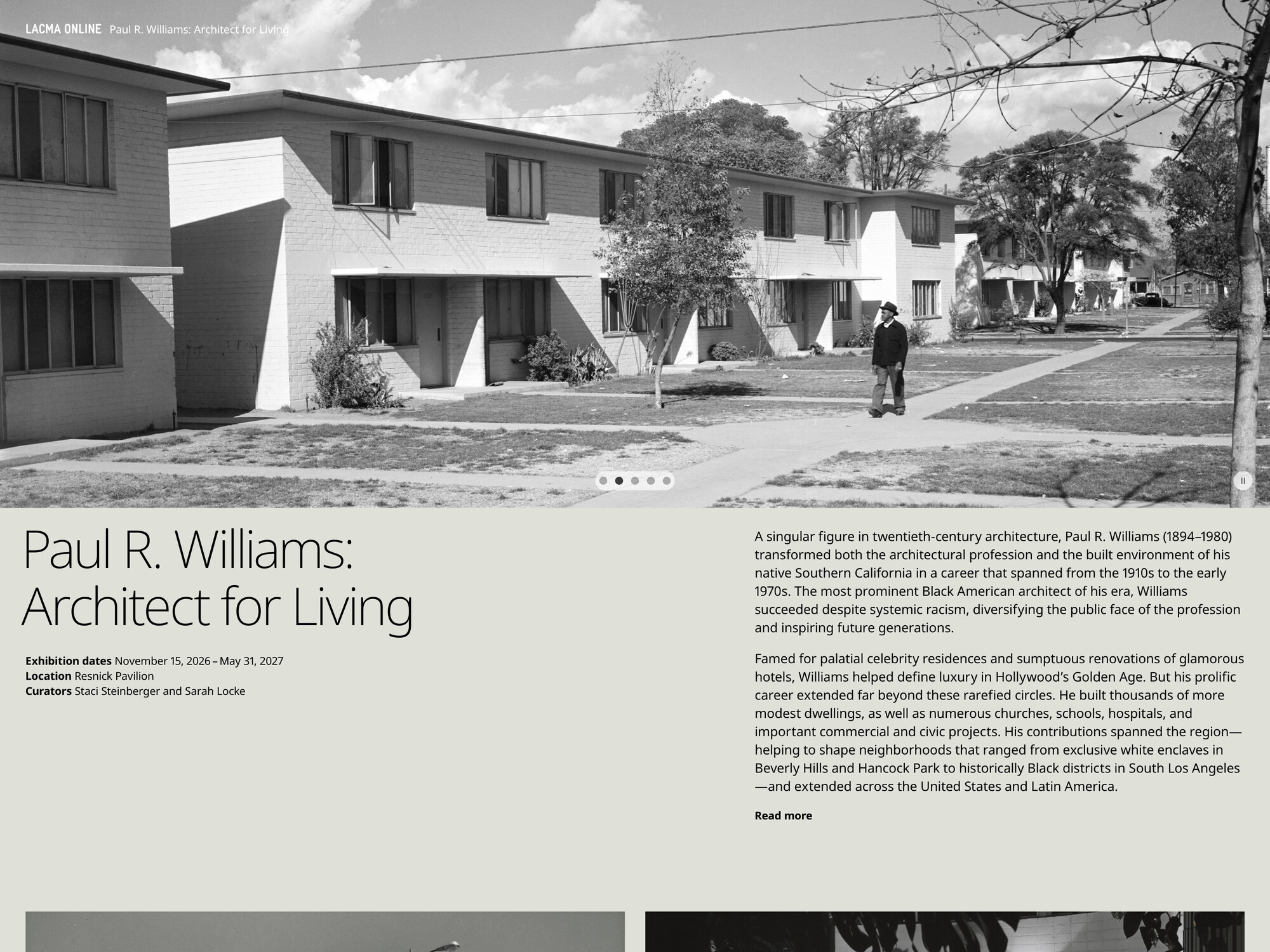
A singular figure in twentieth-century architecture, Paul R. Williams (1894–1980) transformed both the architectural profession and the built environment of his native Southern California in a career that spanned from the 1910s to the early 1970s. The most prominent Black American architect of his era, Williams succeeded despite systemic racism, diversifying the public face of the profession and inspiring future generations.
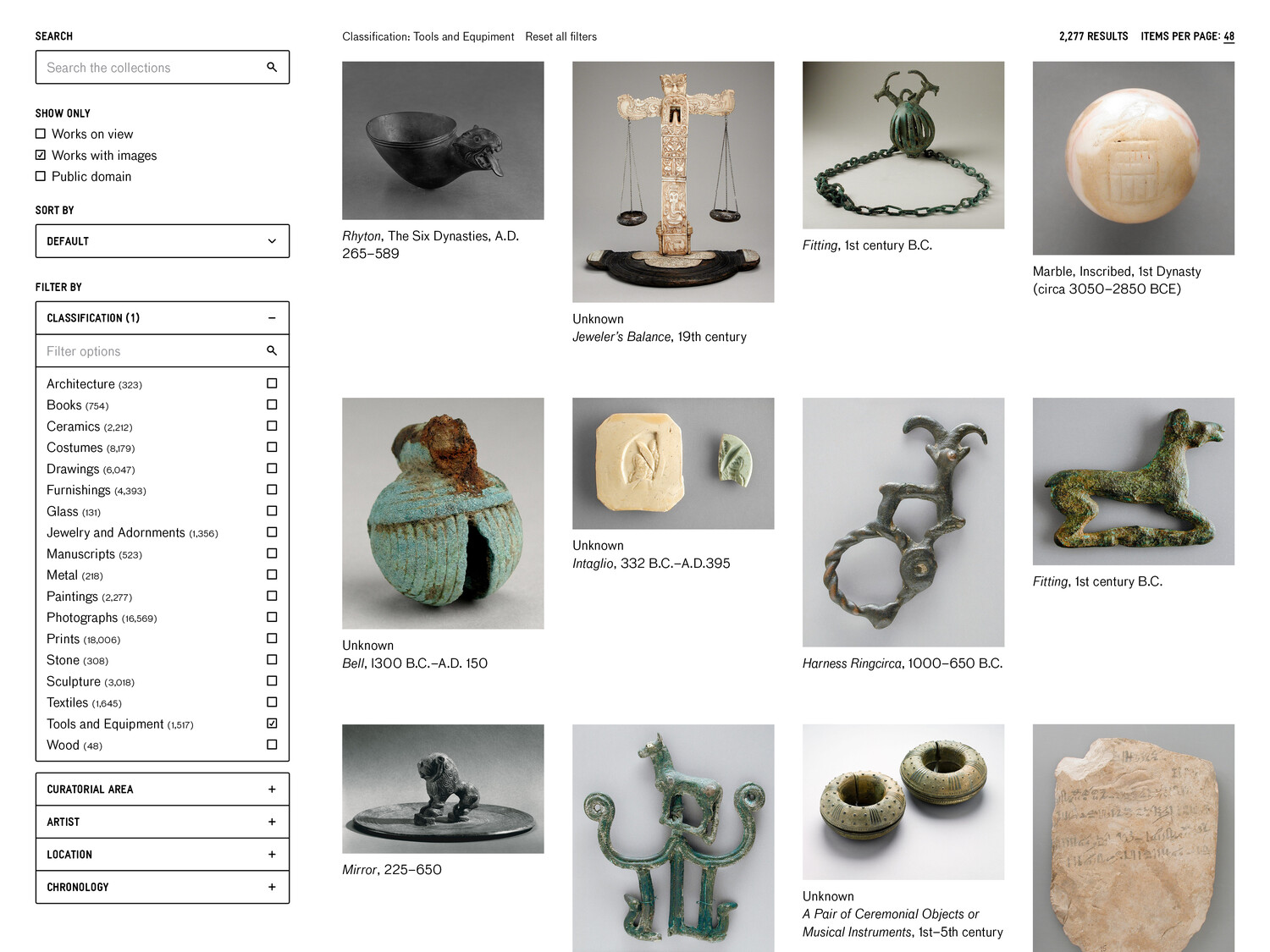
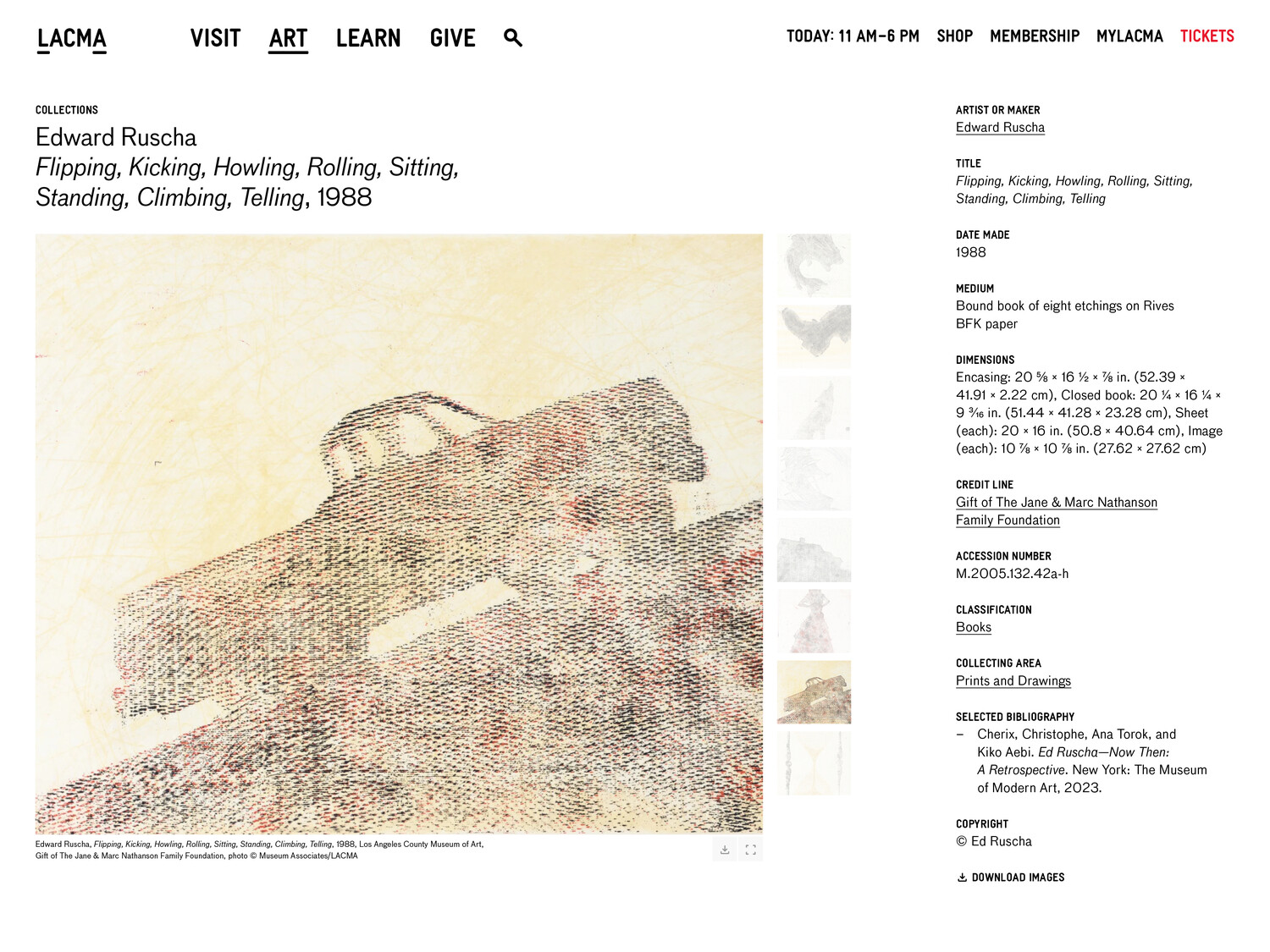
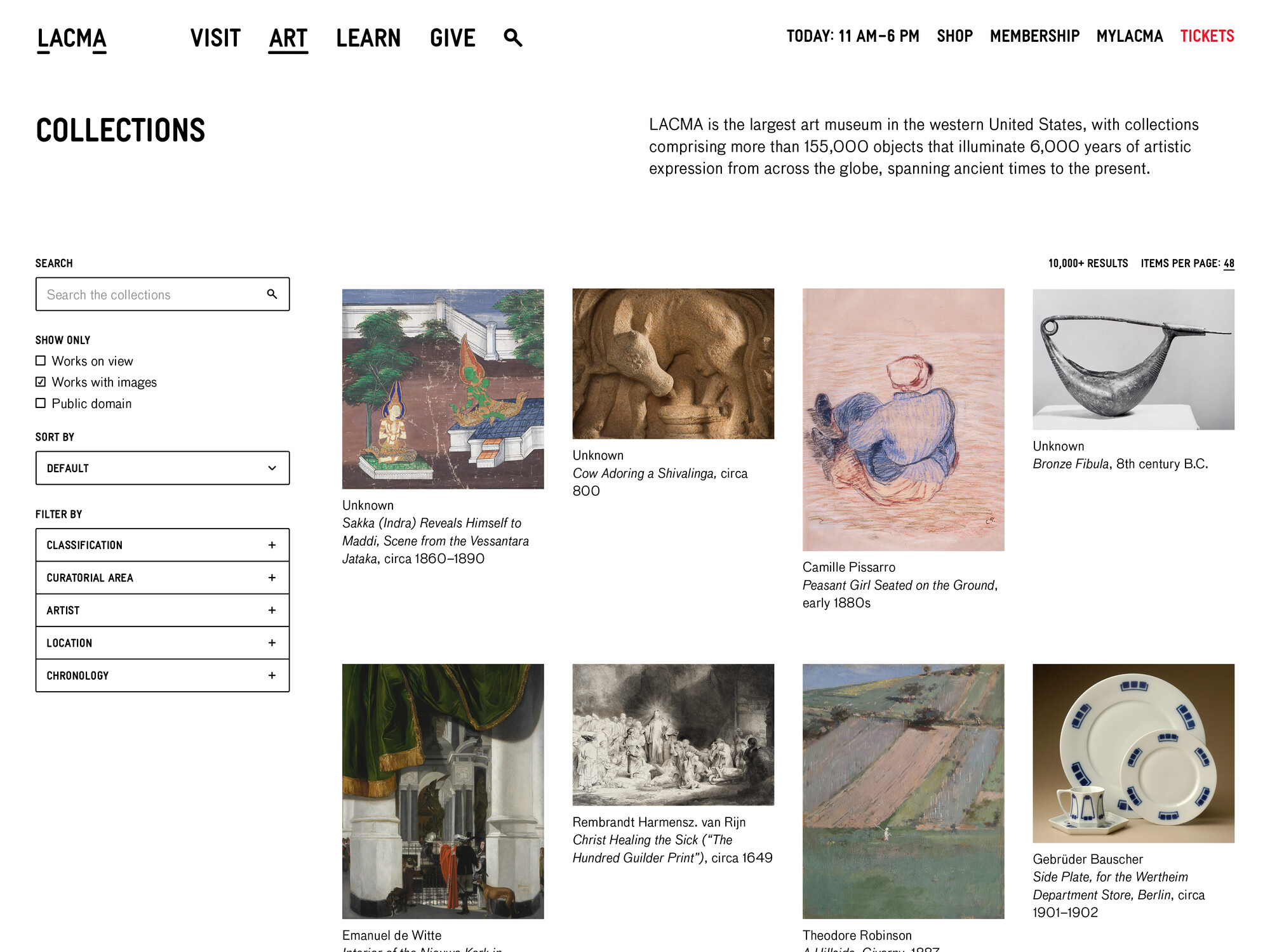
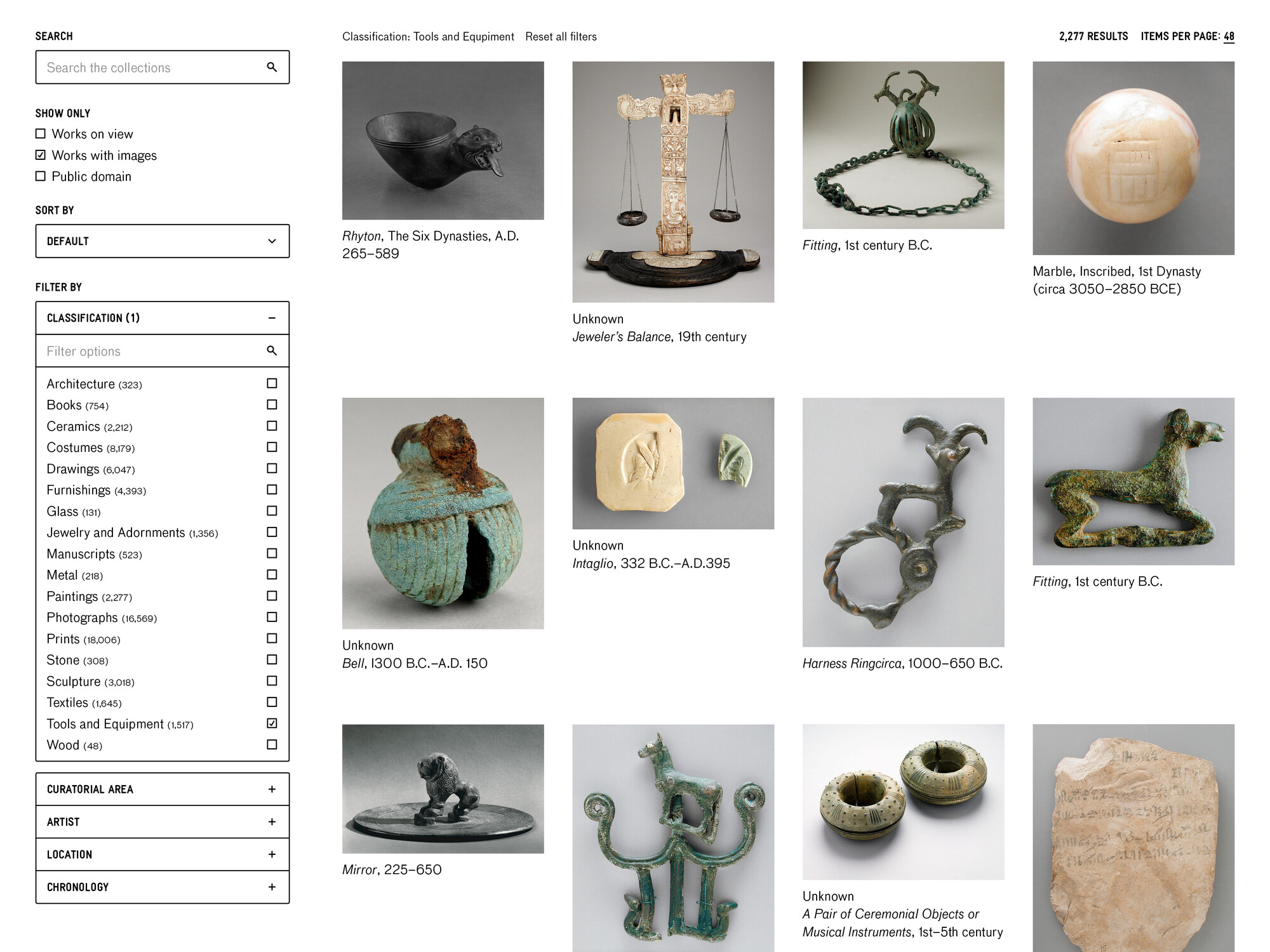
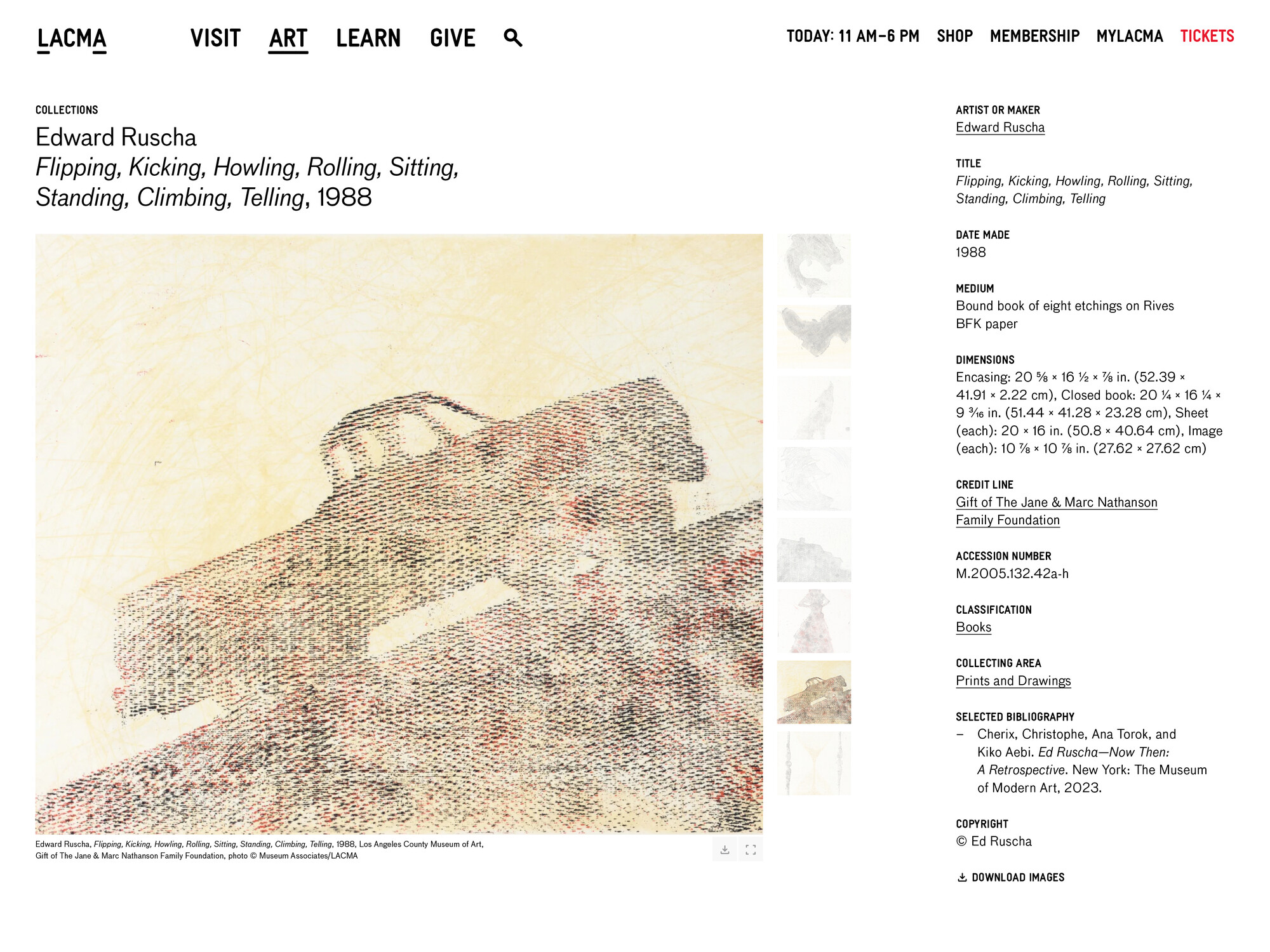
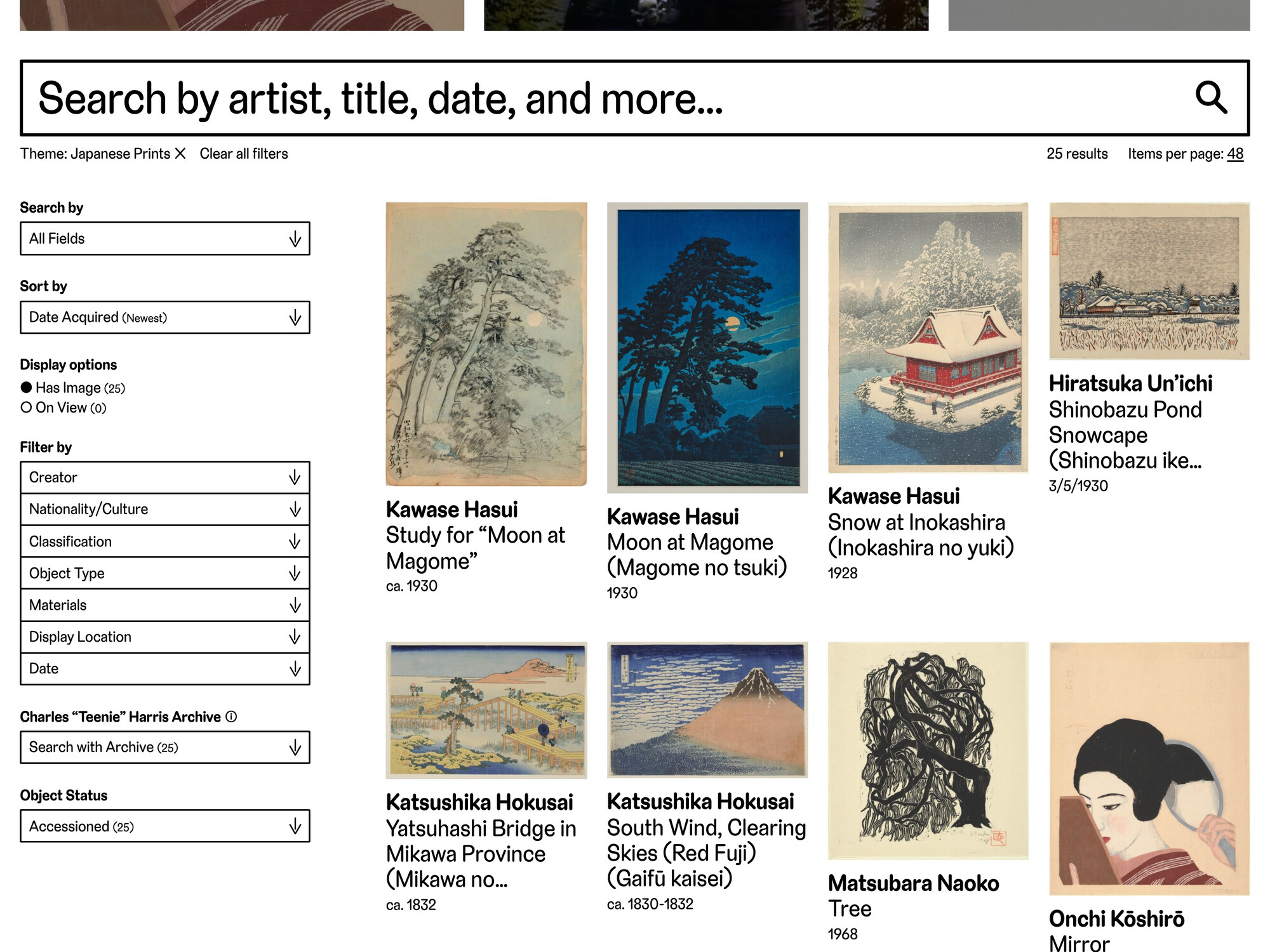
The Los Angeles County Museum of Art houses the largest museum collection in the western United States. The new online platform comprises of a cleanly rebuilt data endpoint paired with a restrained interface design that gives nuanced object records common structure while preserving distinctions in attribution, dating, and depth of scholarship.
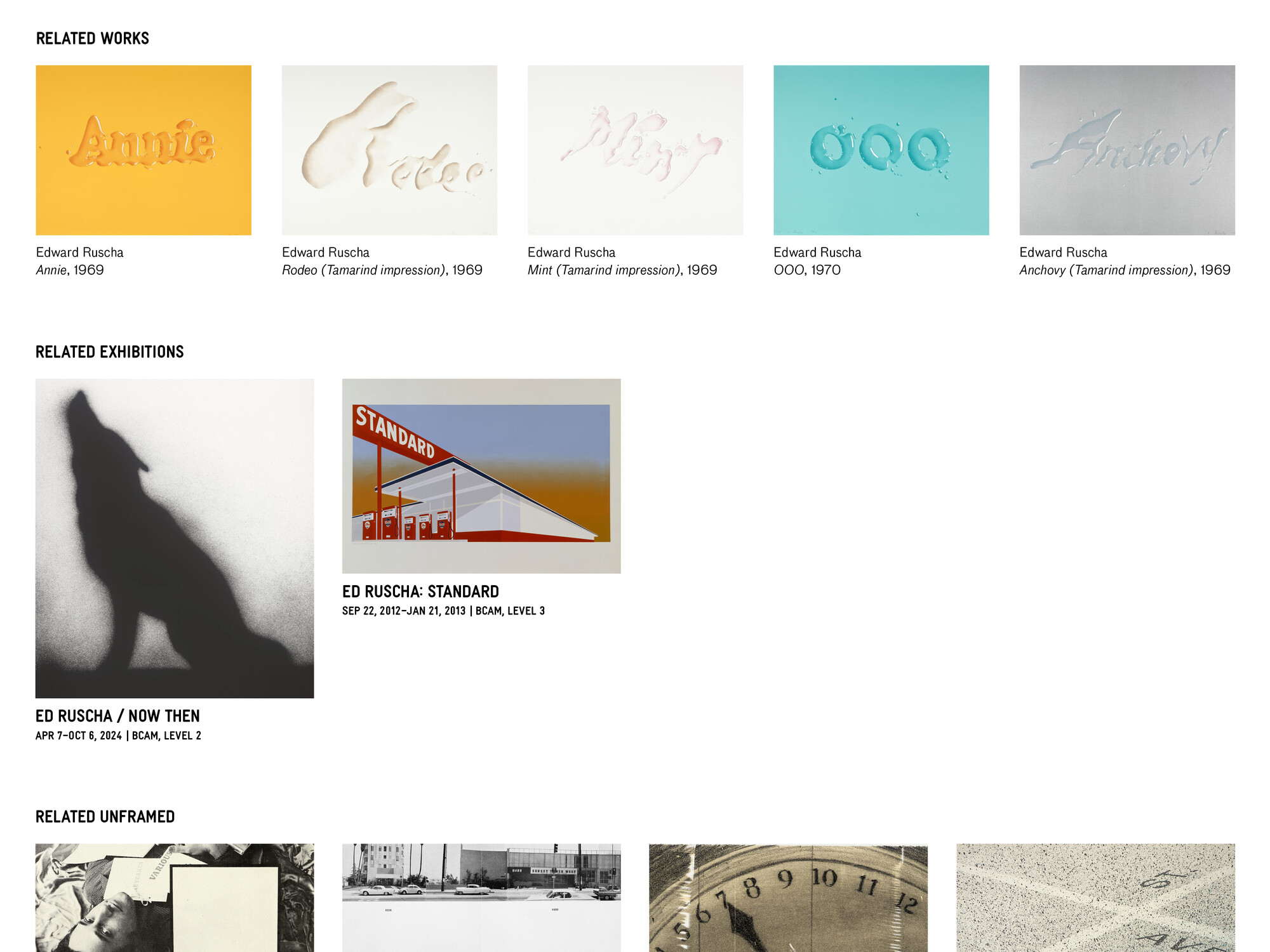
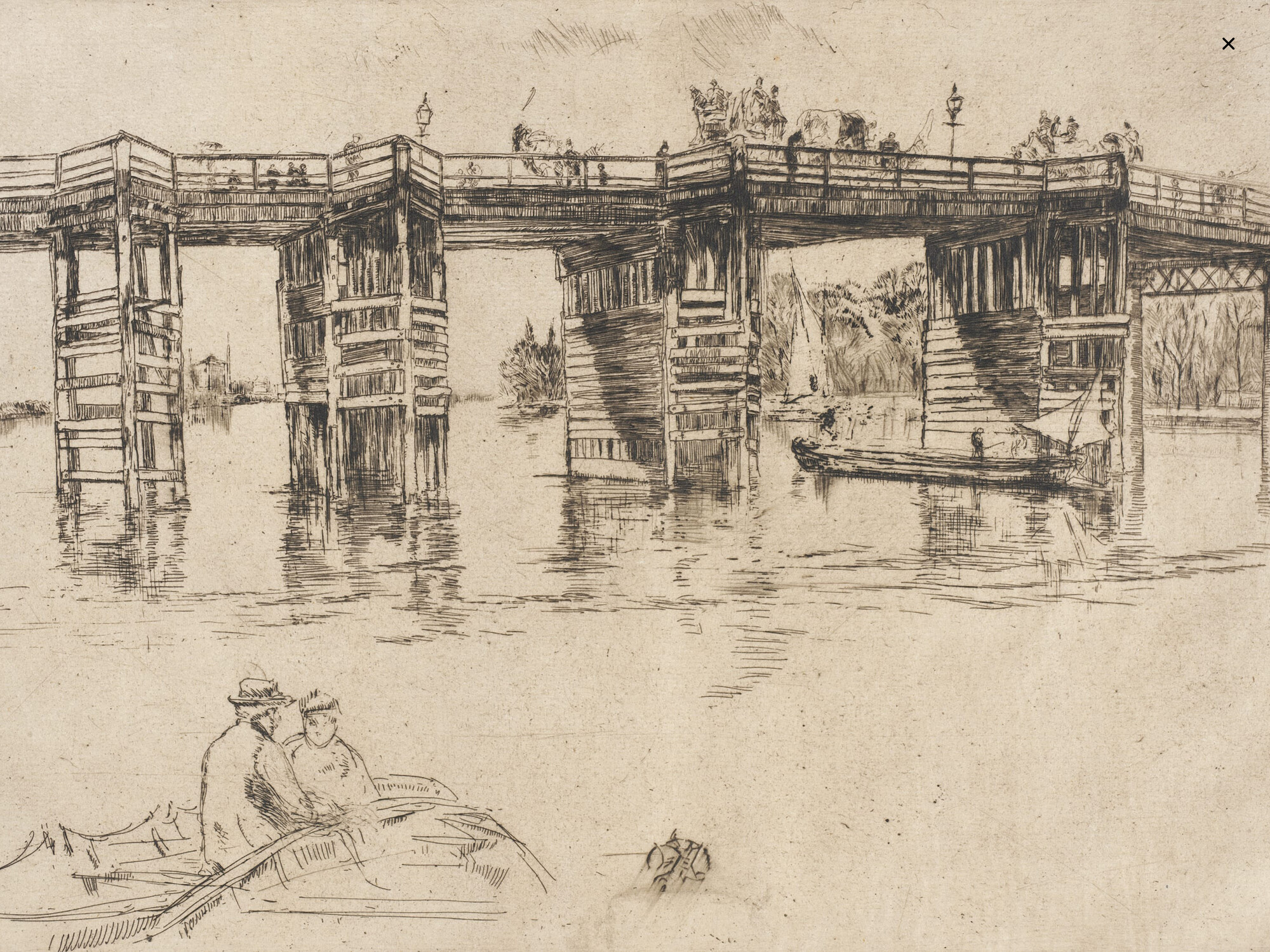
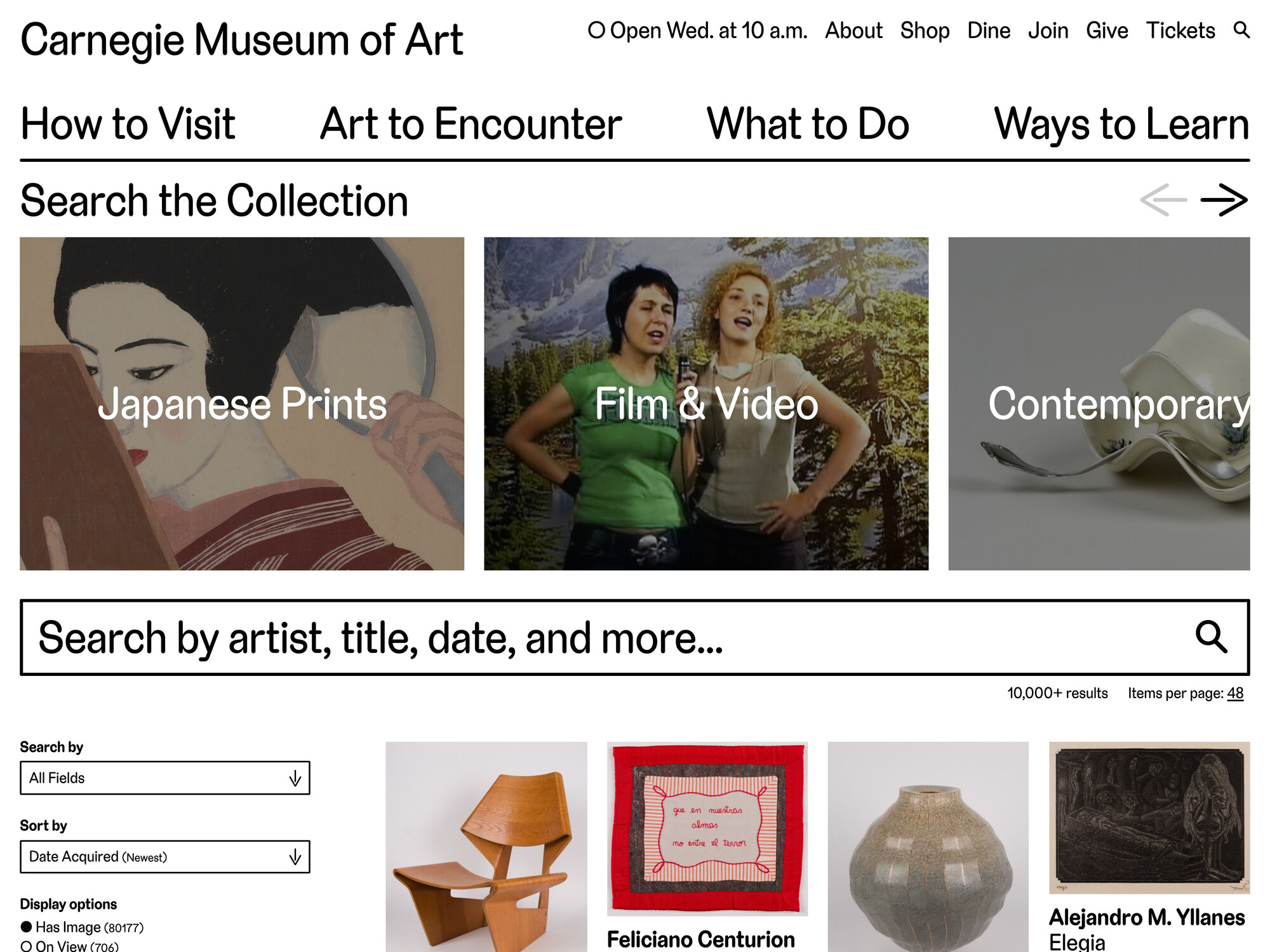
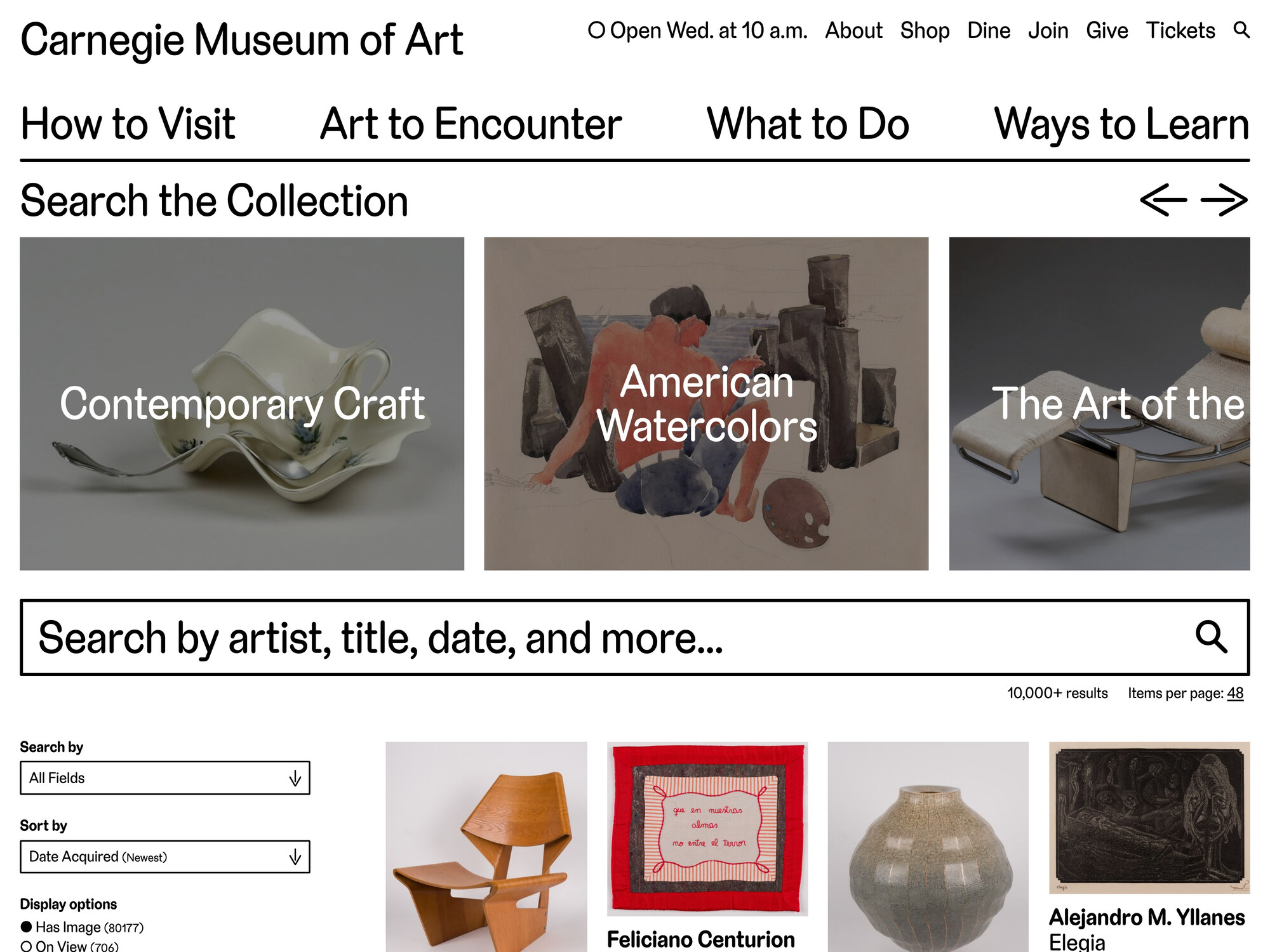
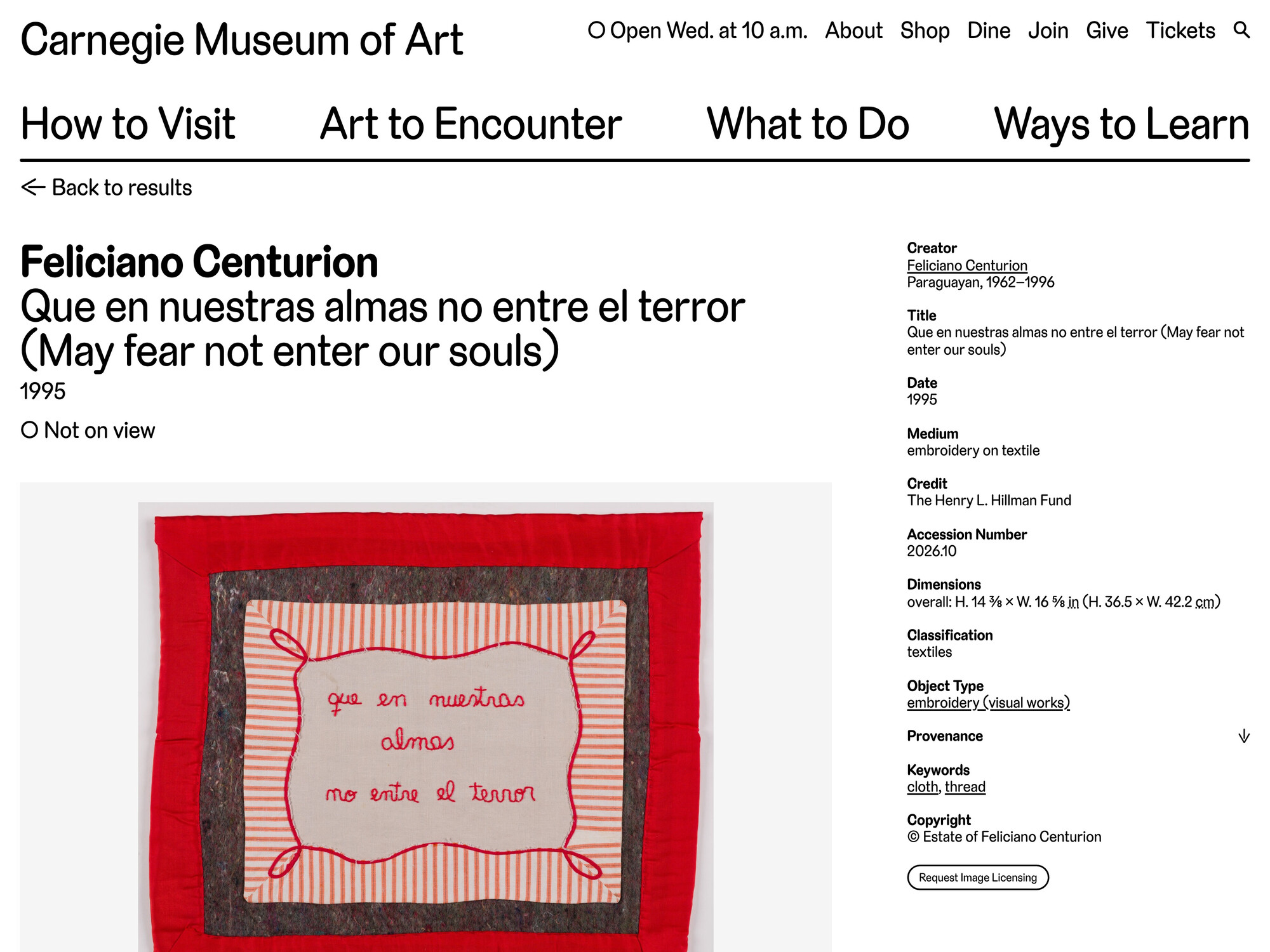
Expanded from our previous work on Carnegie Museum of Art’s online catalogue, the collections website opens us closer study of the collection by connecting individual works with group records, exhibition histories, and associated texts. The collection’s development is more readily traced through museum programs including it’s growth through the Carnegie International, North America's longest-running recurring exhibition of international contemporary art.
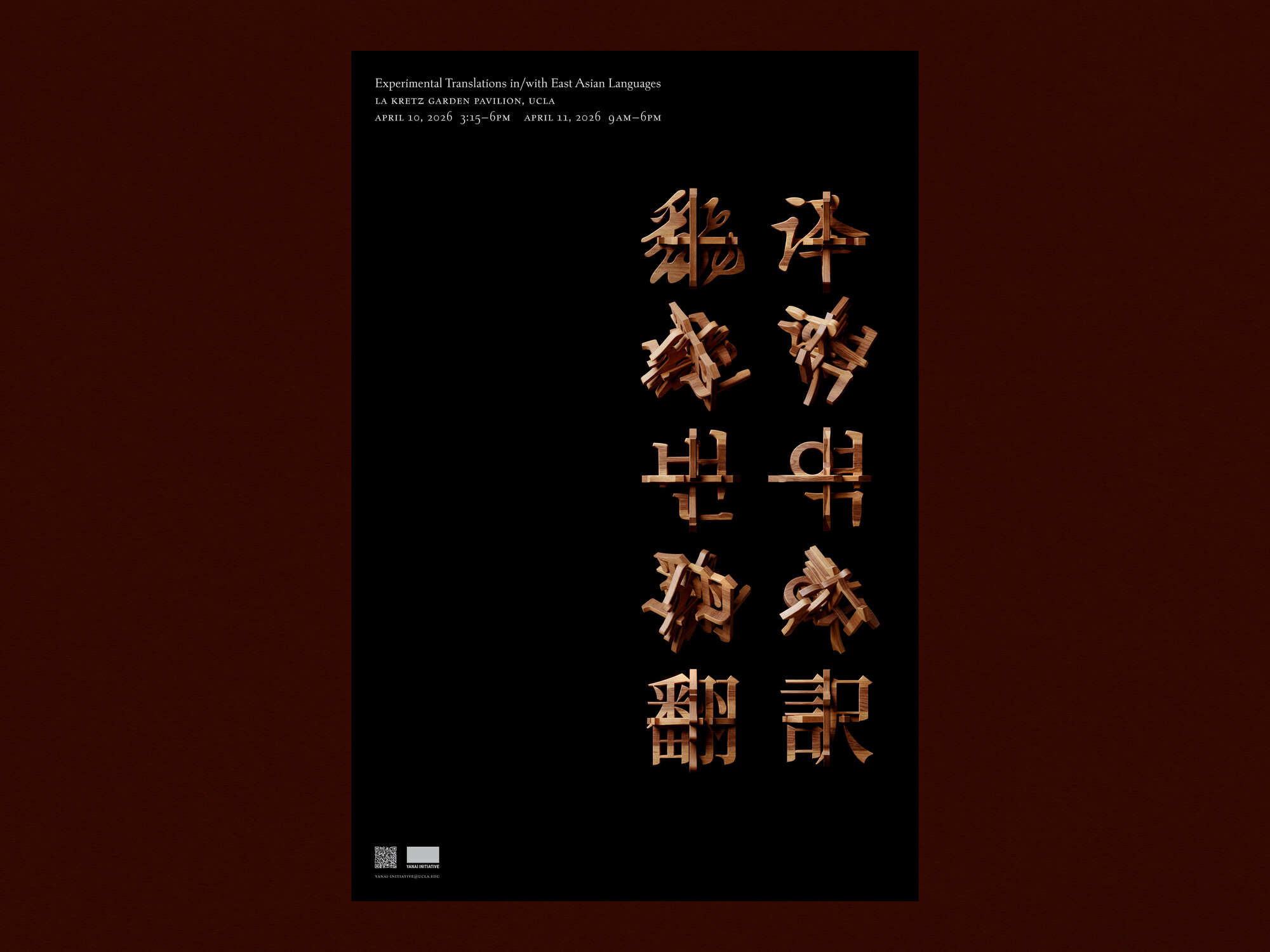
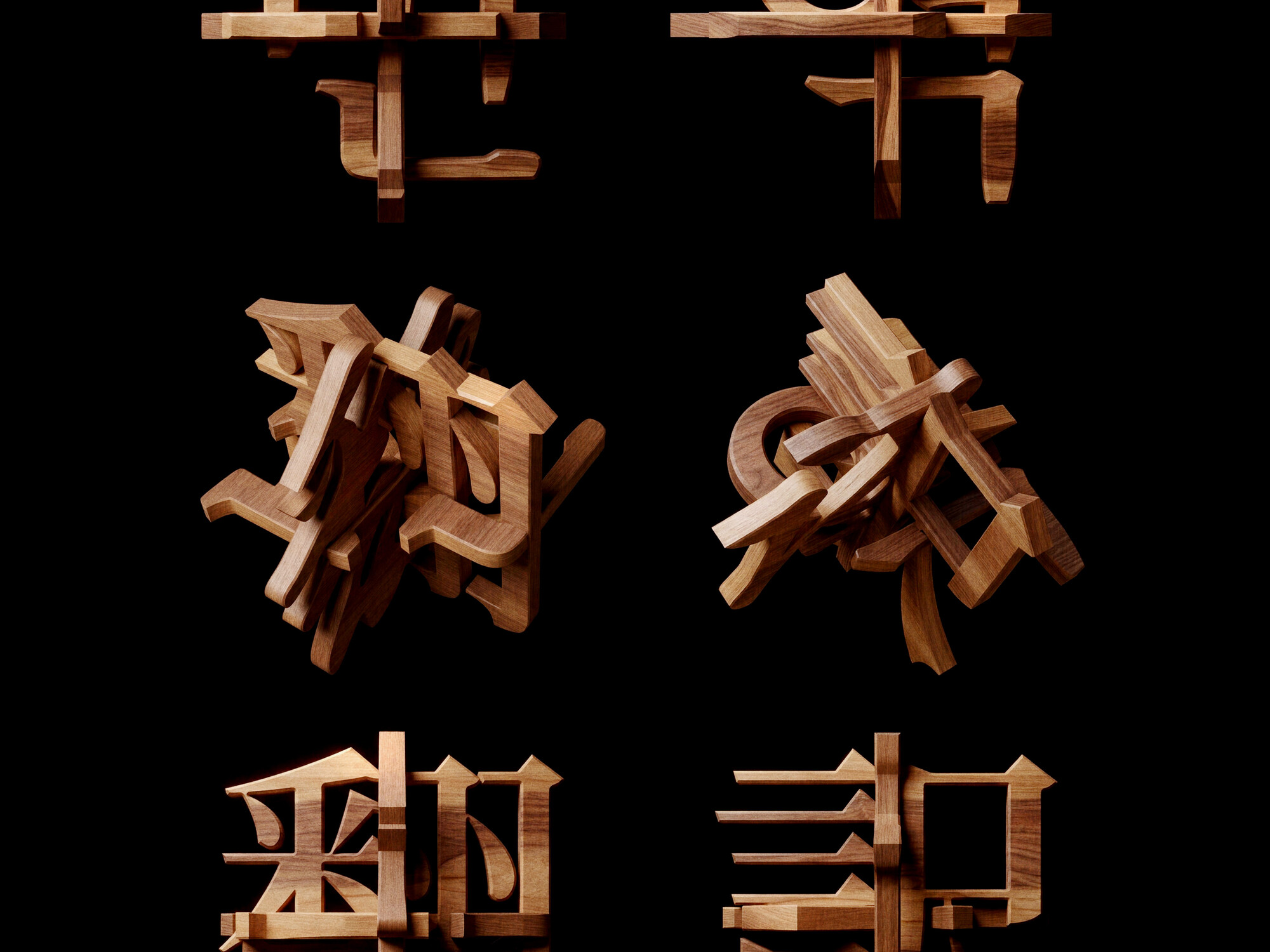
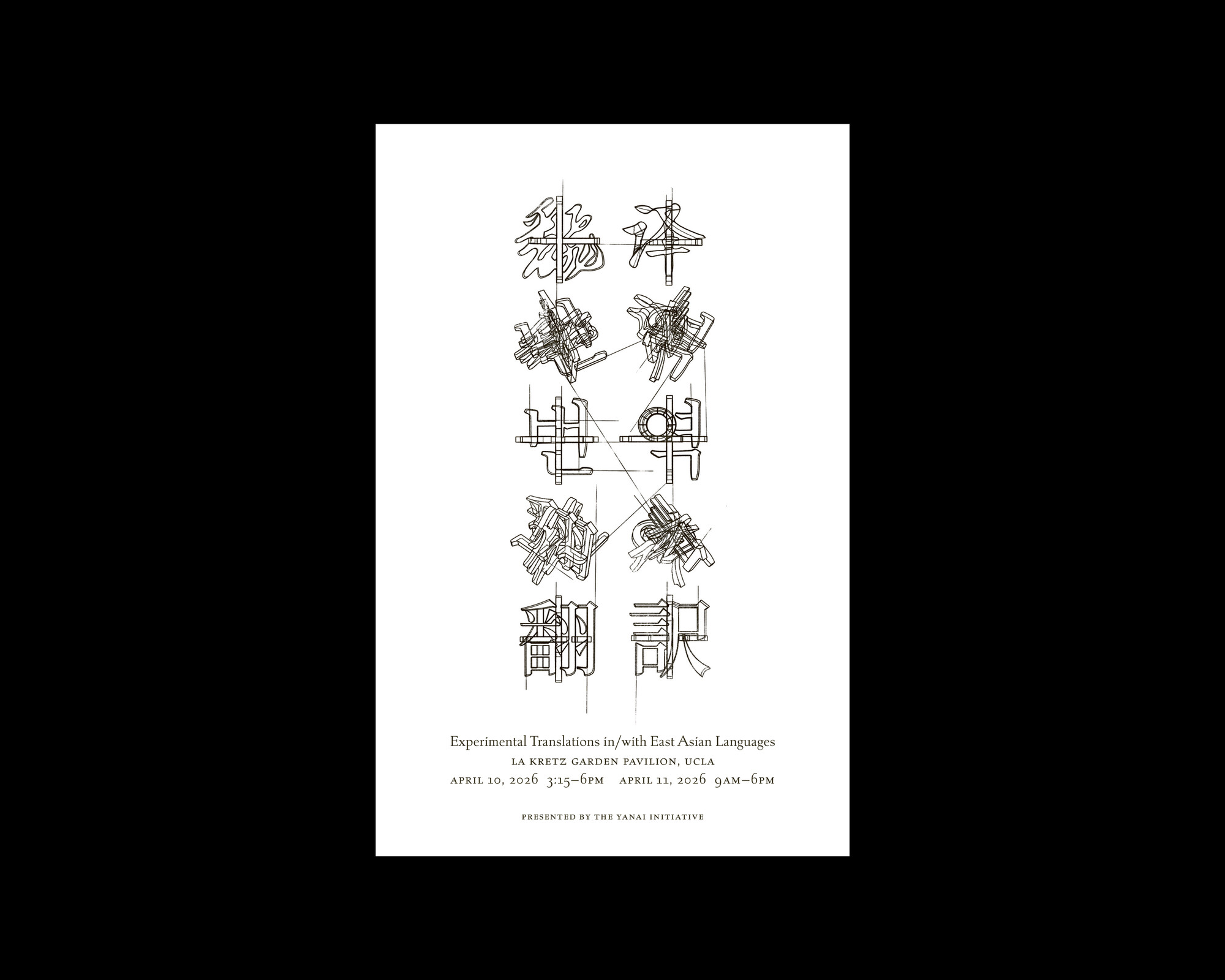
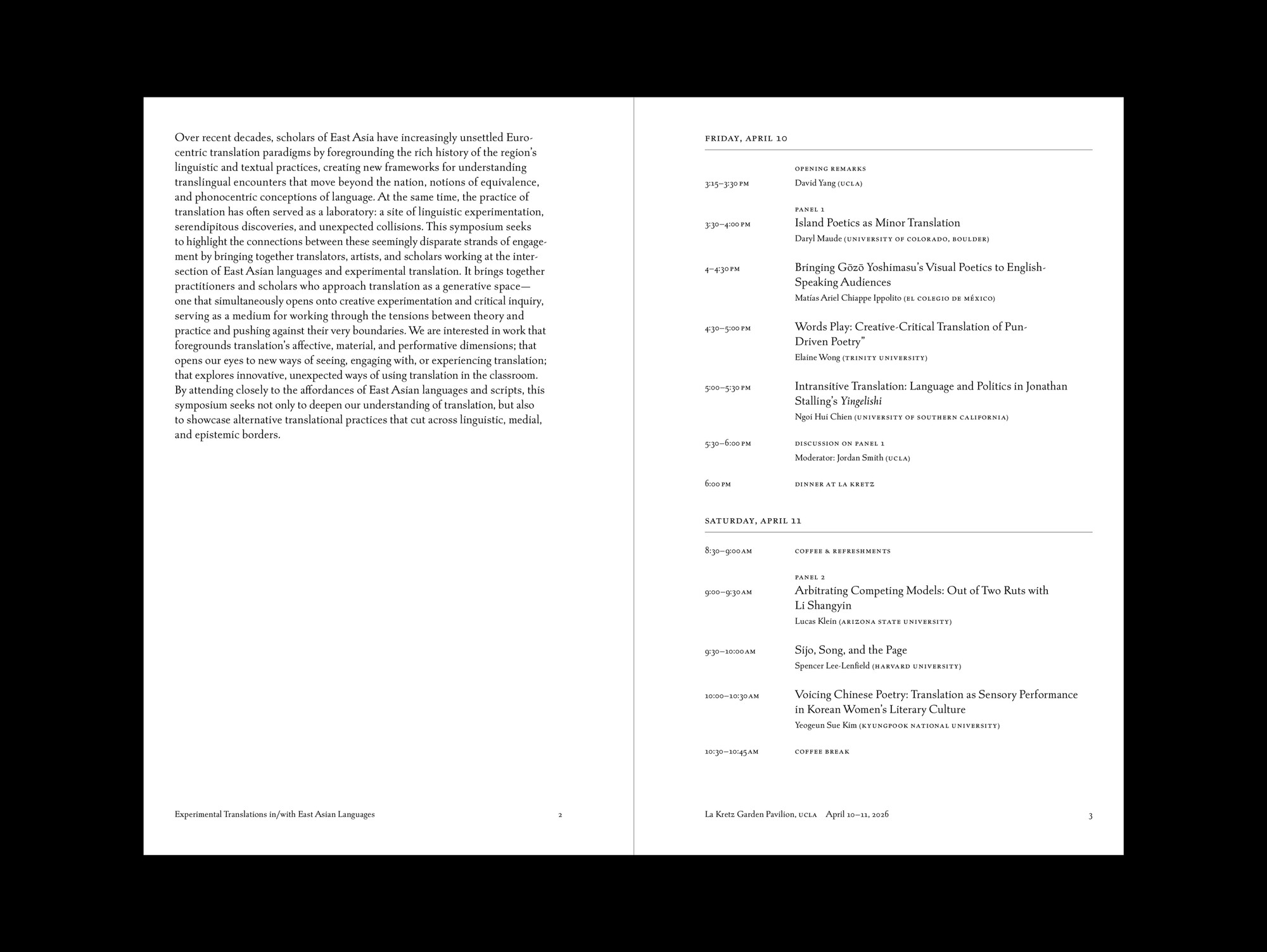
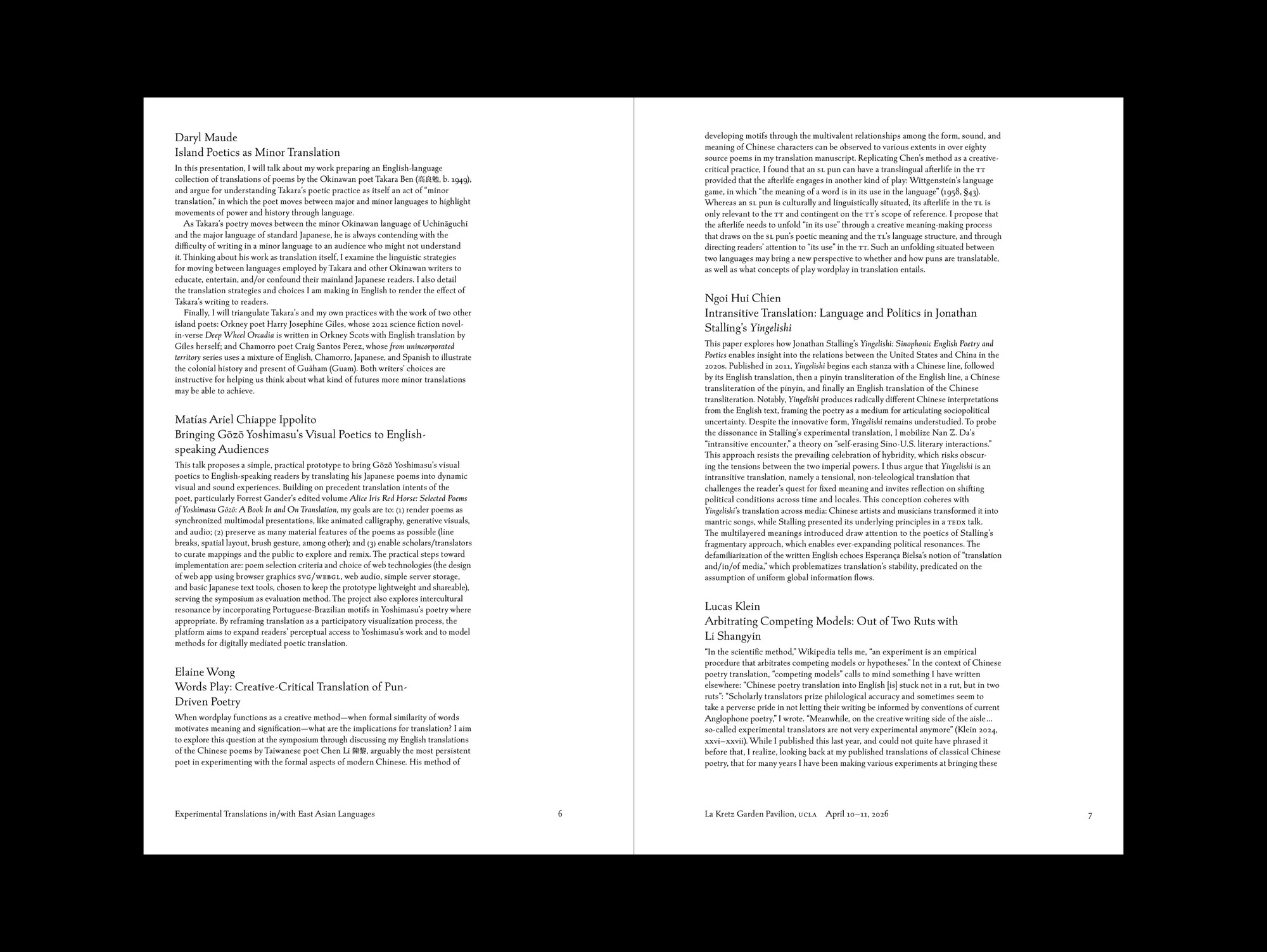
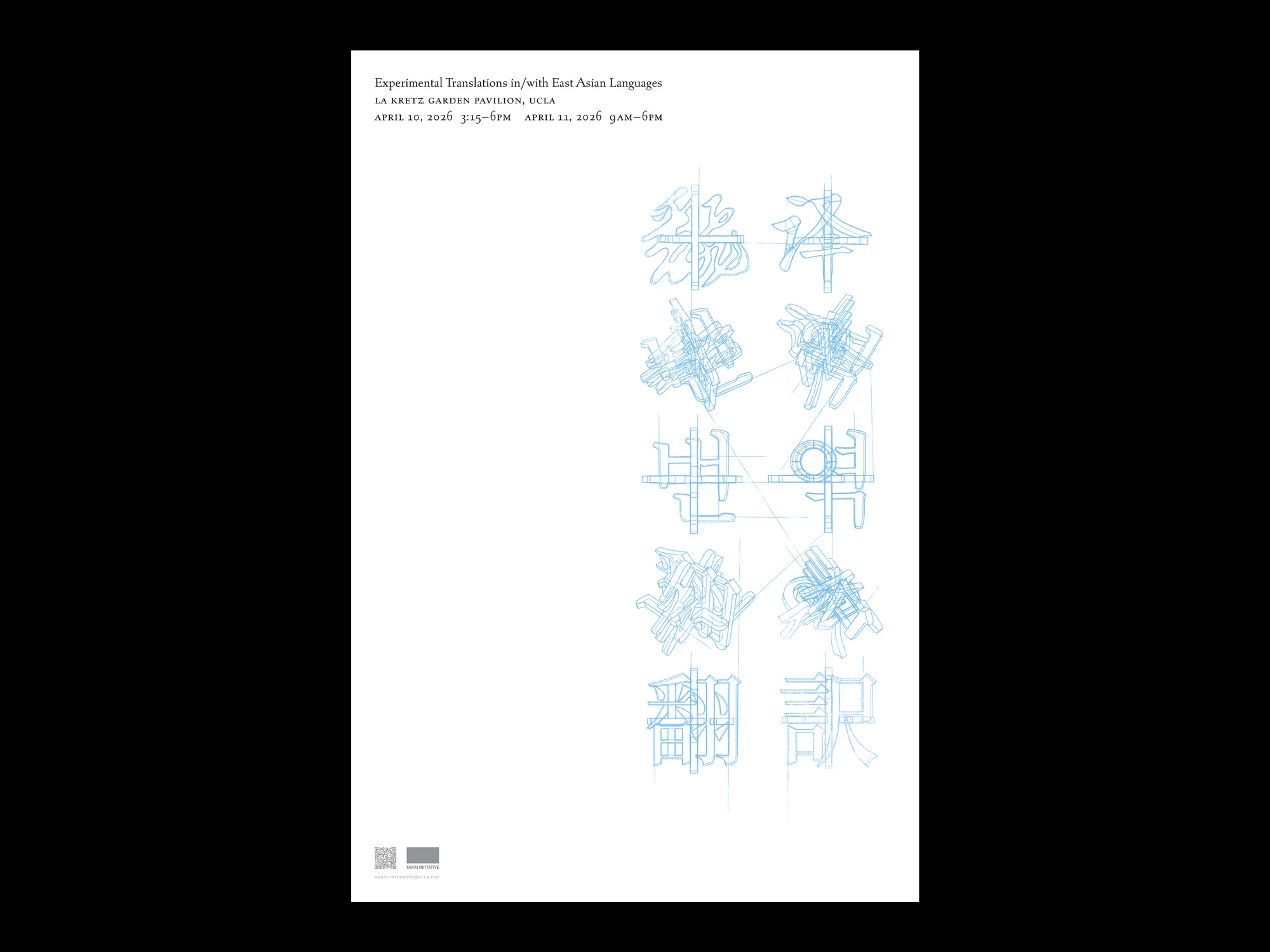
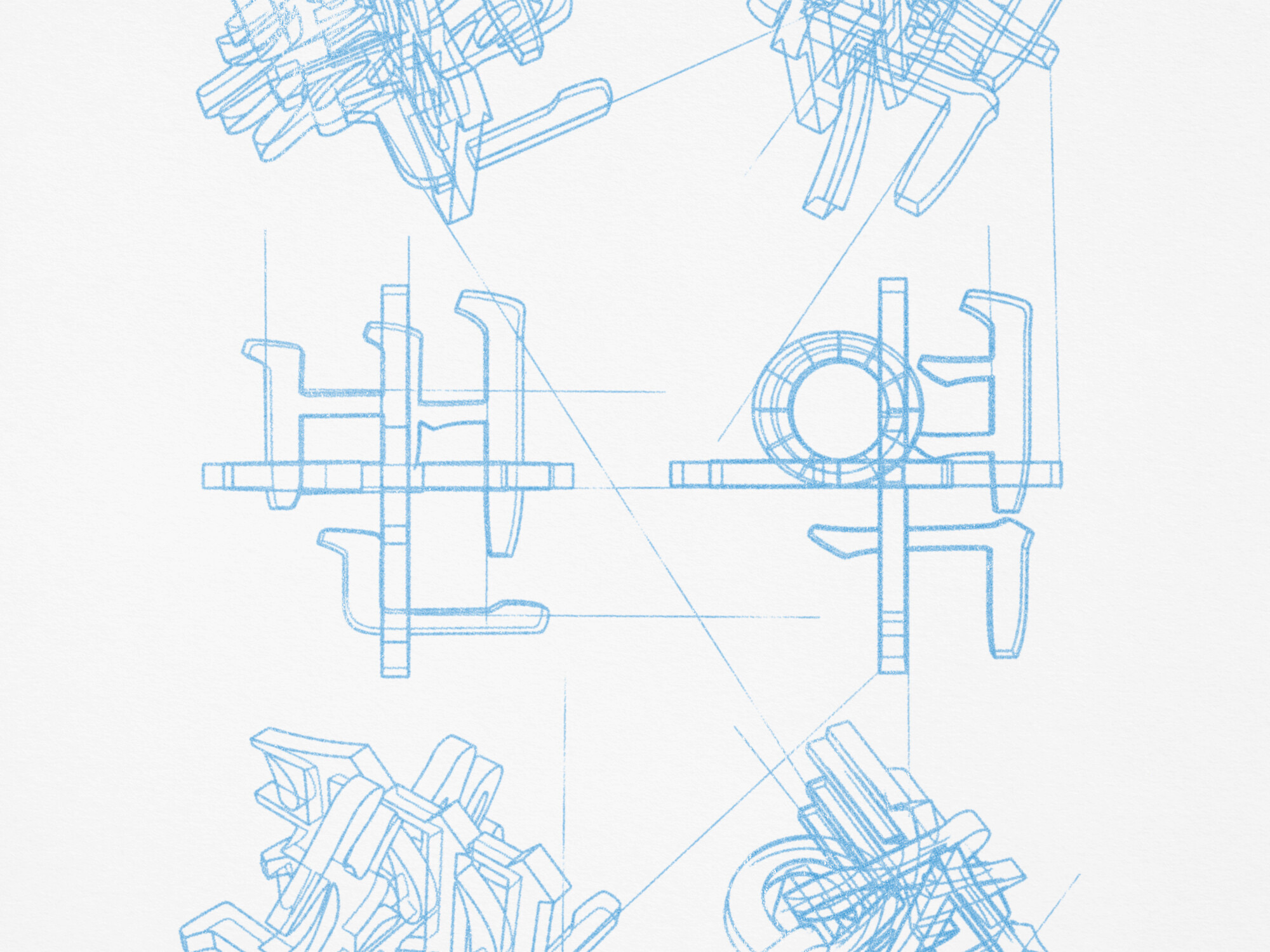
Hosted at UCLA, Experimental Translations in/with East Asian Languages was a translingual laboratory challenging Eurocentric models by exploring East Asian translation through visual poetics, media materiality, and radical creative formats. The word “translation,” in Chinese, Korean, and Japanese, is built as one wood-joined object, shown from five angles as it moves between the three scripts.
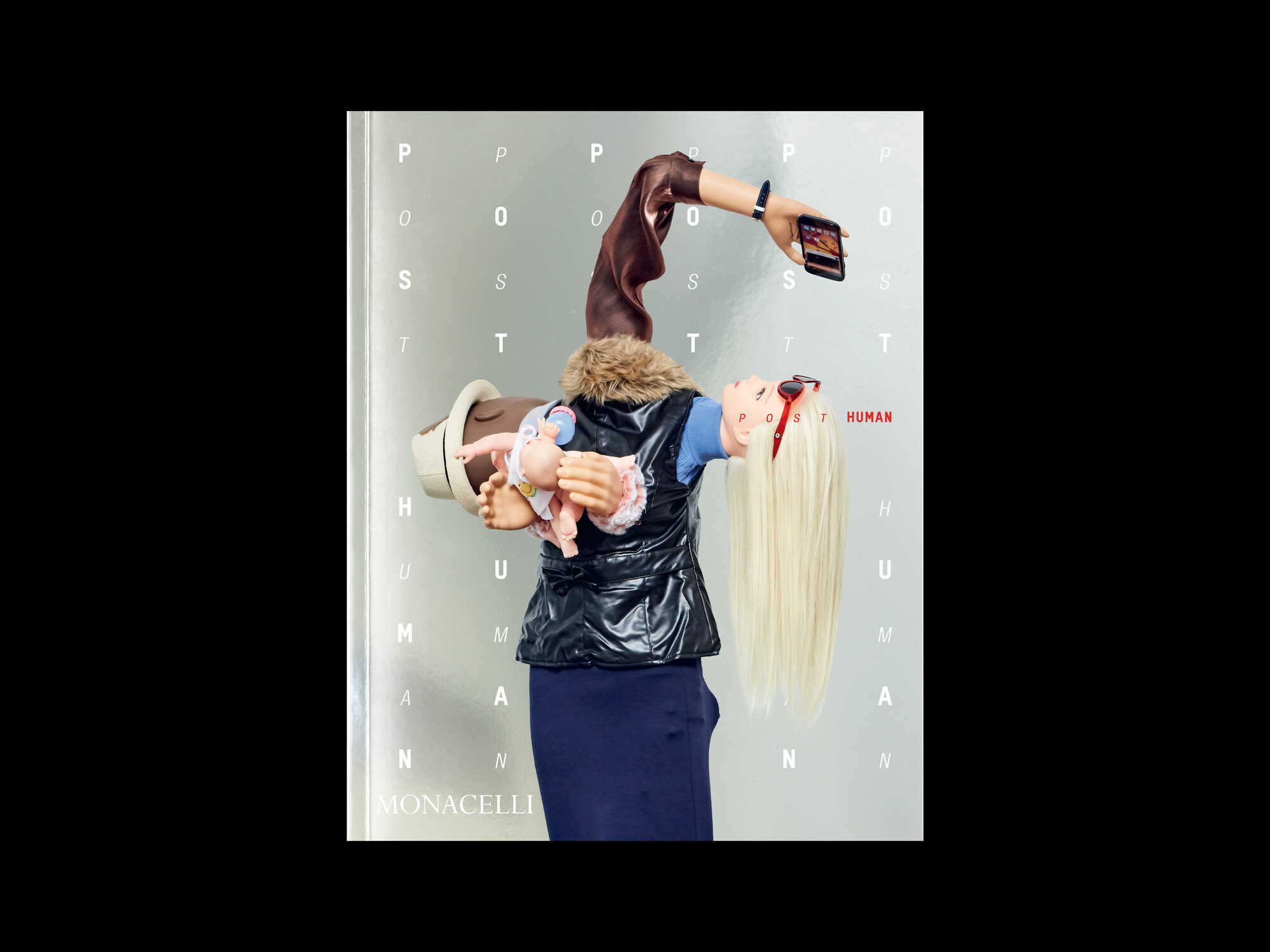
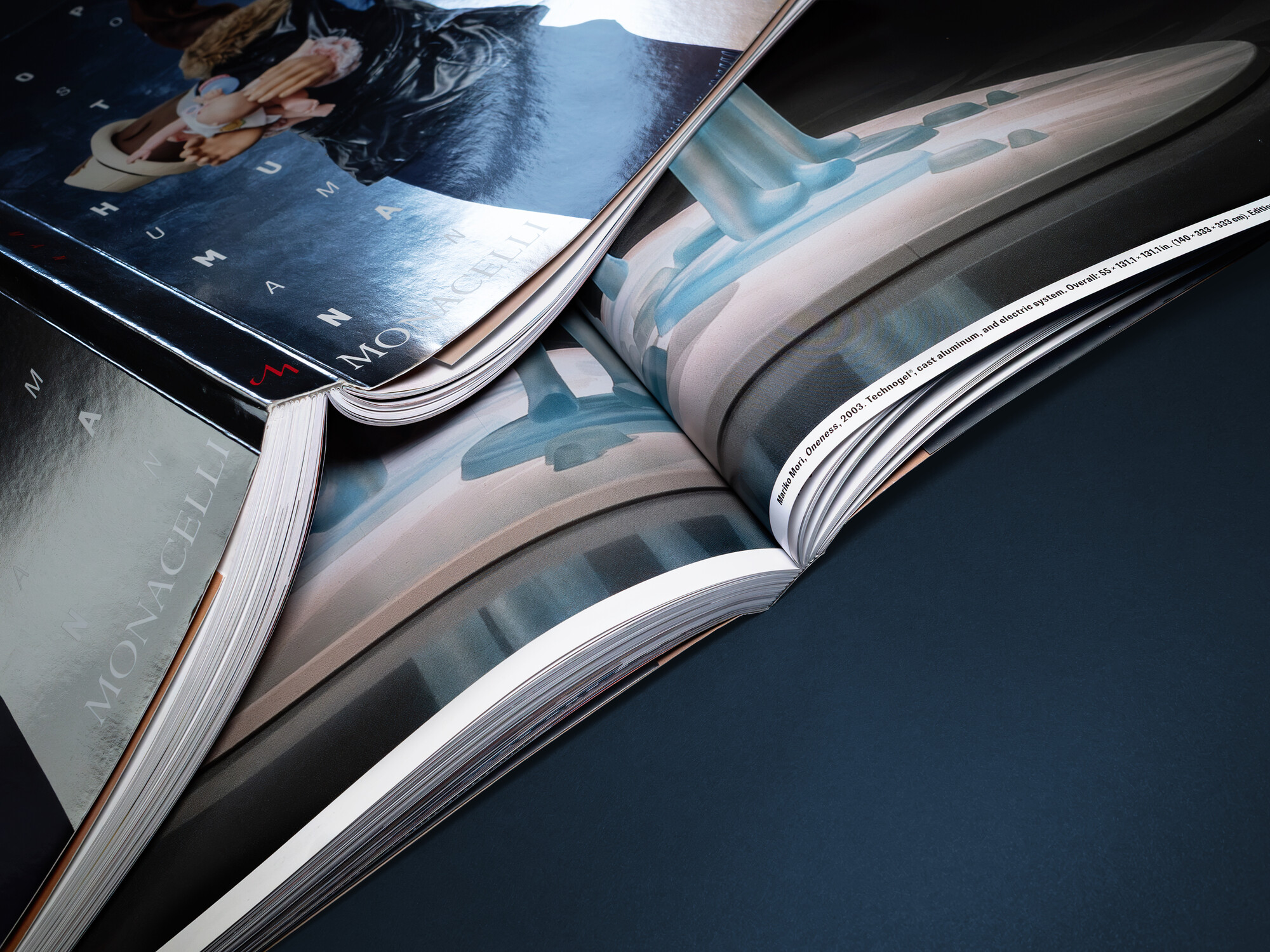
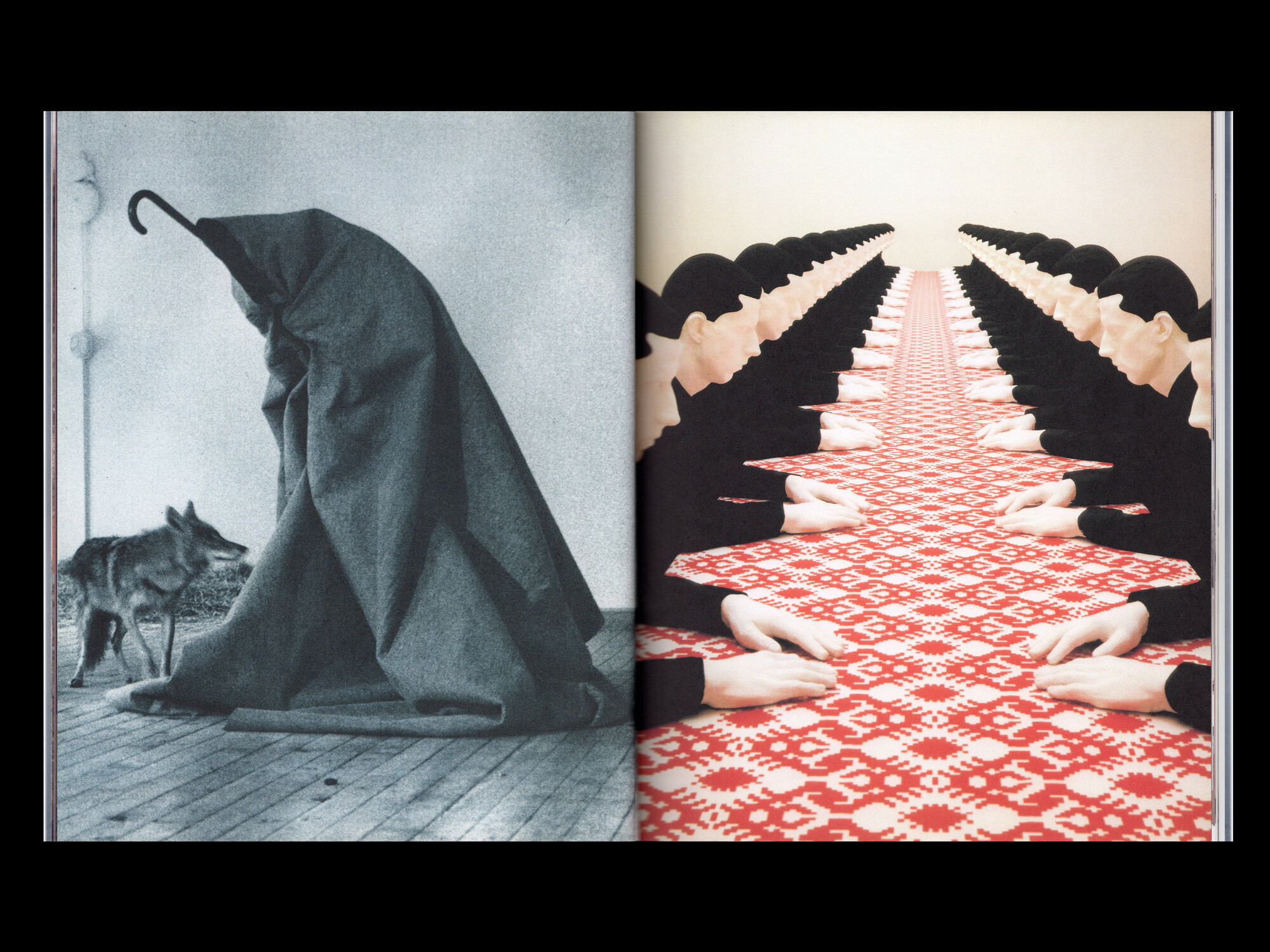
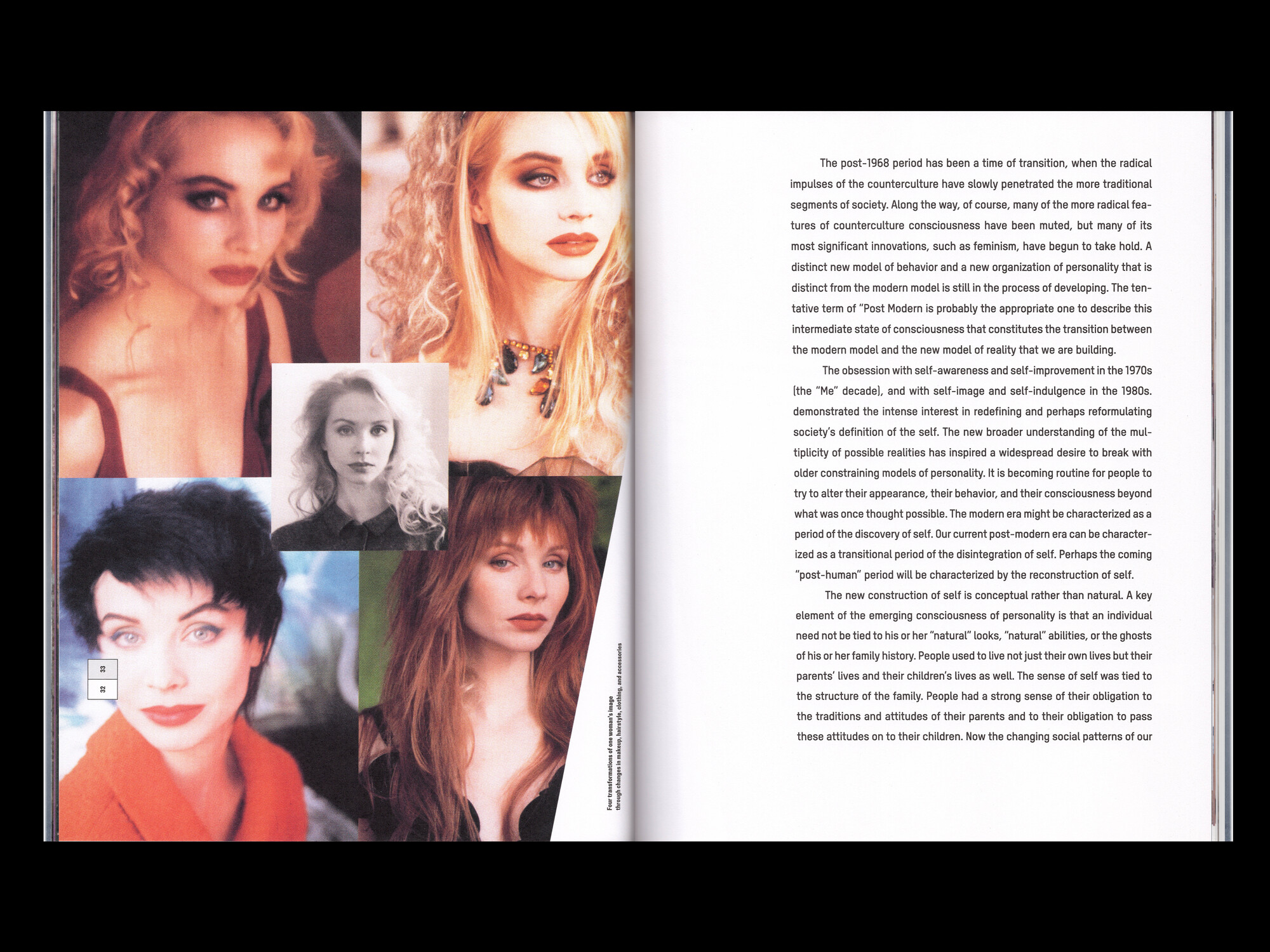
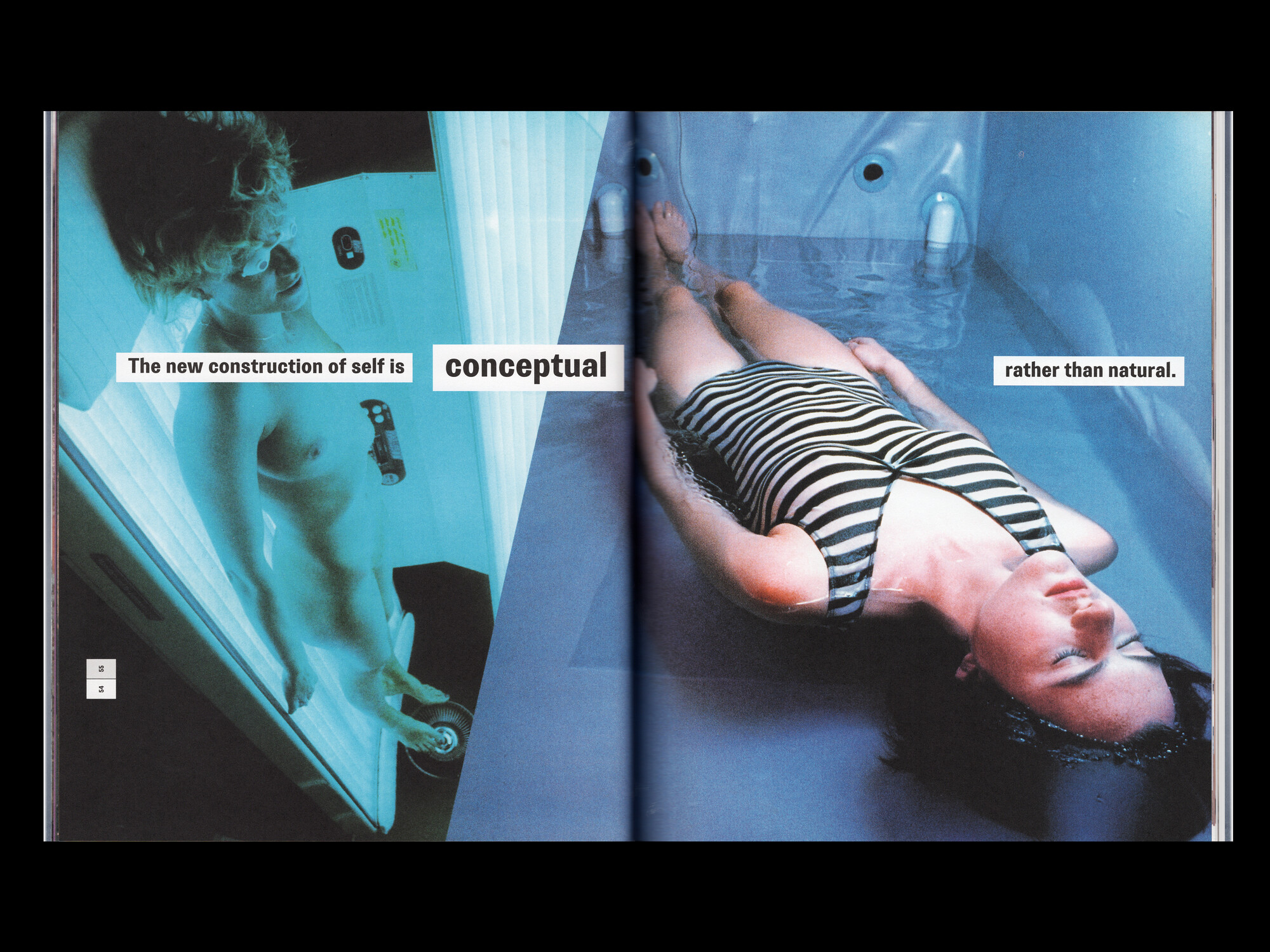
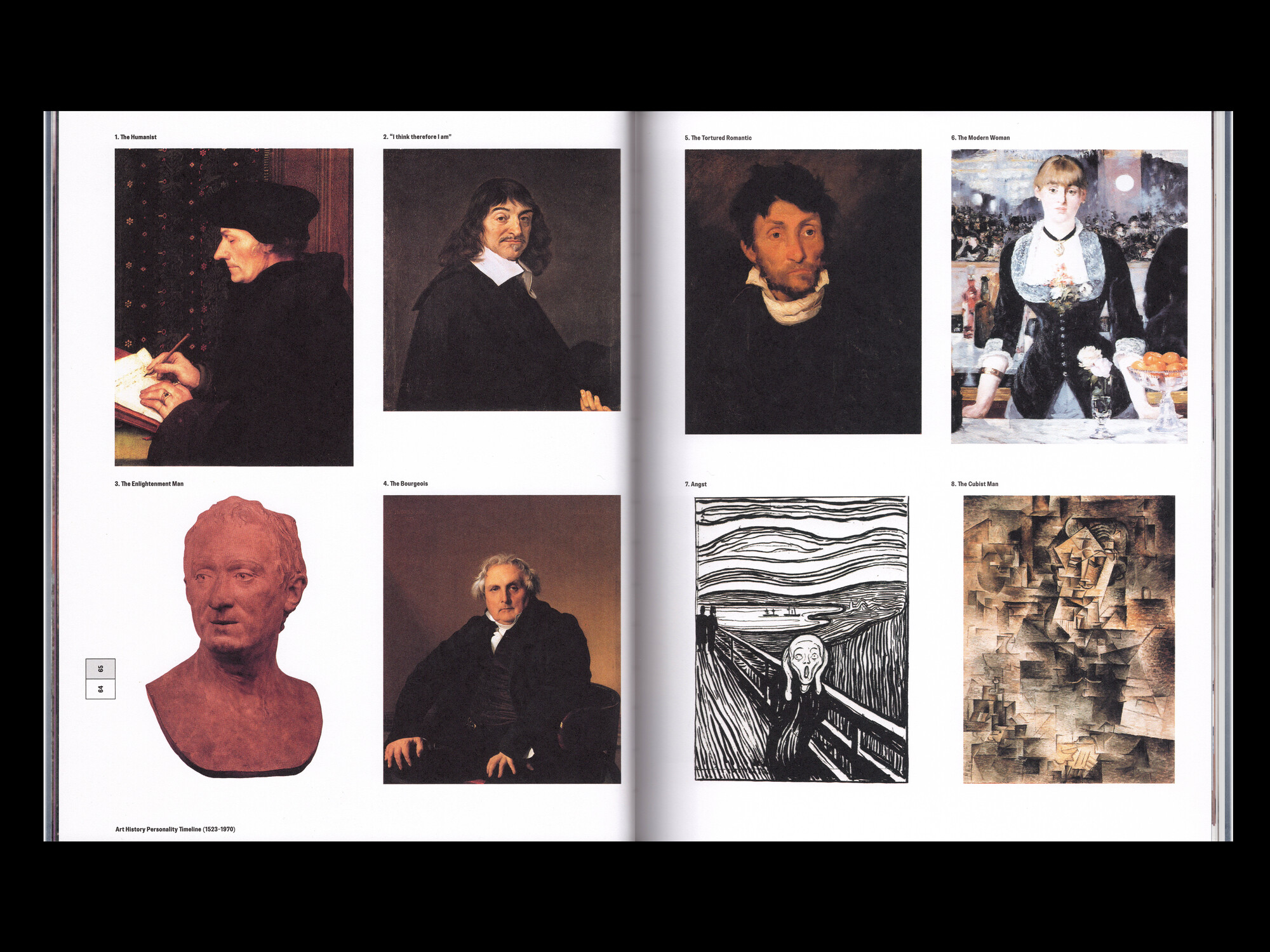
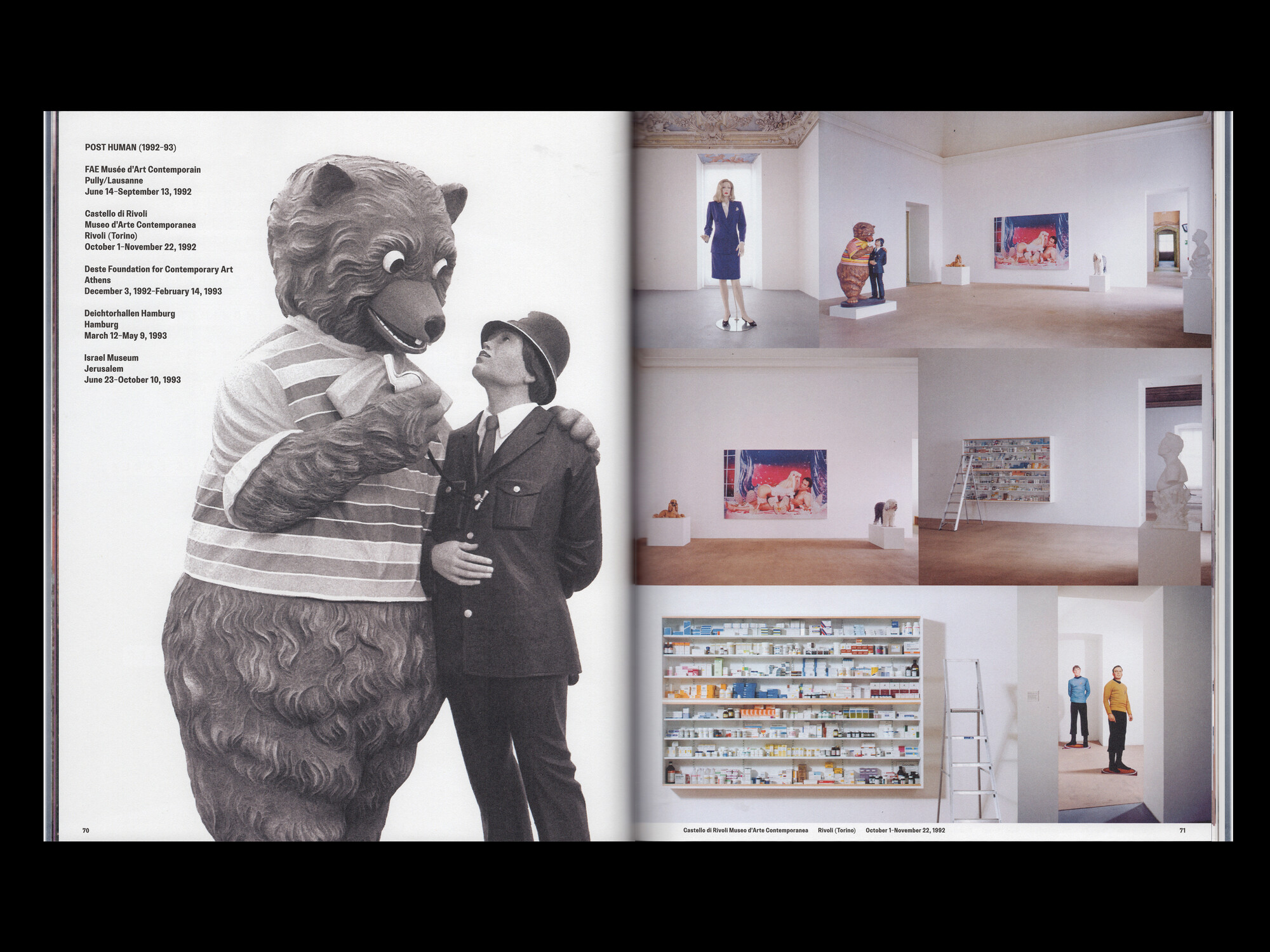
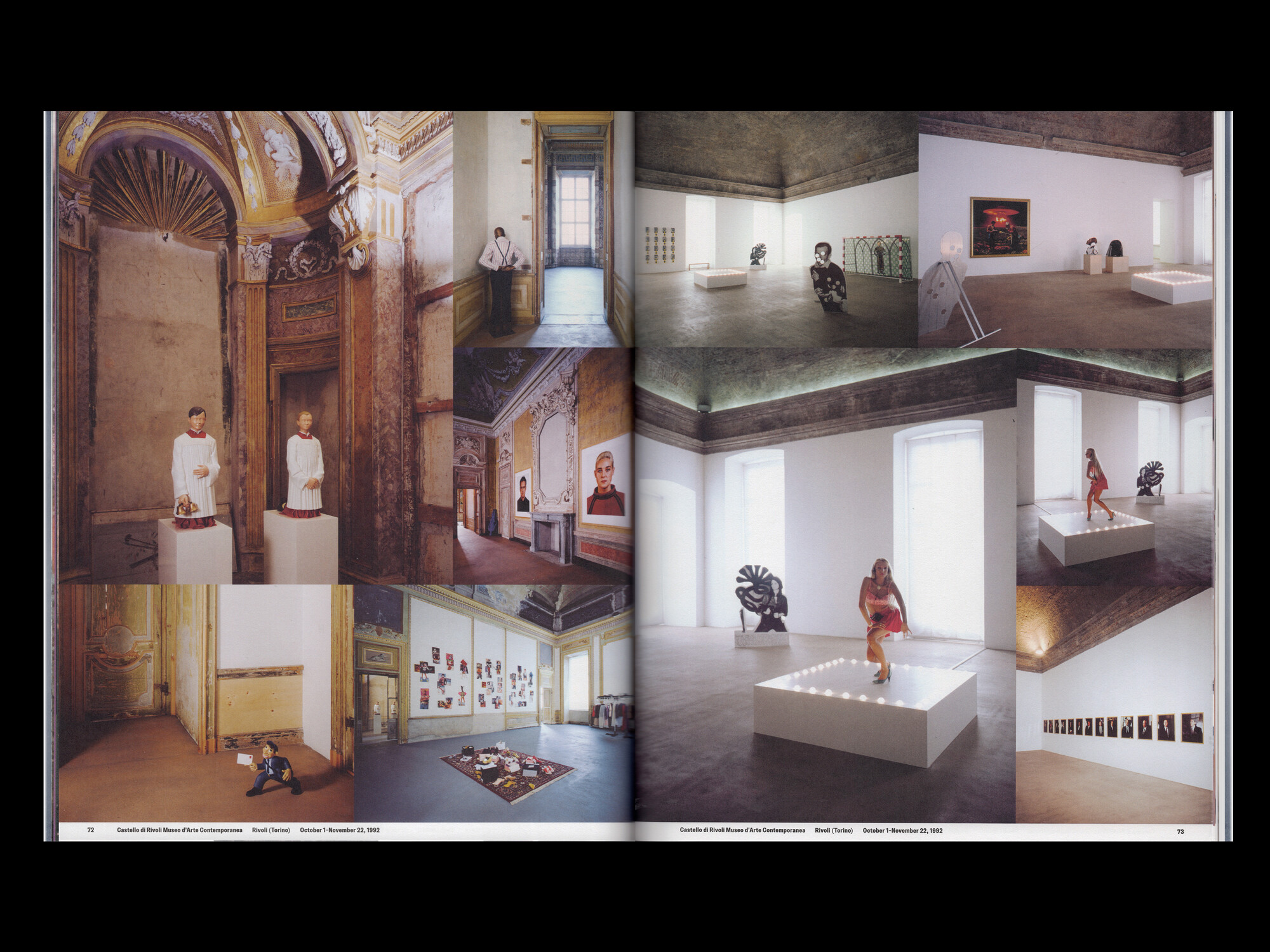
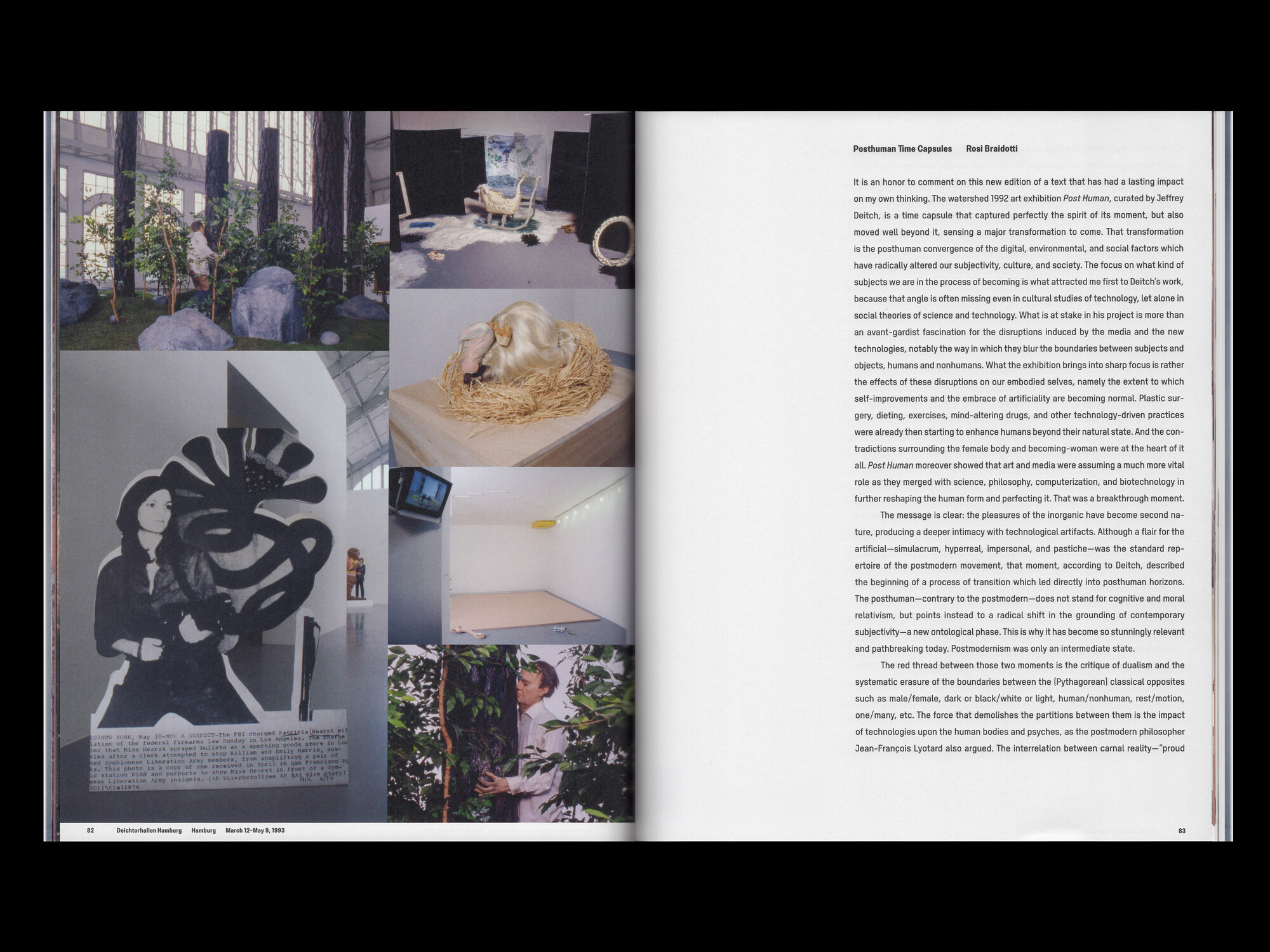
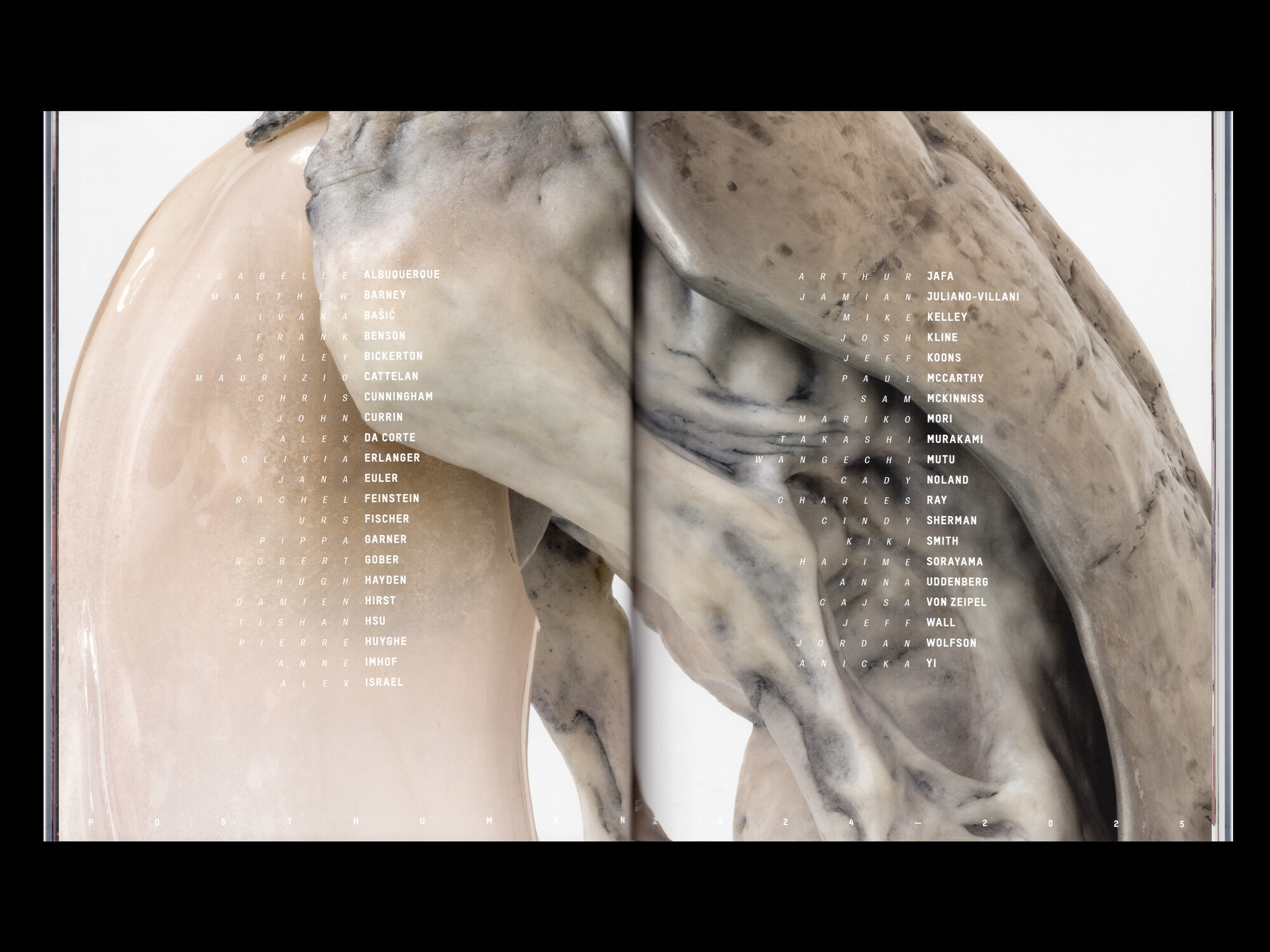
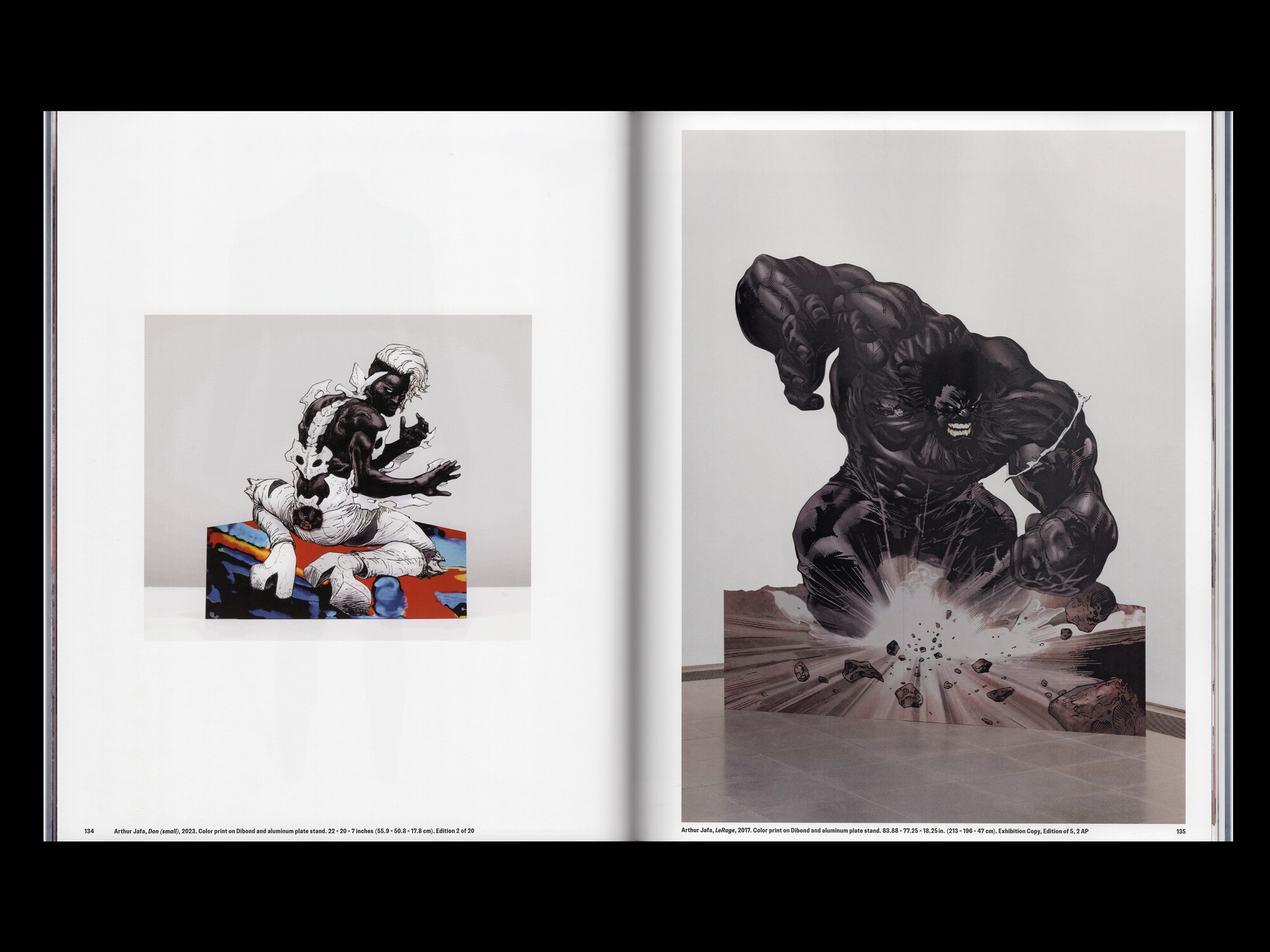
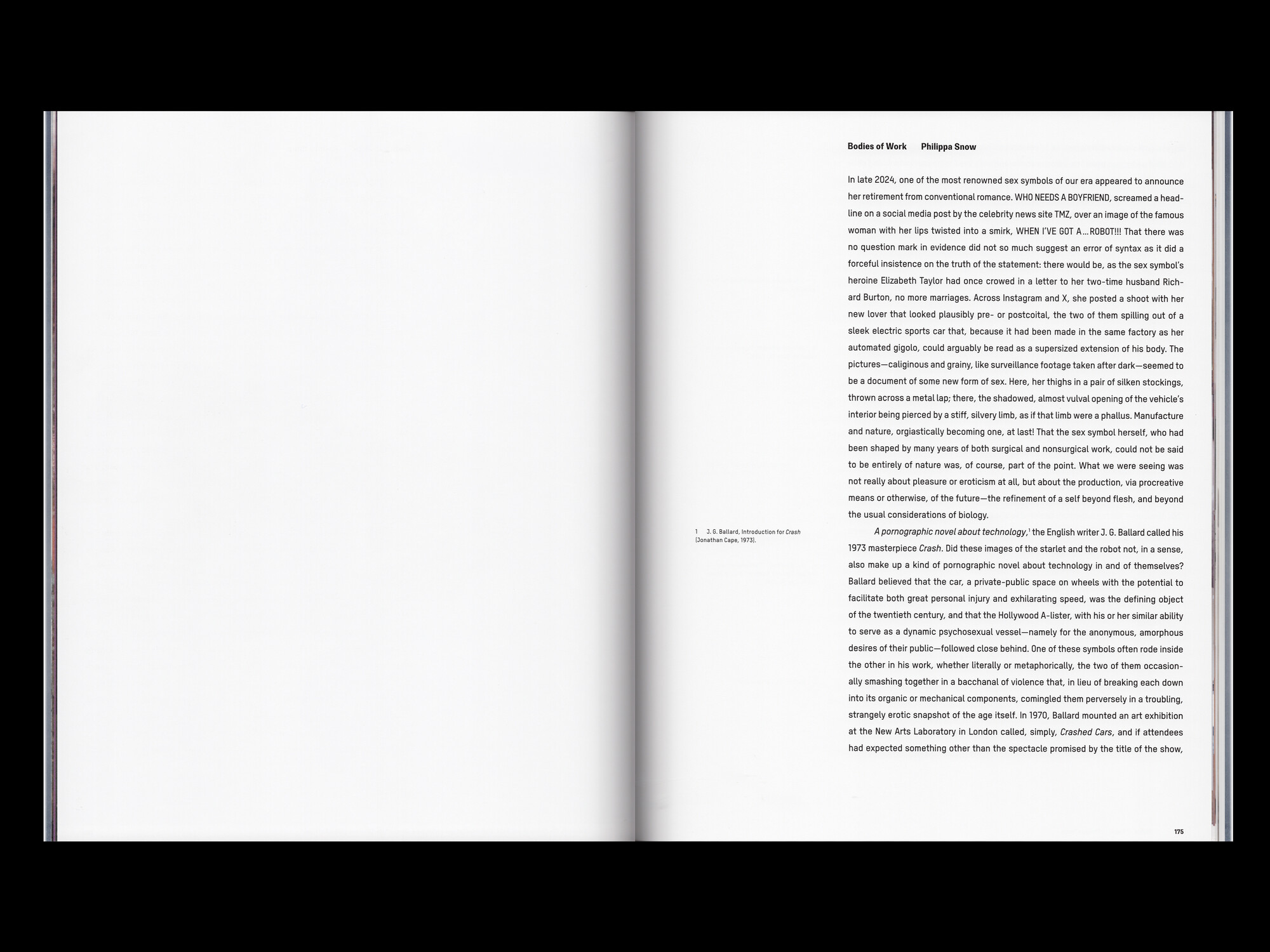
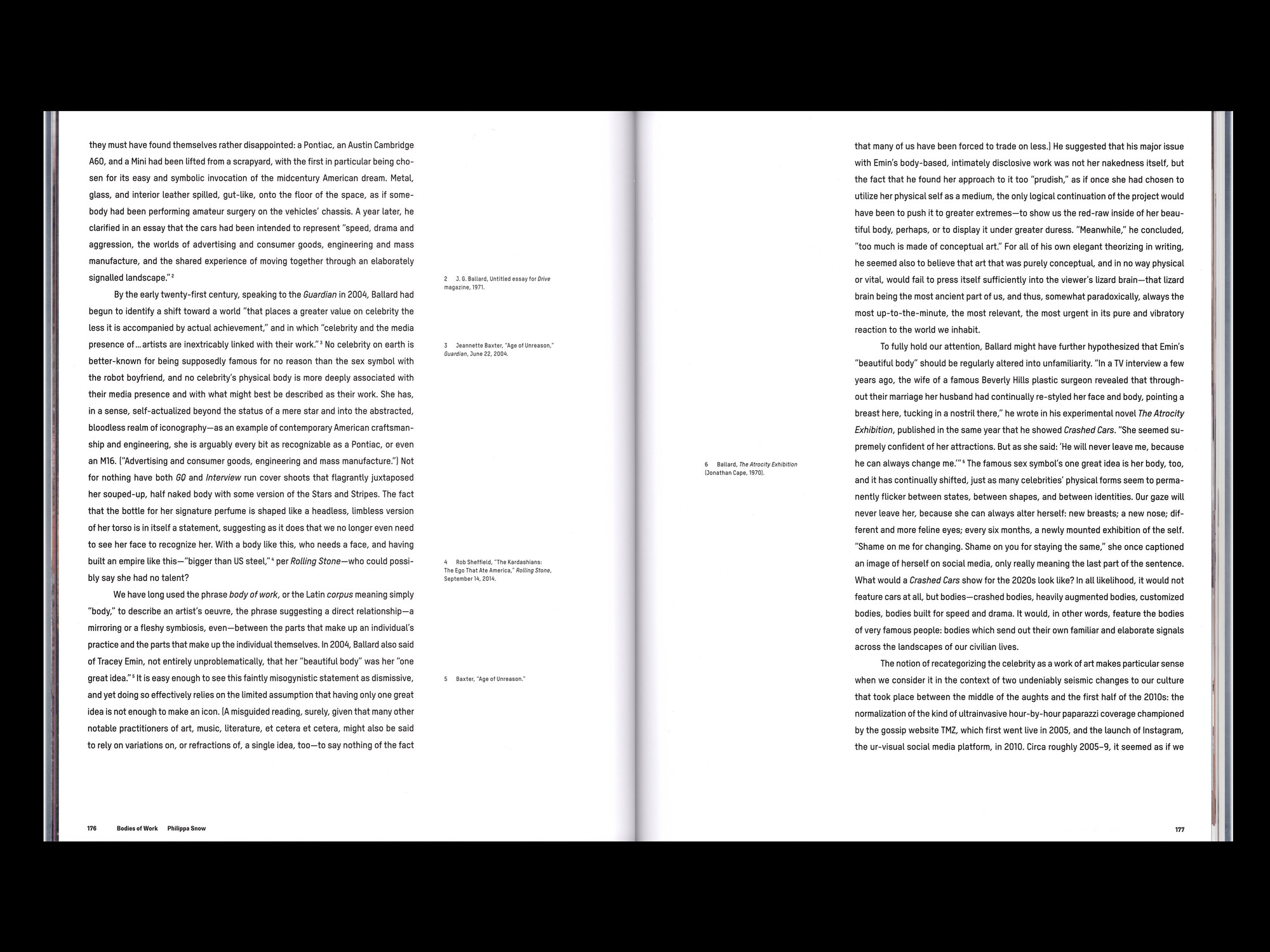
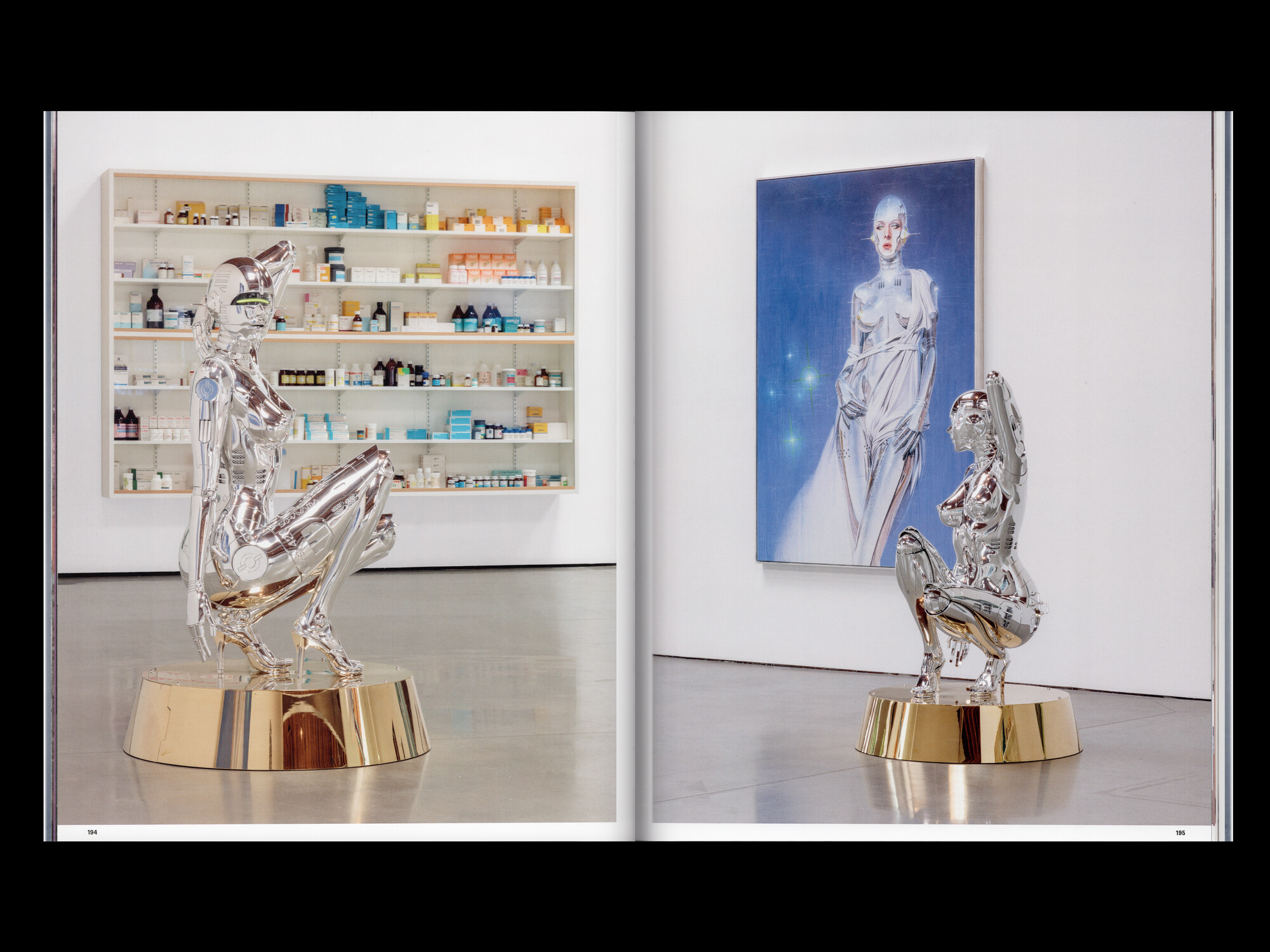
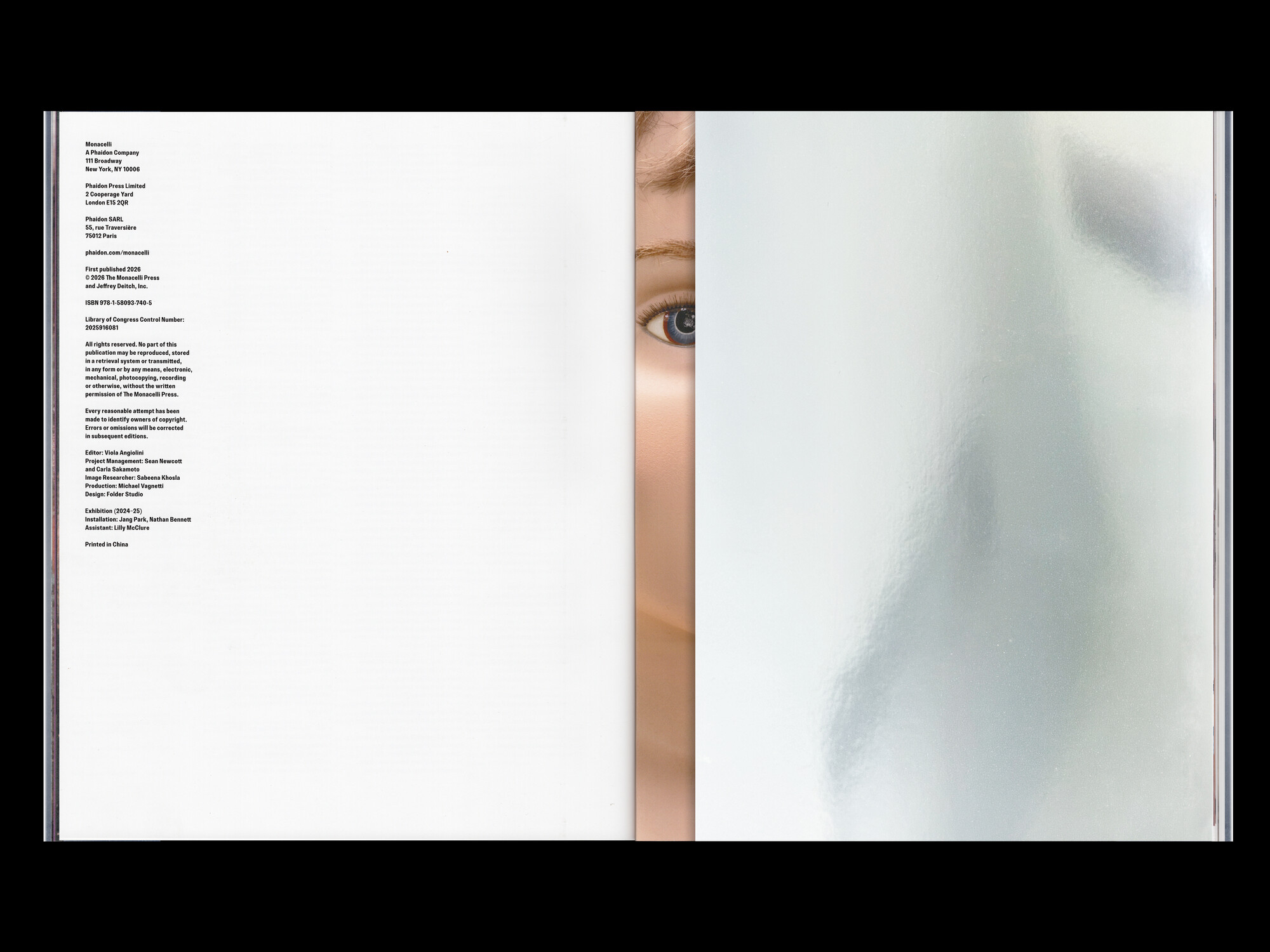
Post Human documents the 2024 revival of Jeffrey Deitch’s foundational 1992 exhibition. The original exhibition featured thirty-six artists working at the intersection of the body and technology and helped set the agenda for 1990s art discourse. The 2024 exhibition brings original participants into dial ogue with a new generation, expanding the discussion to contemporary concepts of technology and the body.
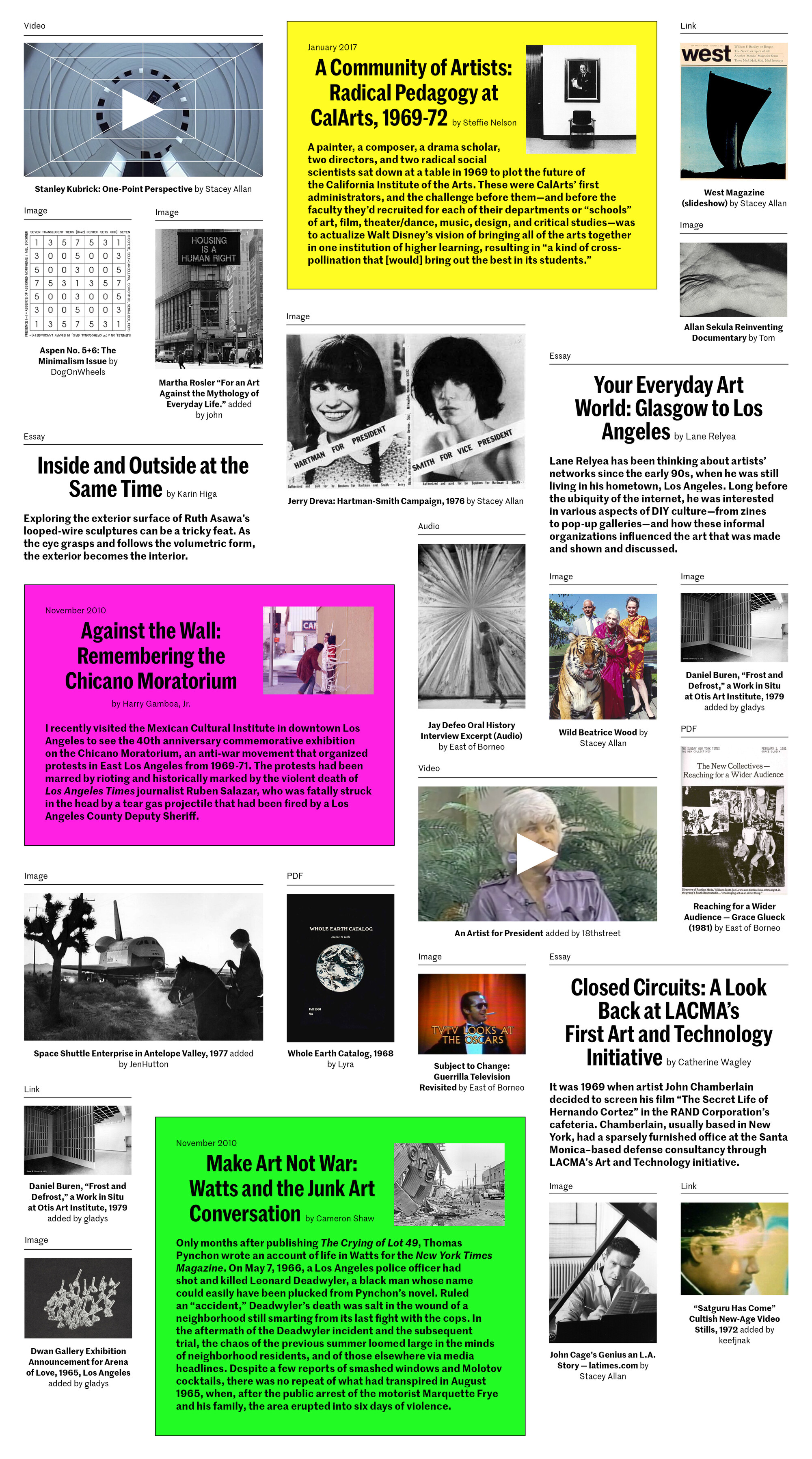
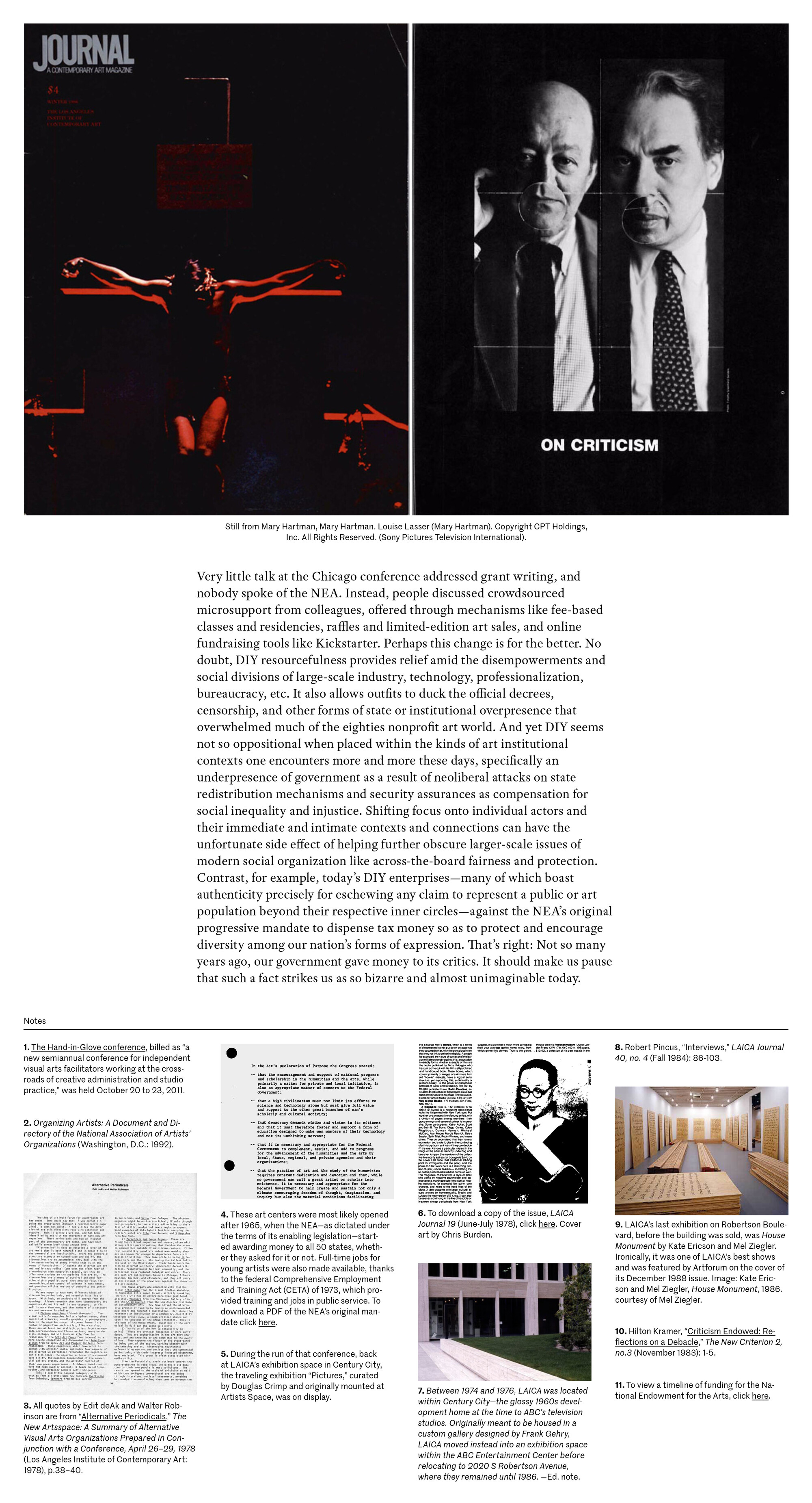
Website for East of Borneo, a collaborative online magazine dedicated to contemporary art and its history in Los Angeles. Hosts essays, interviews, and an open-access archive of images and documents contributed by the public. Visit site ⎘
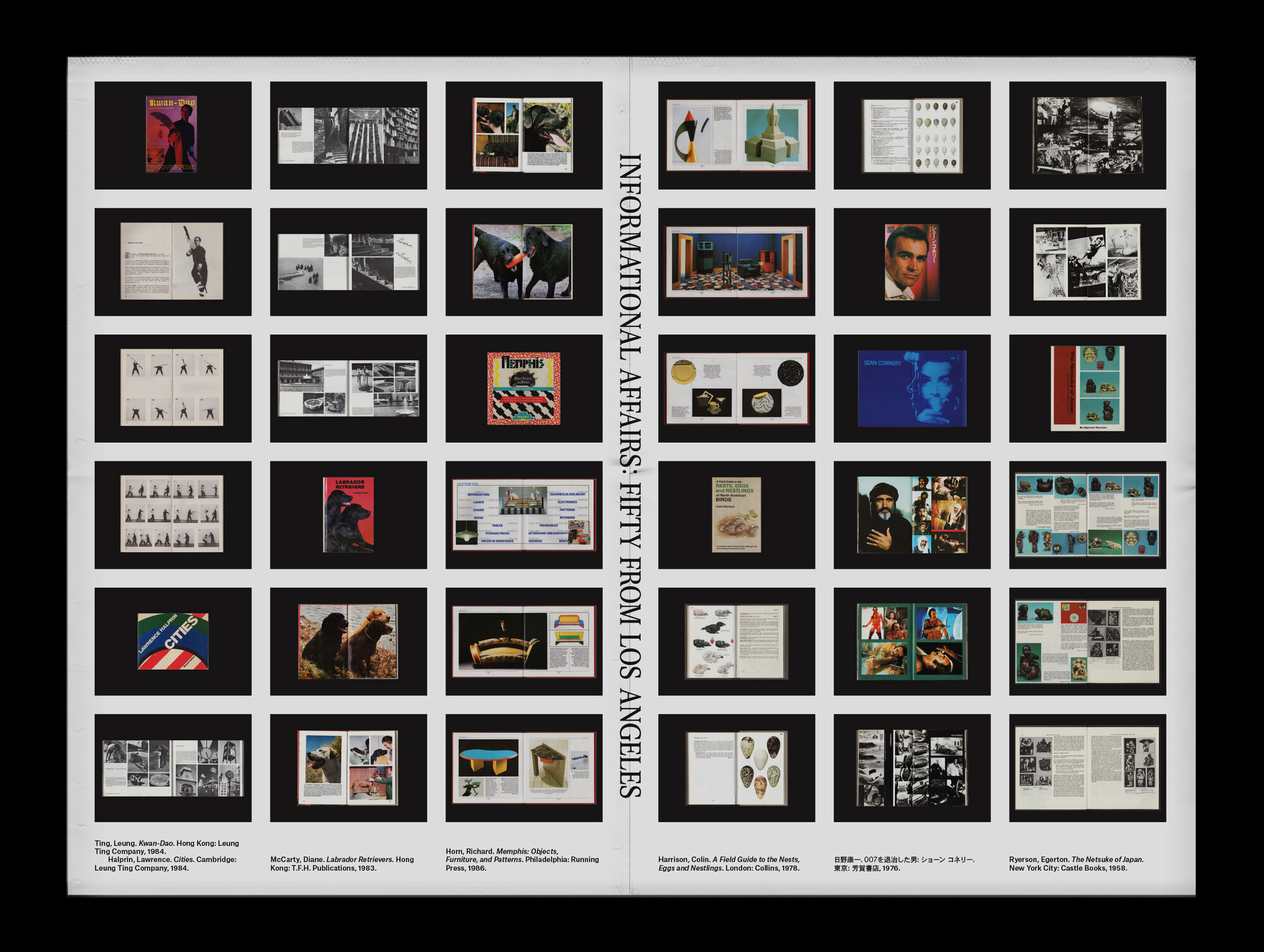
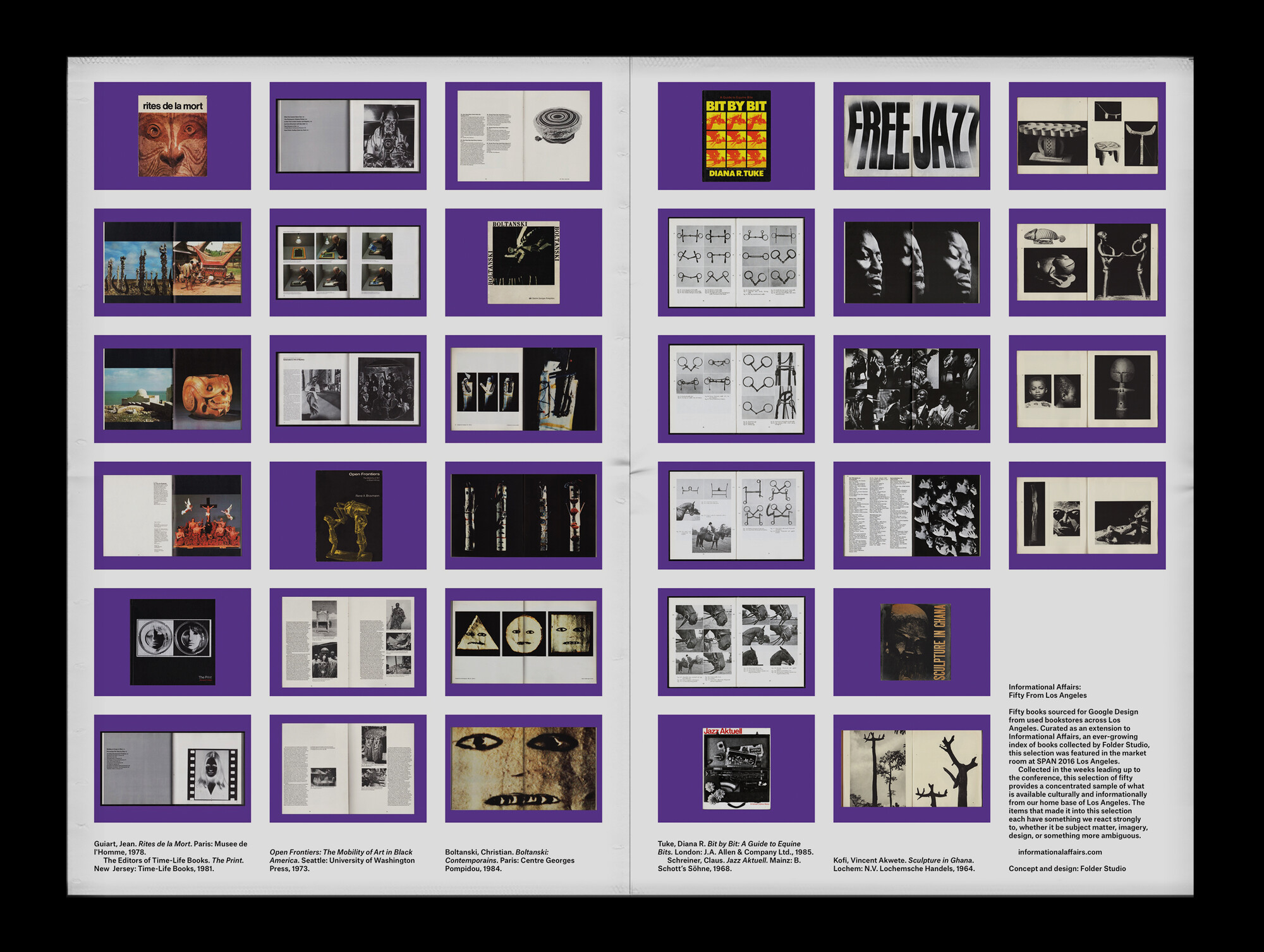
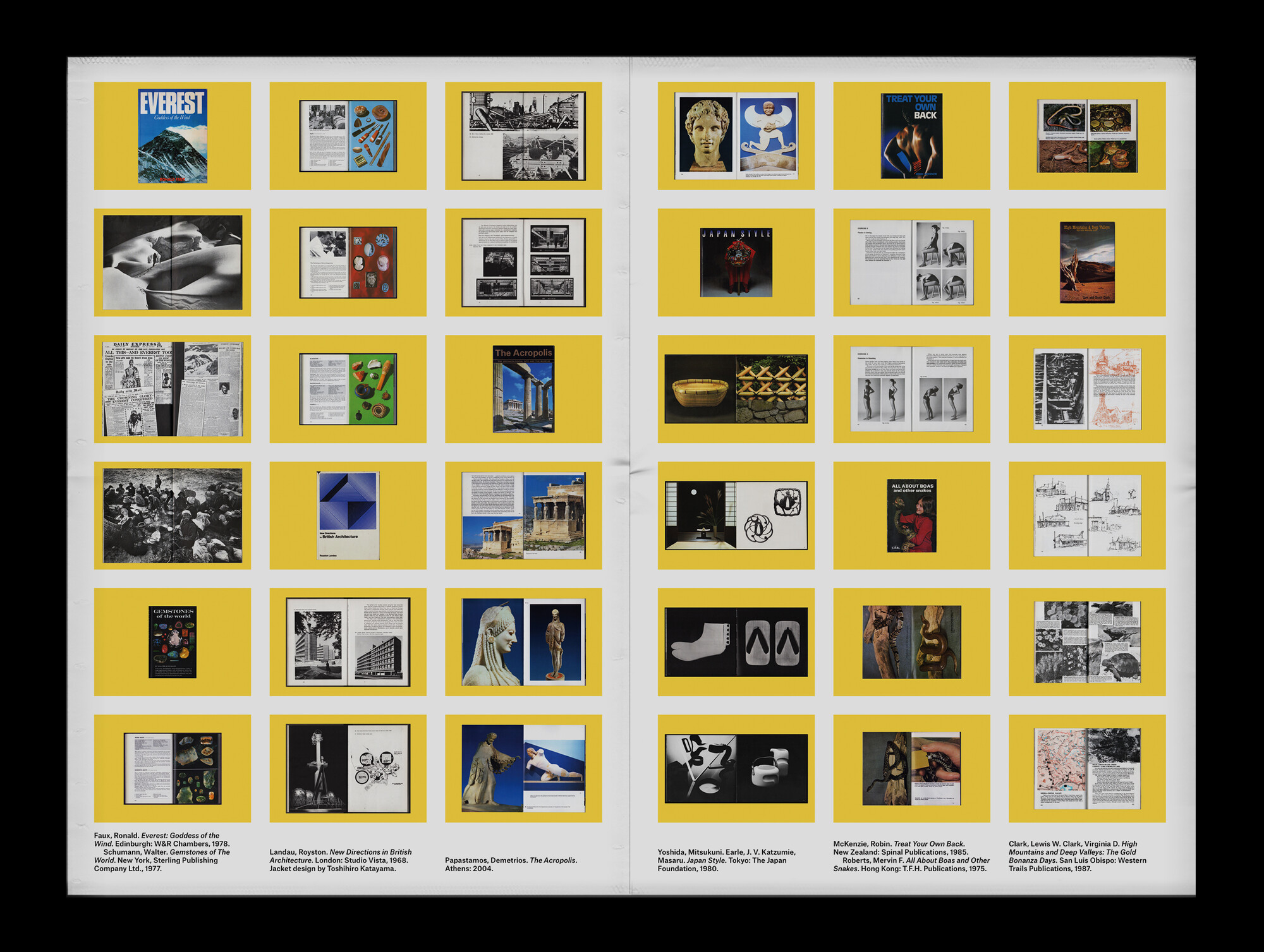
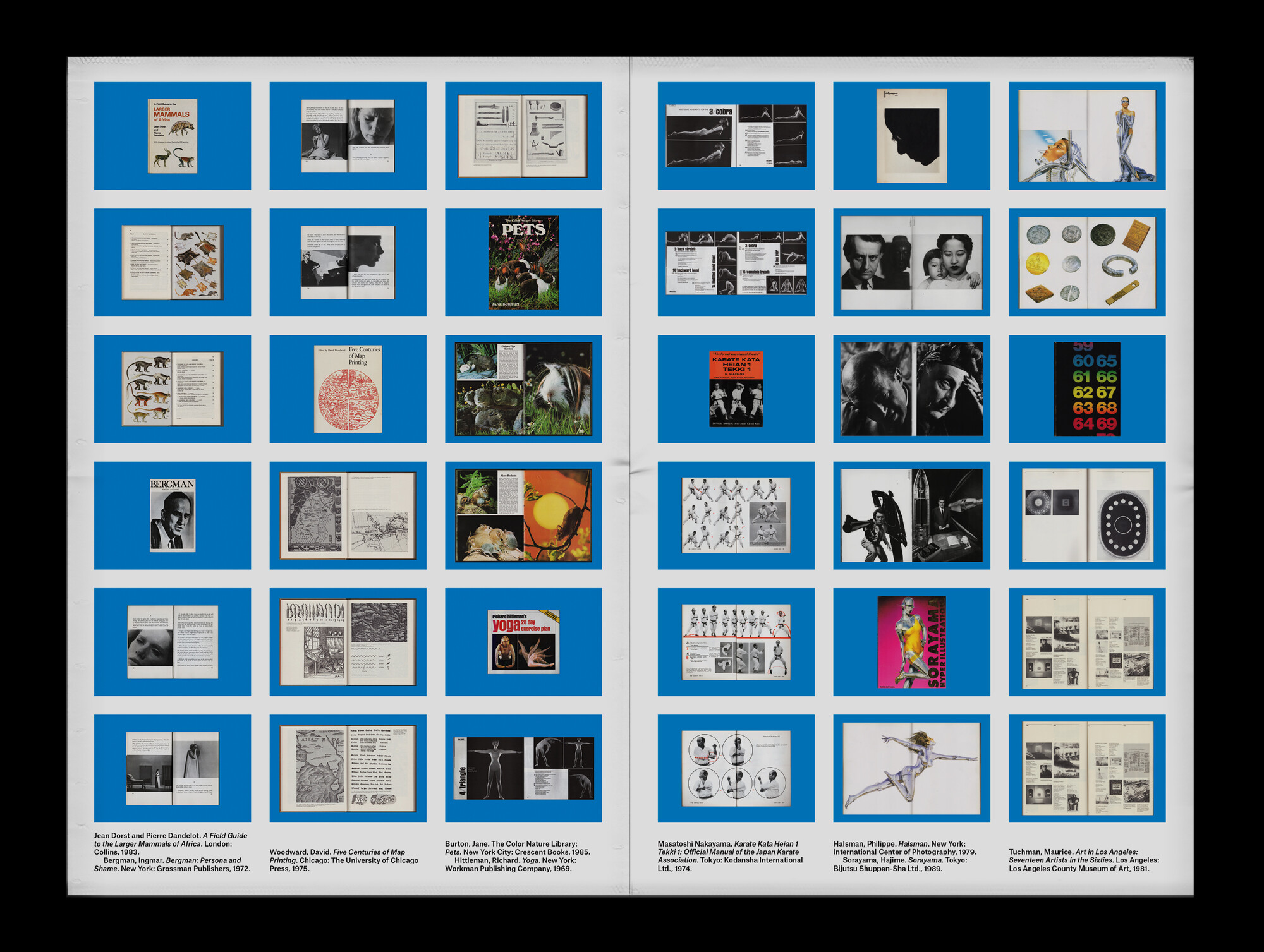
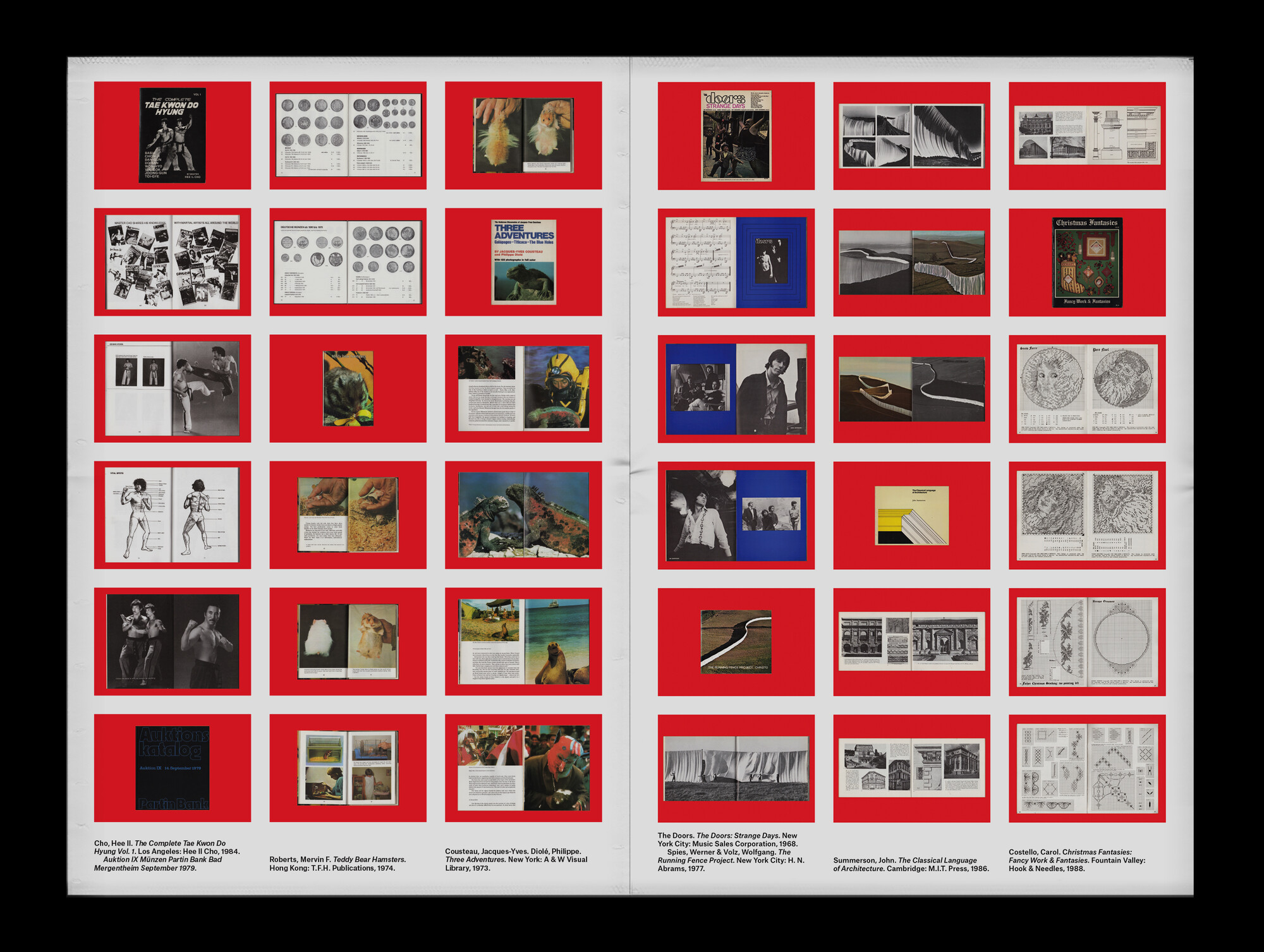
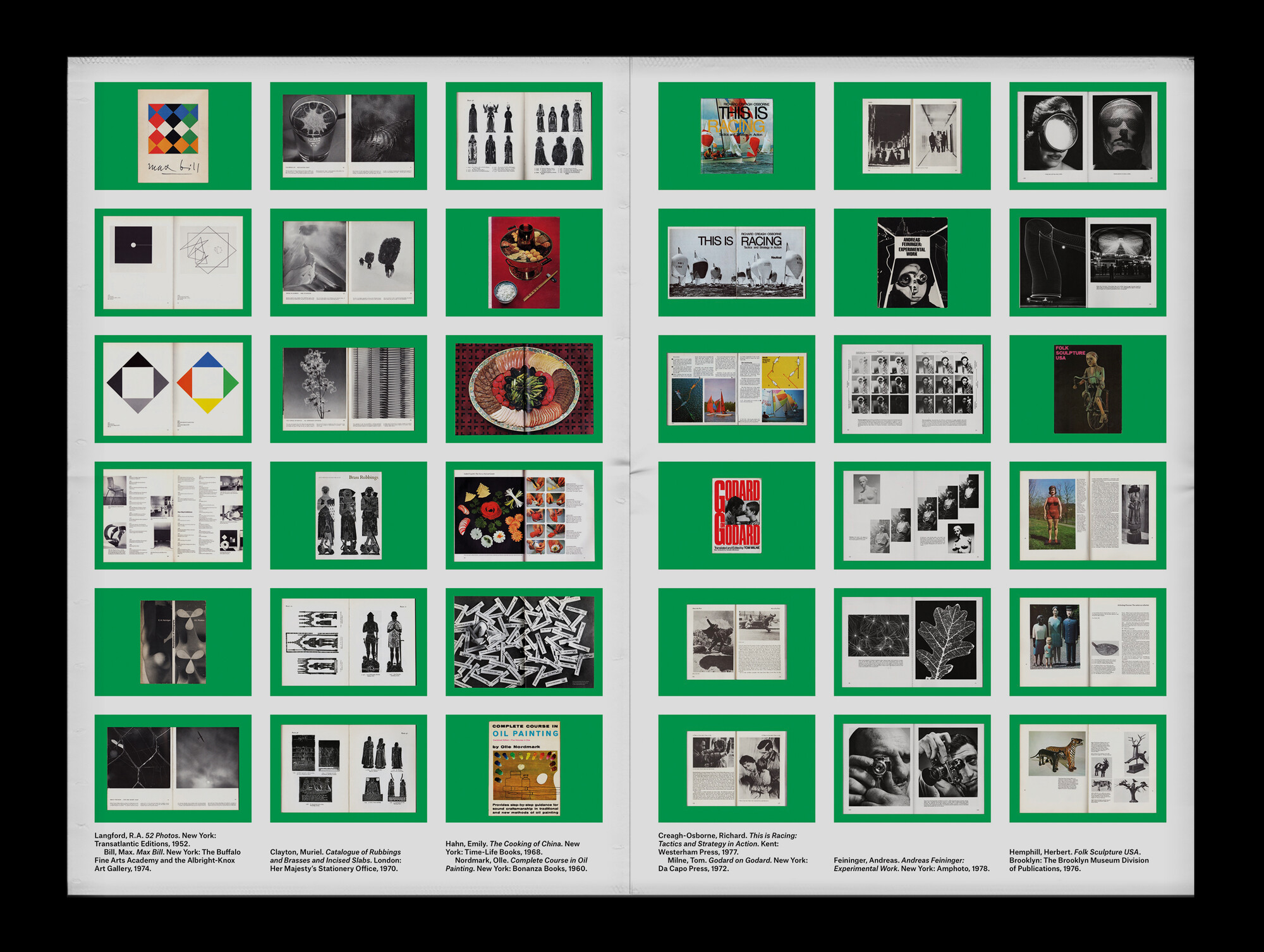
Newsprint publication for Google Design featuring fifty books sourced from used bookstores across Los Angeles. Produced for SPAN 2016 Los Angeles as part of the studio’s ongoing Informational Affairs series, the selection reflects the city’s layered design culture through its printed matter. More info ⎘
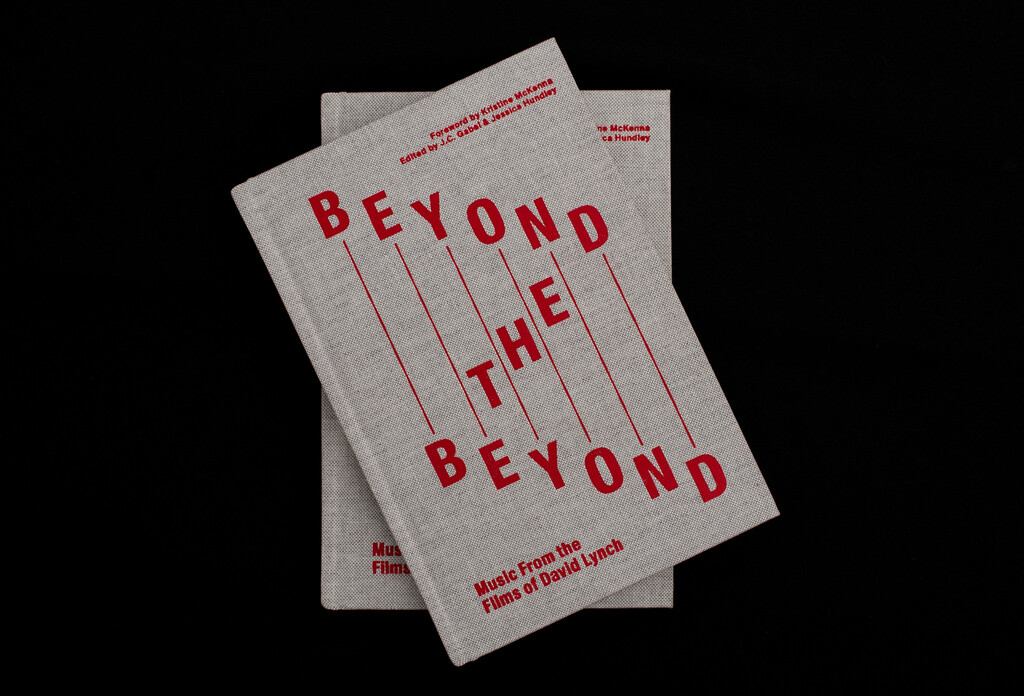
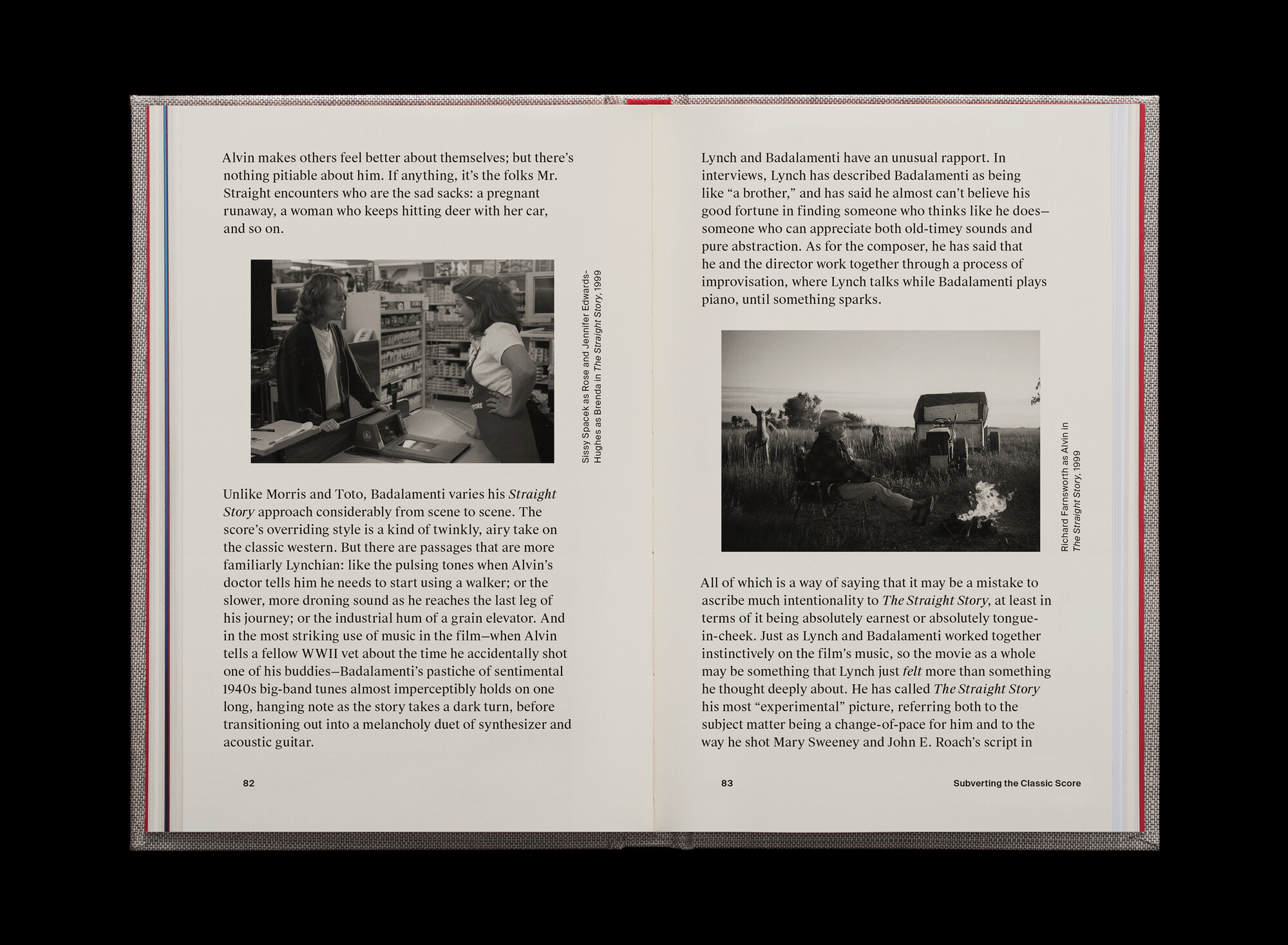
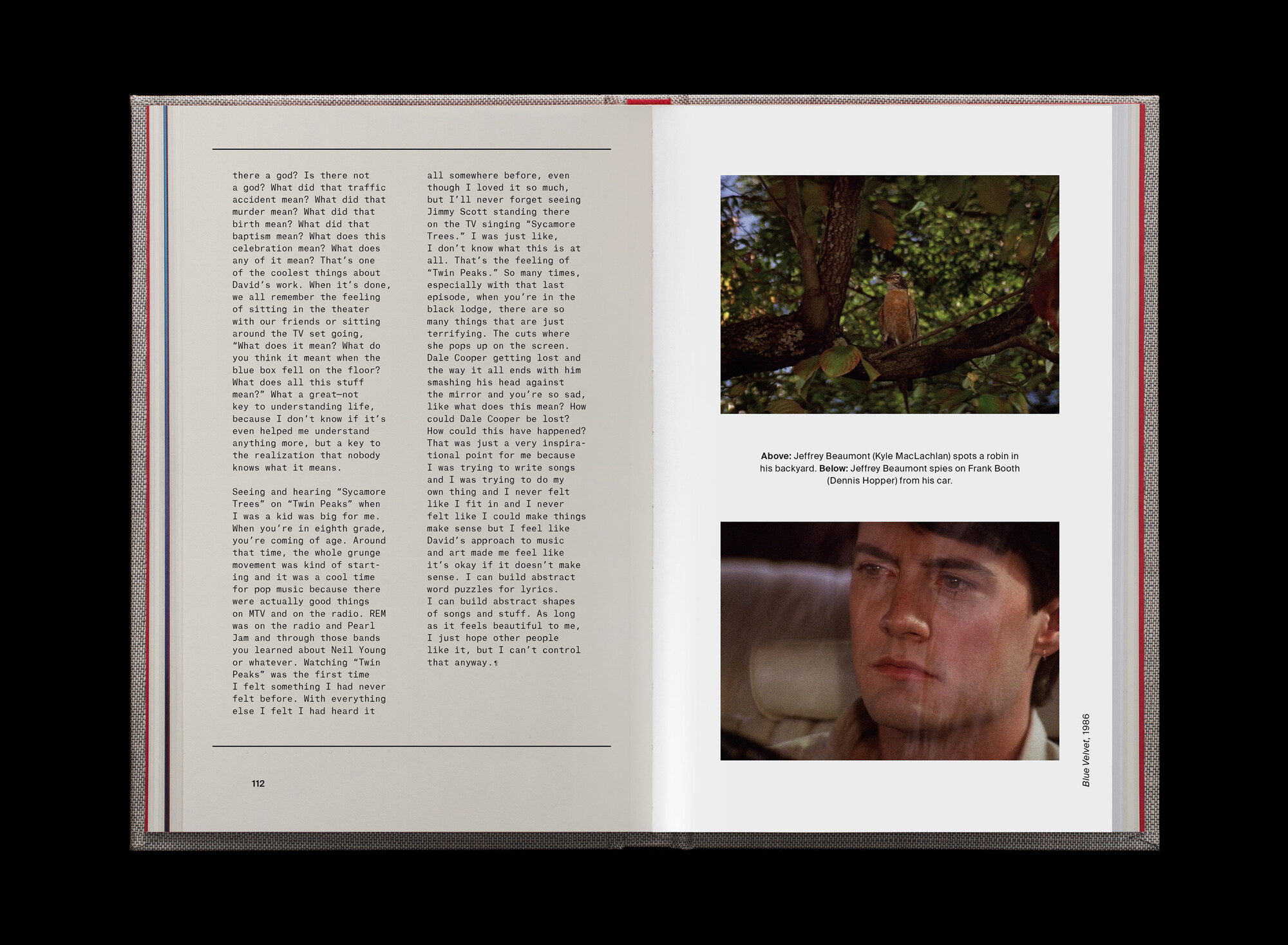
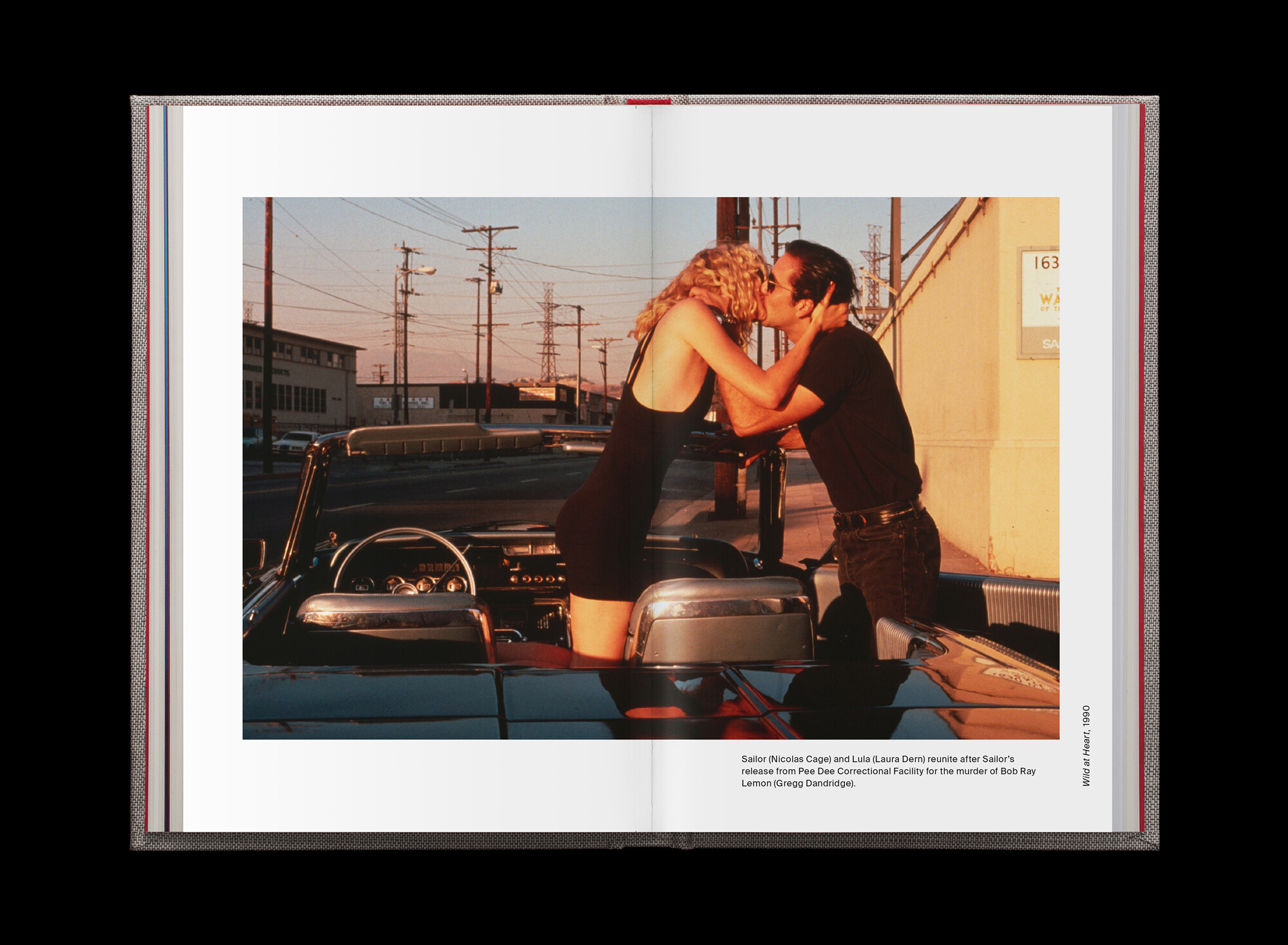
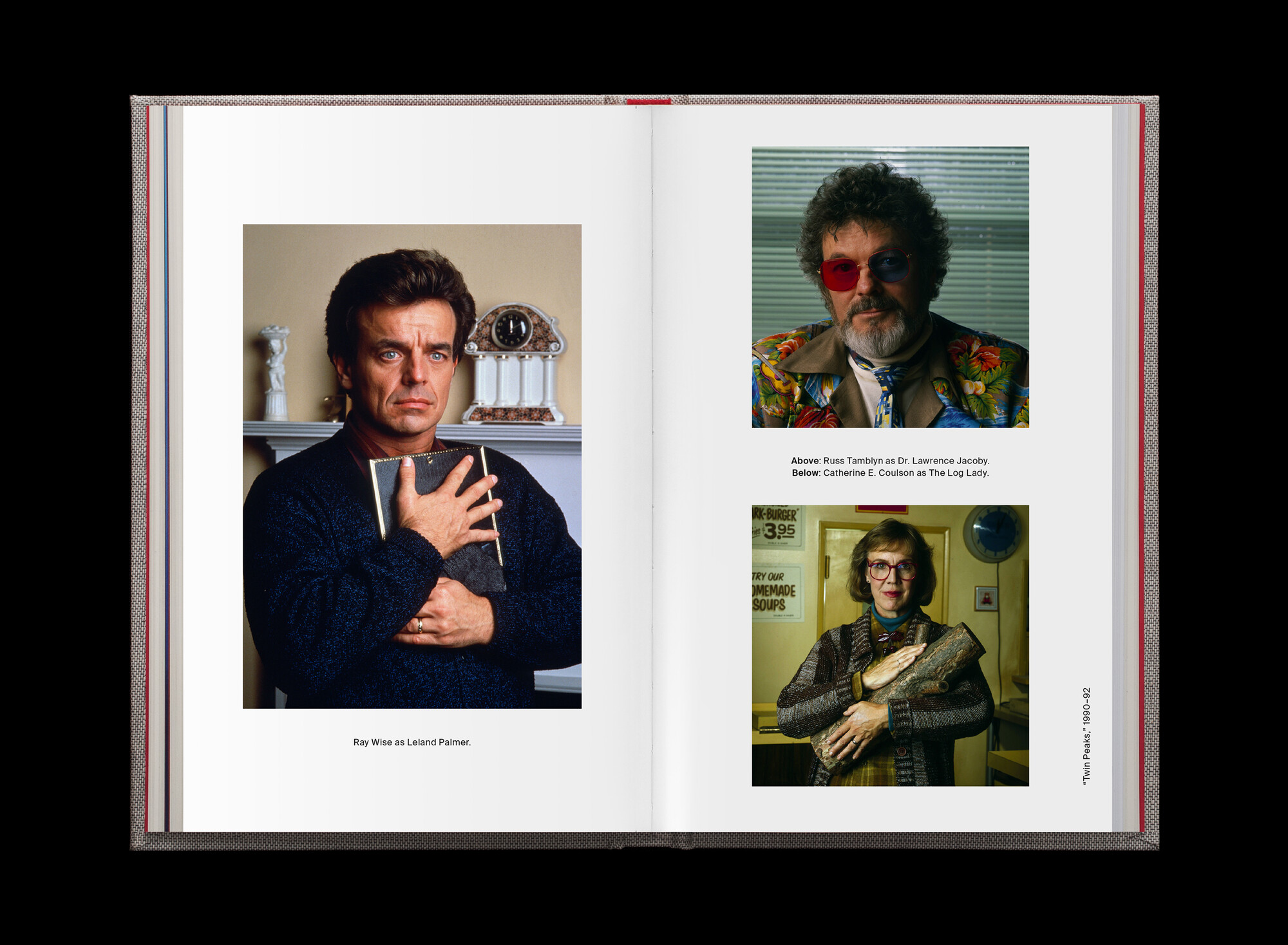
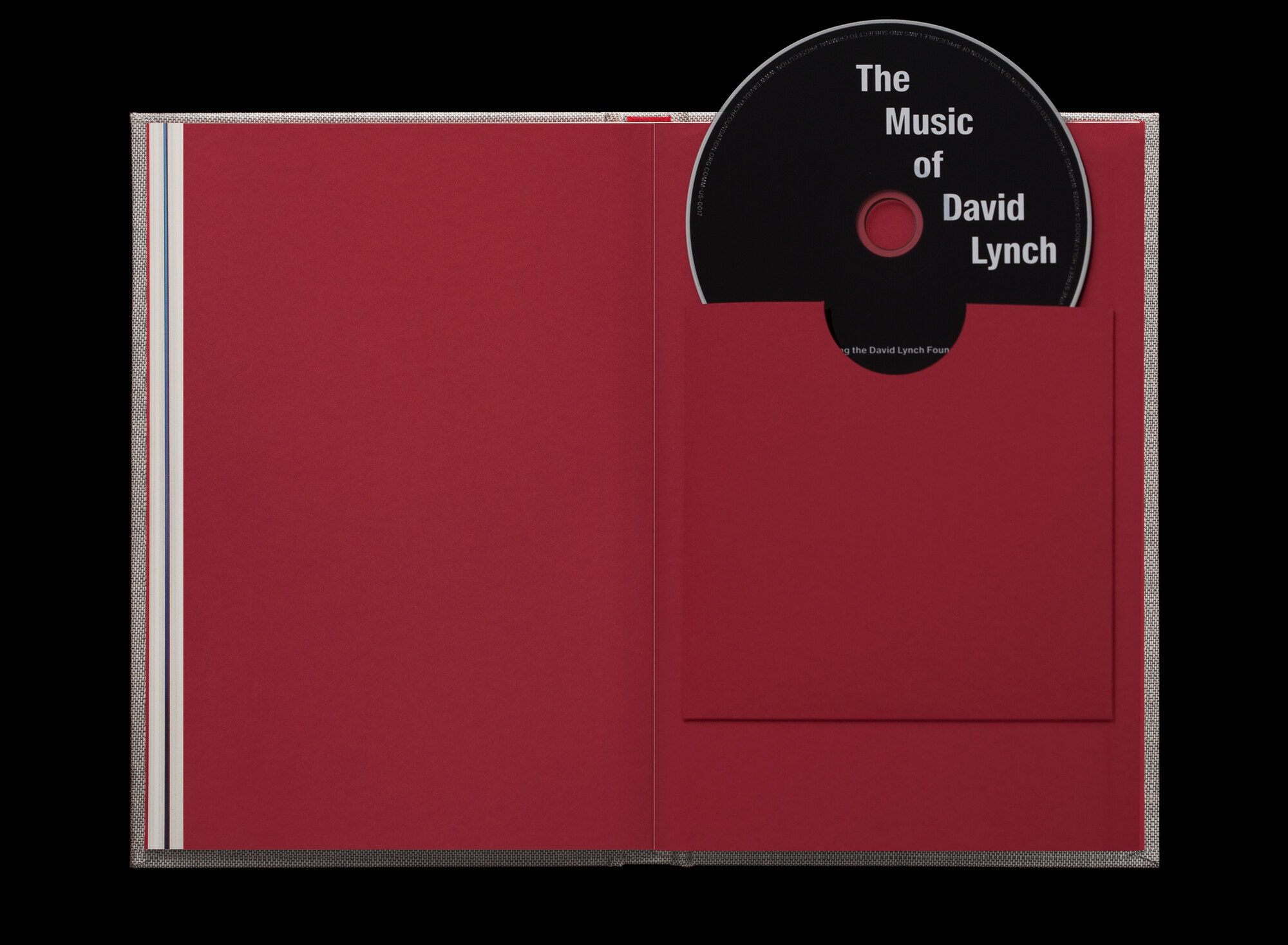
Book for the David Lynch Foundation featuring essays and interviews on the role of music in David Lynch’s creative practice. Published as a companion to The Music of David Lynch concert event, connecting his work in film and sound through conversation, archival materials, and performance. More info ⎘
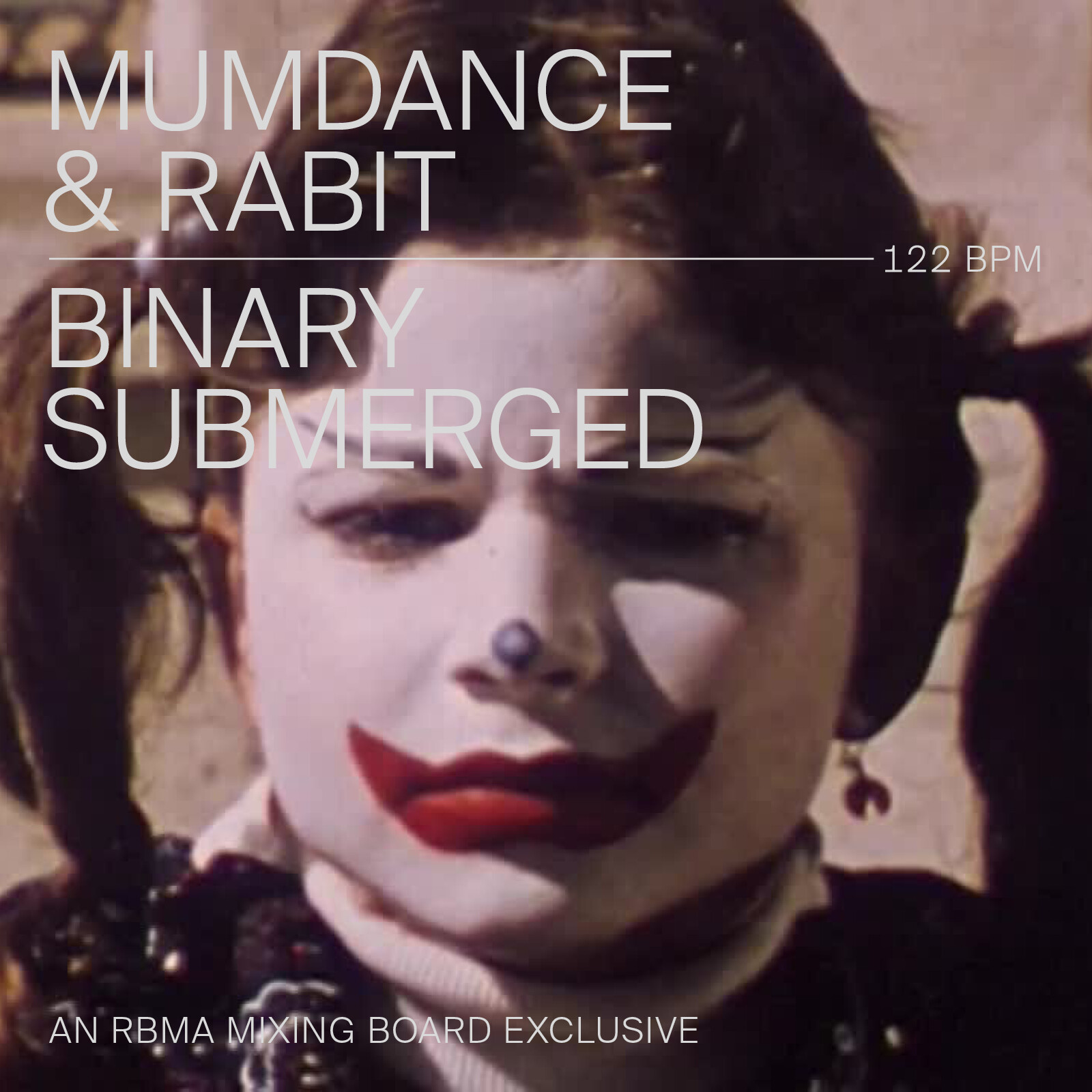
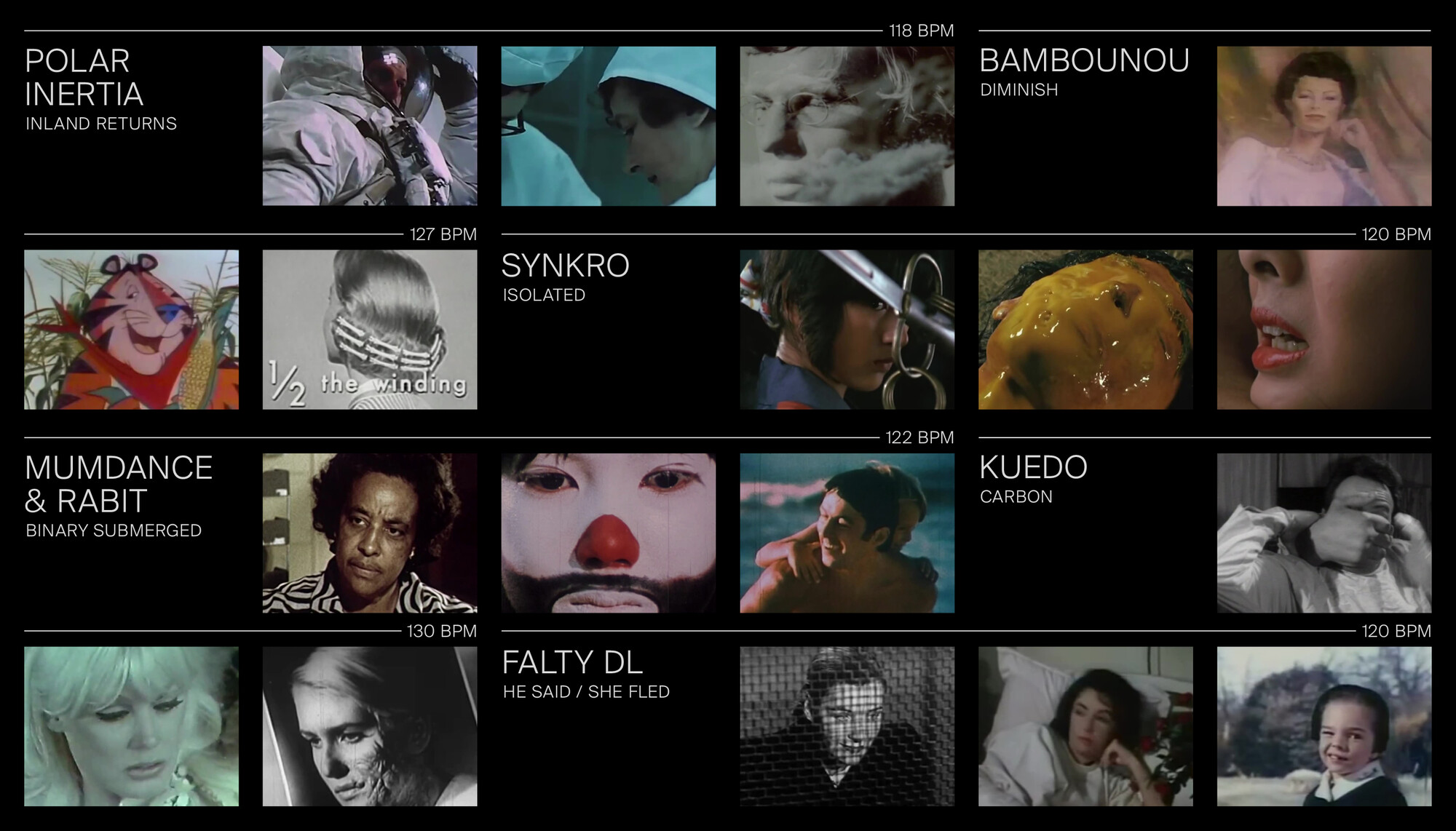
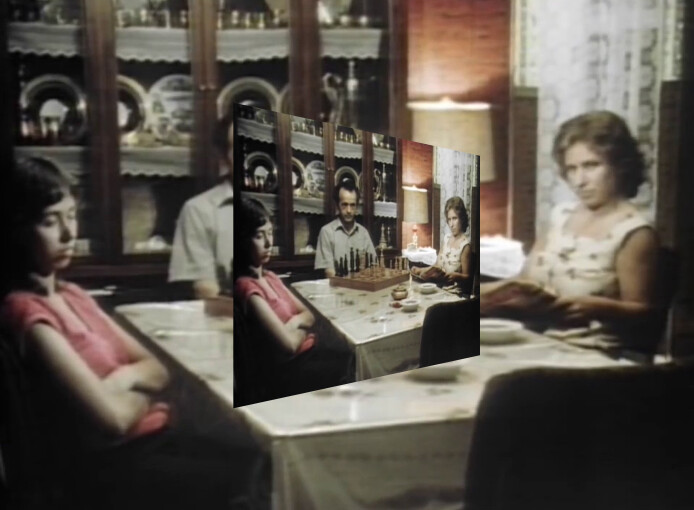
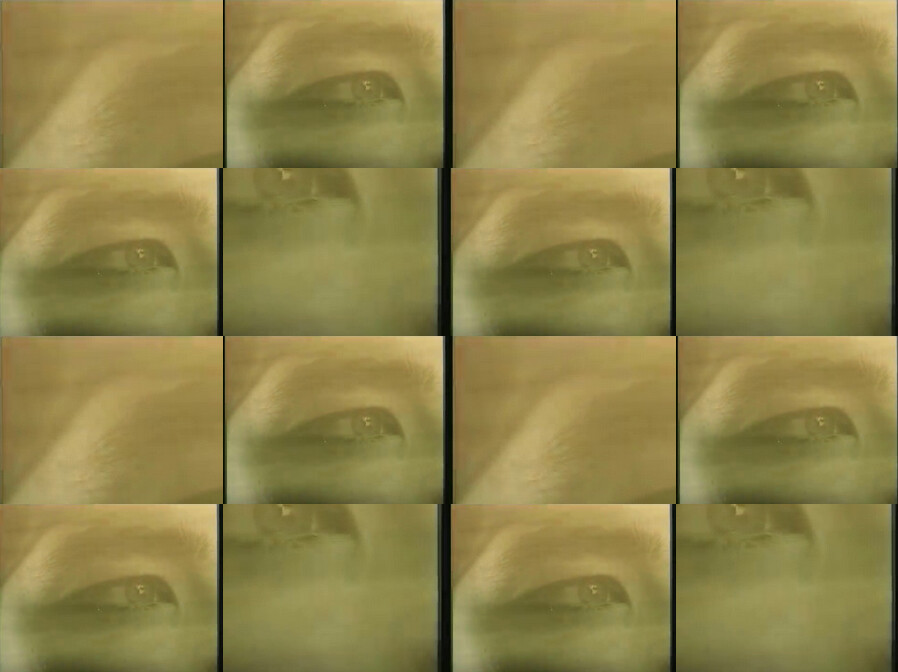
Interactive project for Red Bull Music Academy created in collaboration with ten electronic artists. Features tracks built from mixable stems that shift in tempo and mood, paired with public-domain footage reflecting the emotional range of each composition.
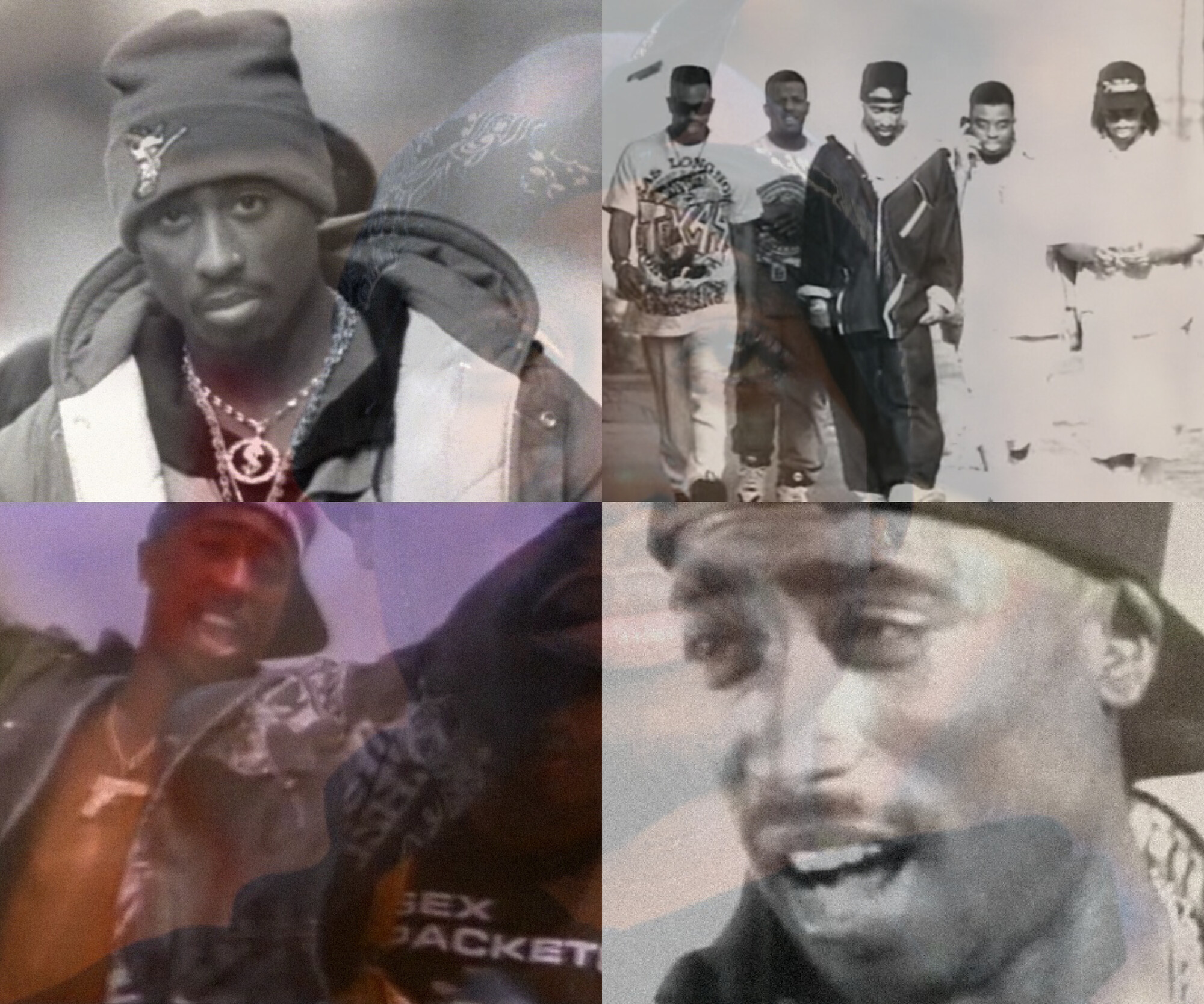
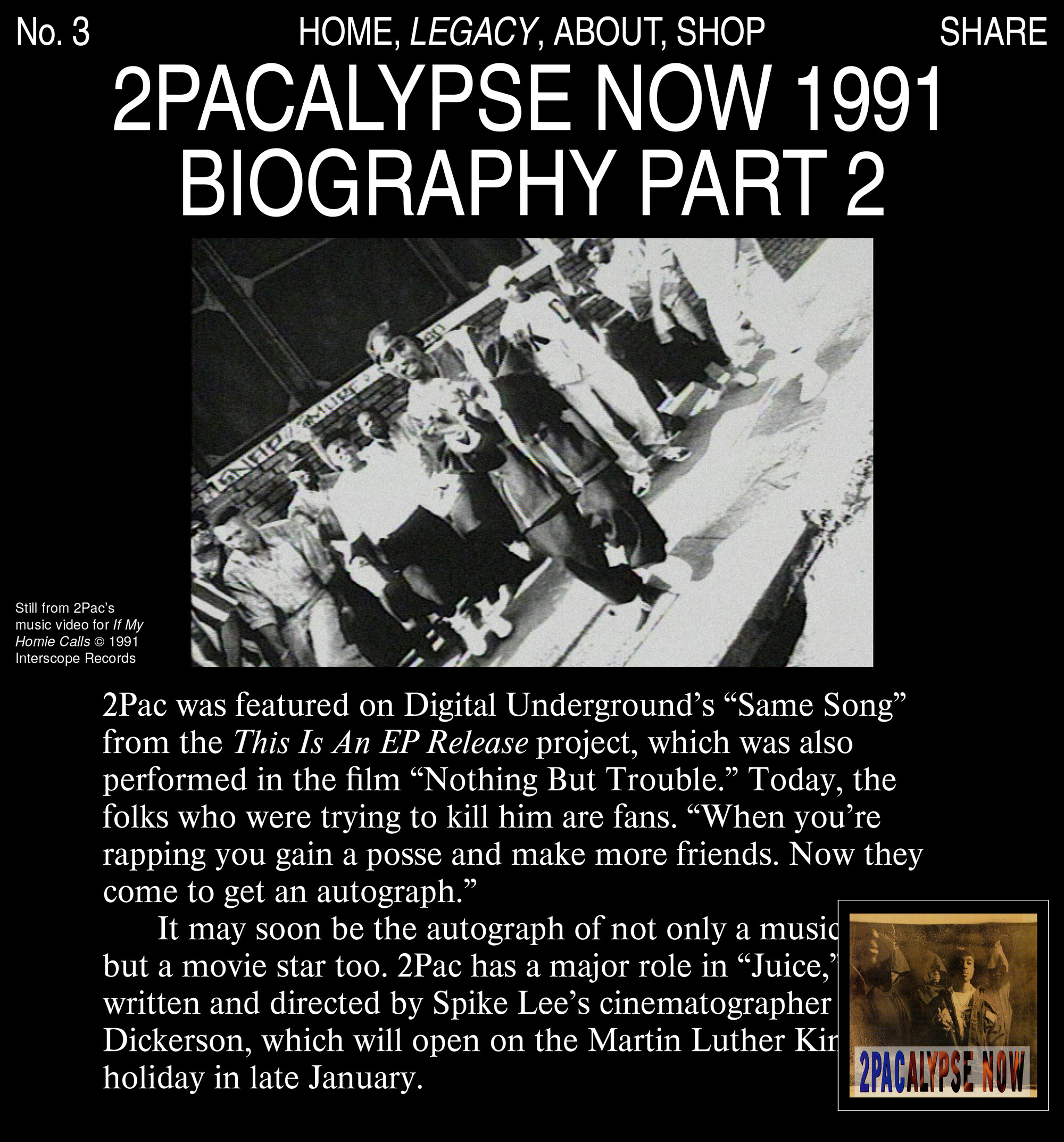
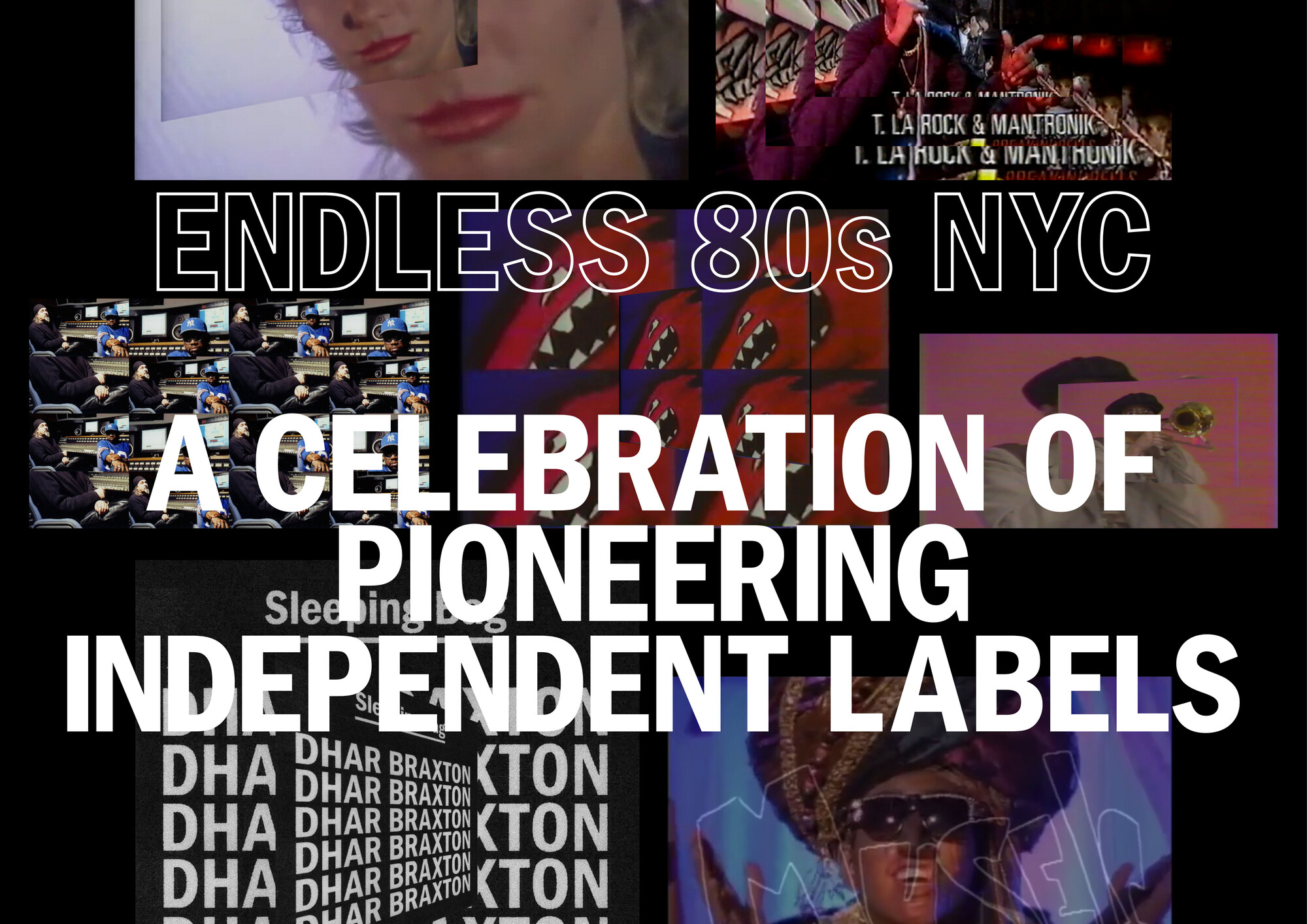
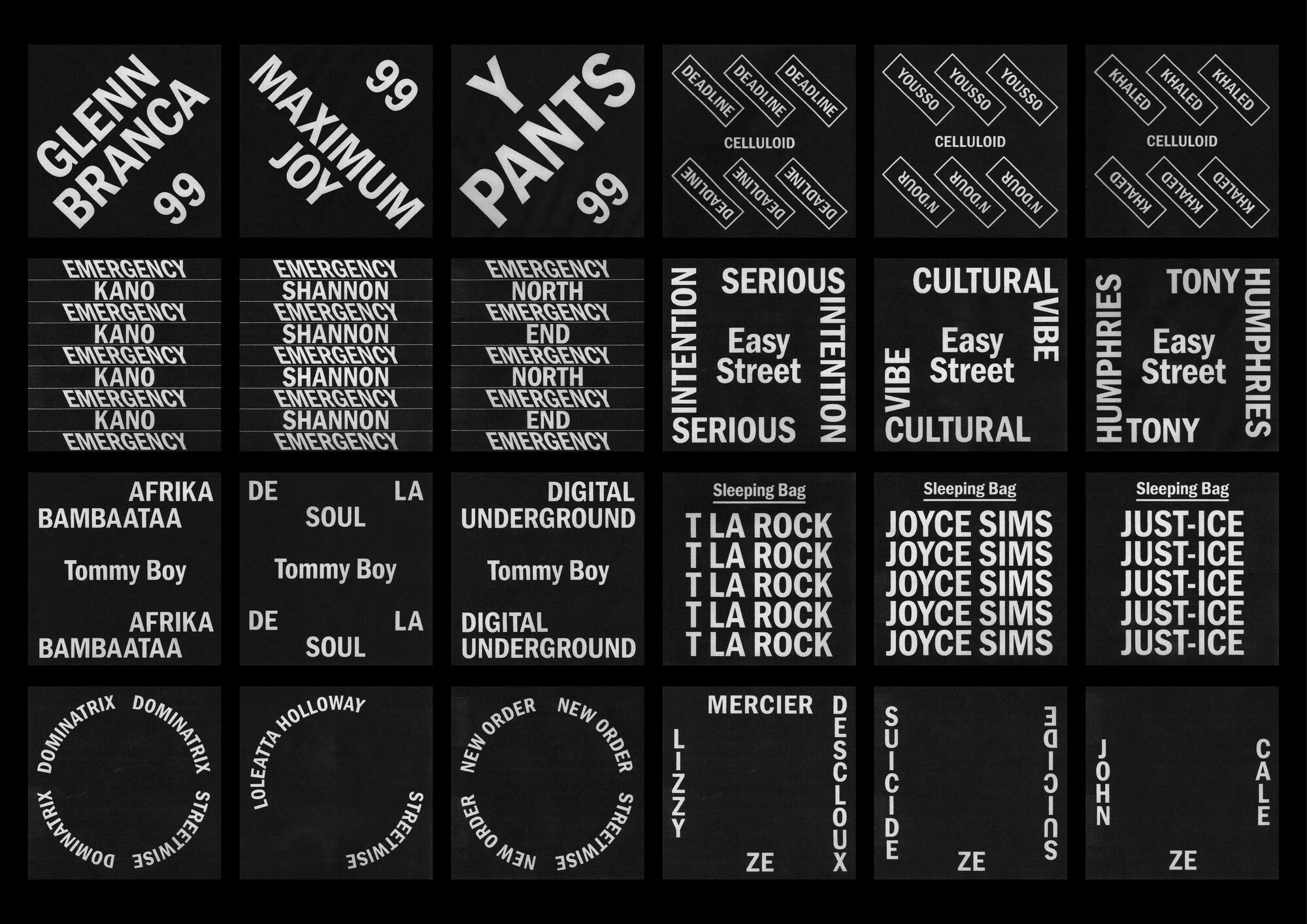
Pulling from a bank of over 700 carefully curated images including album covers, found footage, and original content, Endless 80s NYC explores ten of the most influential New York record labels from the 80s and pays homage to the vibrant energy and blending of cultures that took place in the city during that decade. Awards: 11th Macau Design Biennial, 2018.
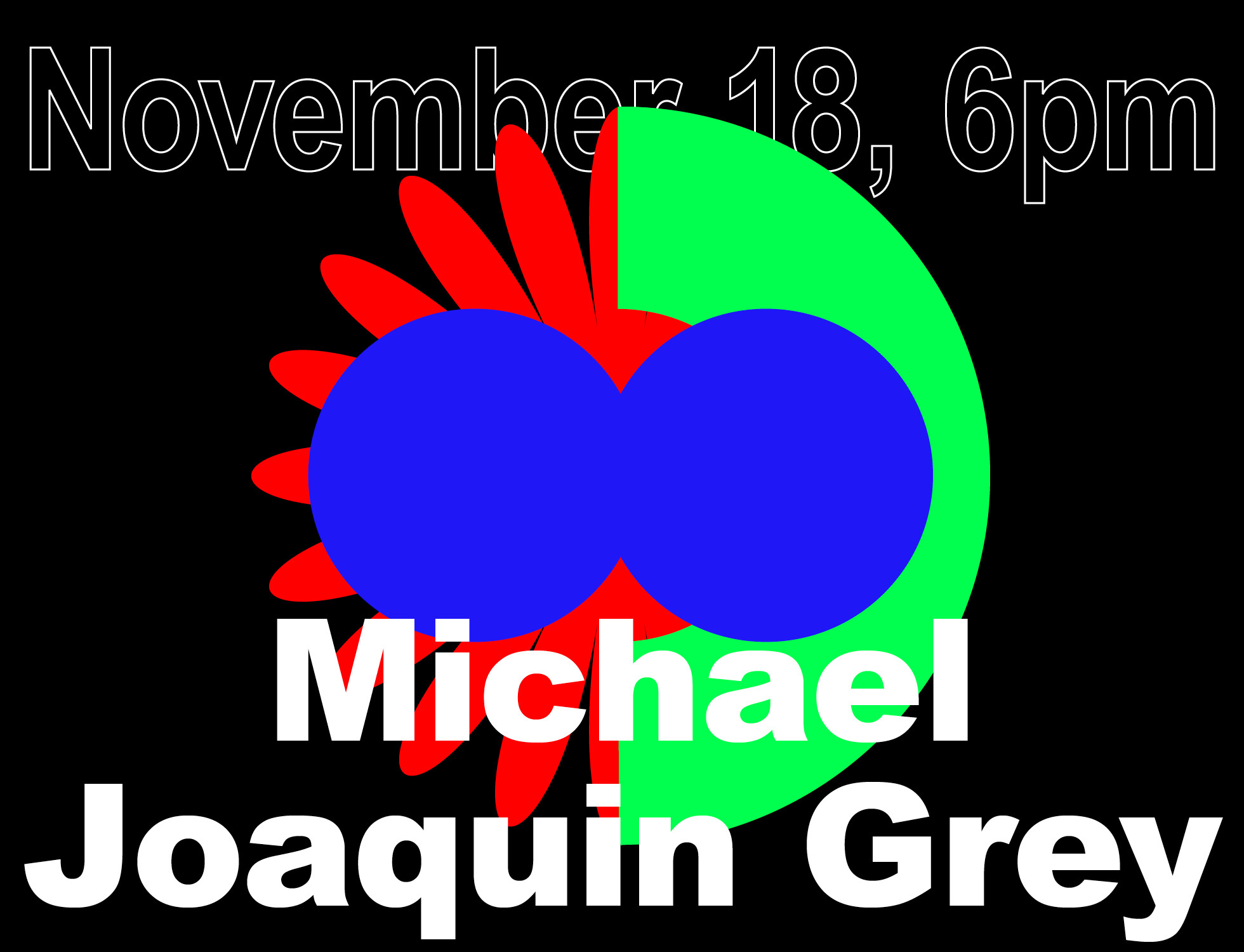
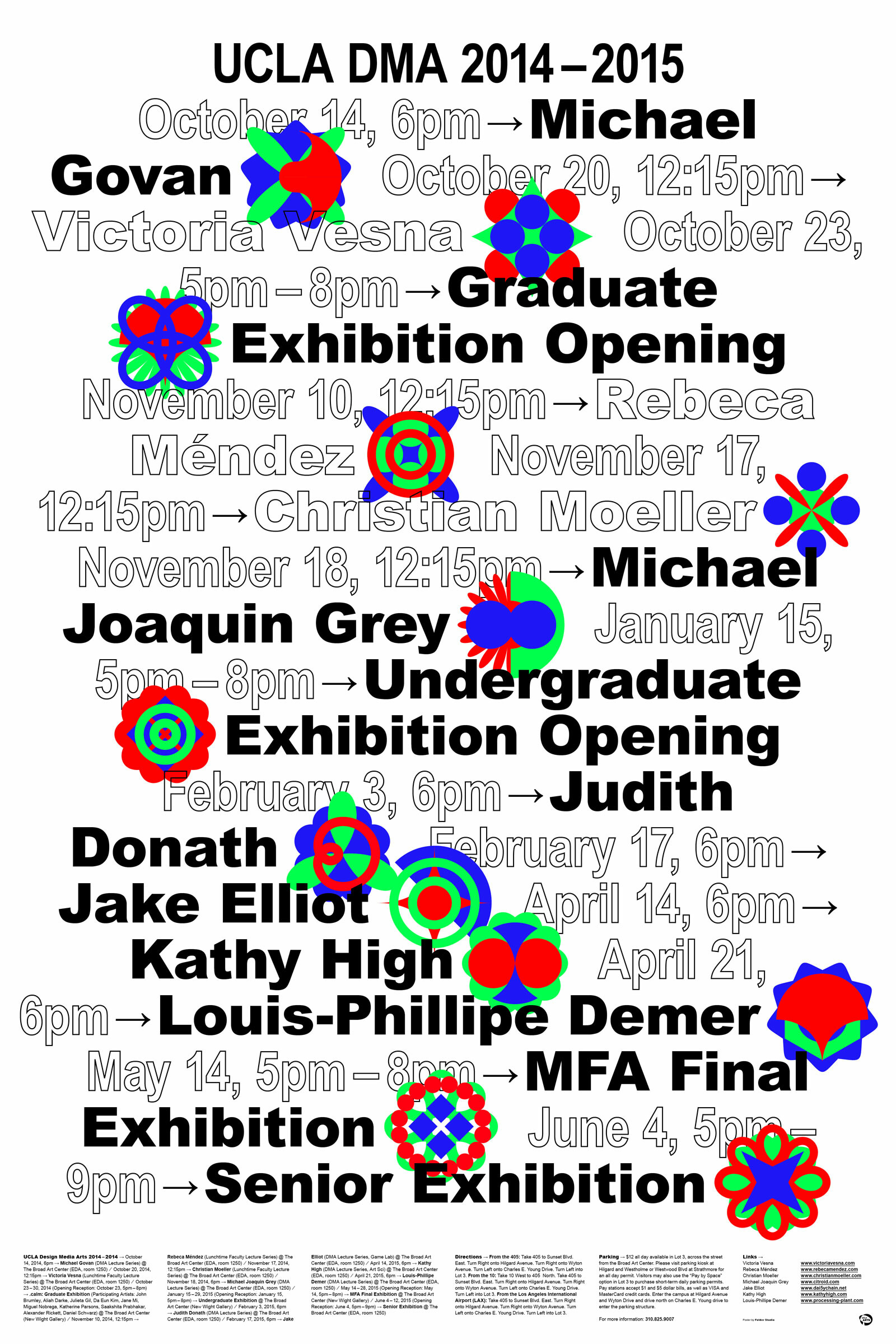
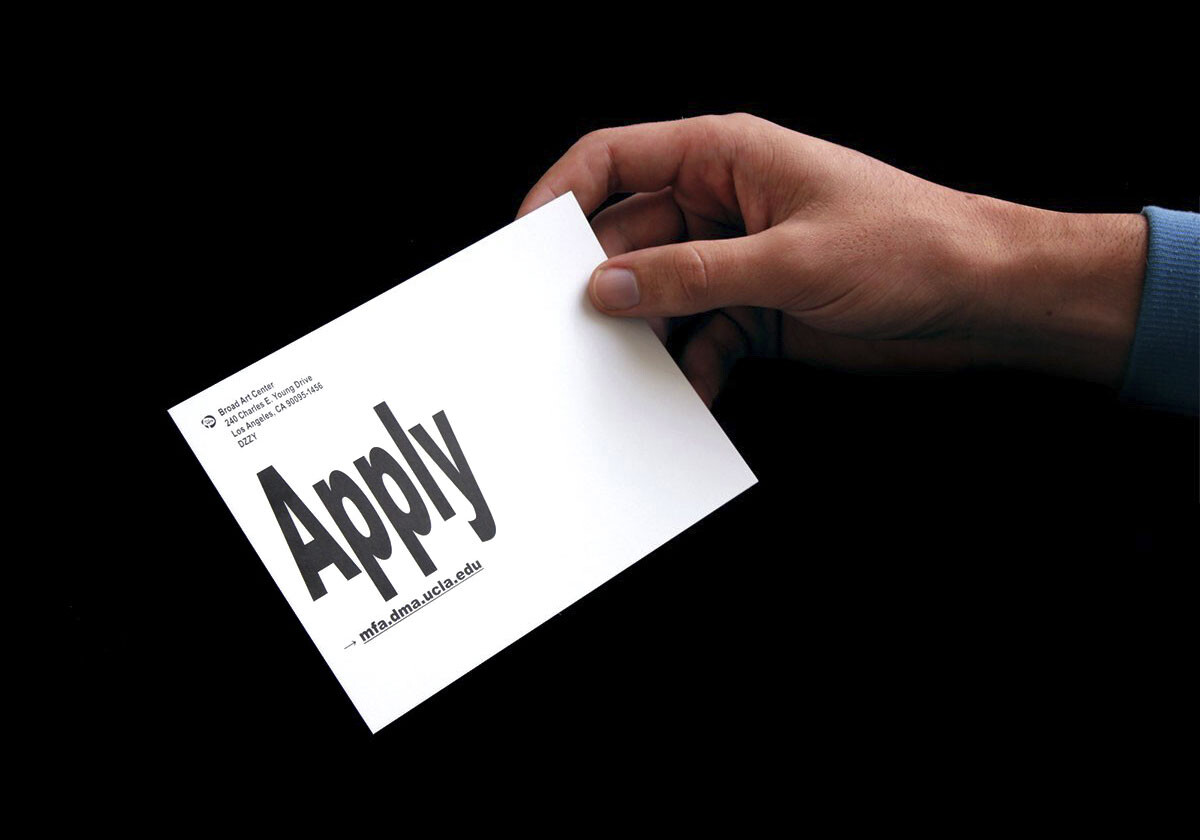
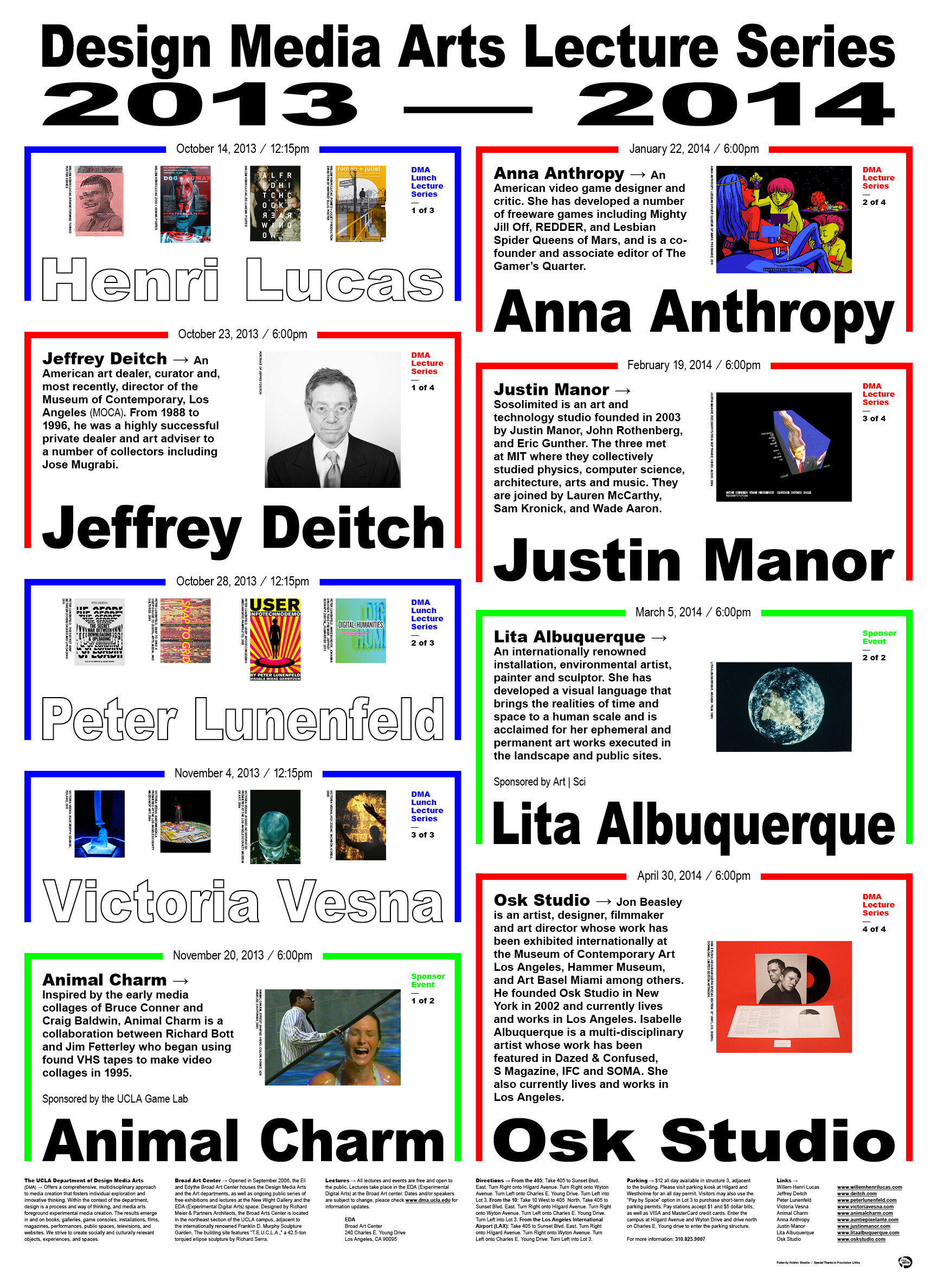
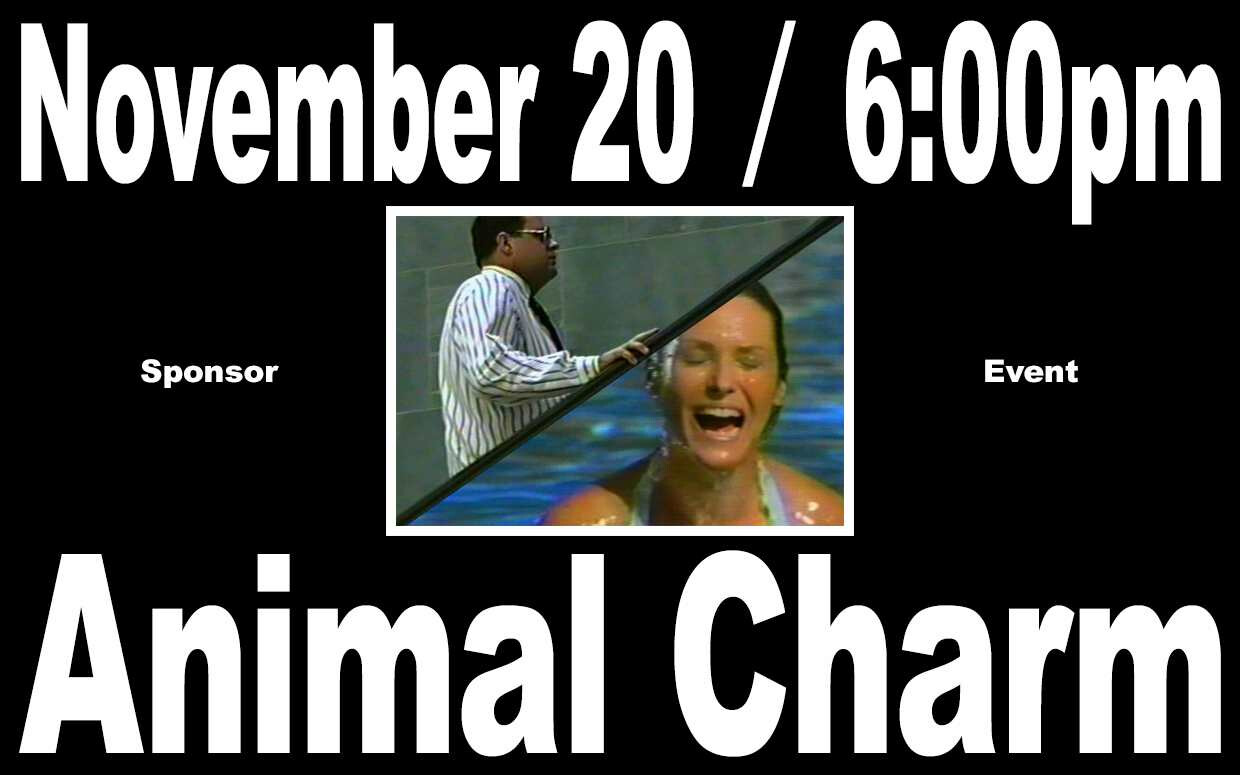
Posters, postcards, and digital materials for the UCLA Design Media Arts MFA Lecture Series. A modular system of shapes and typography allows each poster to shift in tone, from abstract to technical, while maintaining a unified structure across the series.