Folder designs interfaces, publications, and systems for organizing, encountering, and carrying information forward. We help museums, universities, civic institutions, and others engaged in the stewardship and sharing of knowledge create ways for language, media, and material to surface and endure.
We are interested in what happens to information over time, and how form can reveal the connections that give it meaning. Projects come in a variety of configurations rooted in partnerships that honor the material and its strategic presentation.
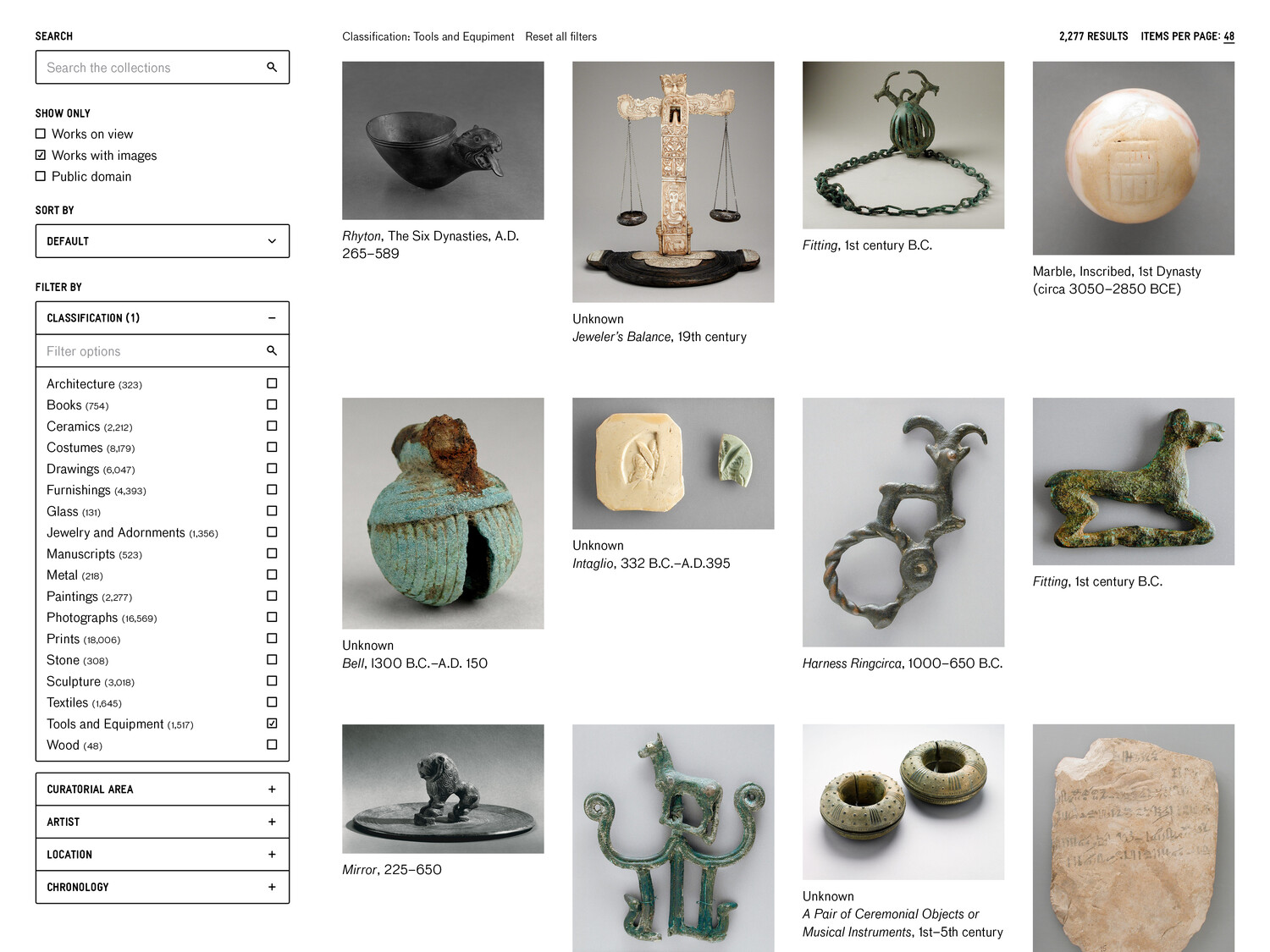
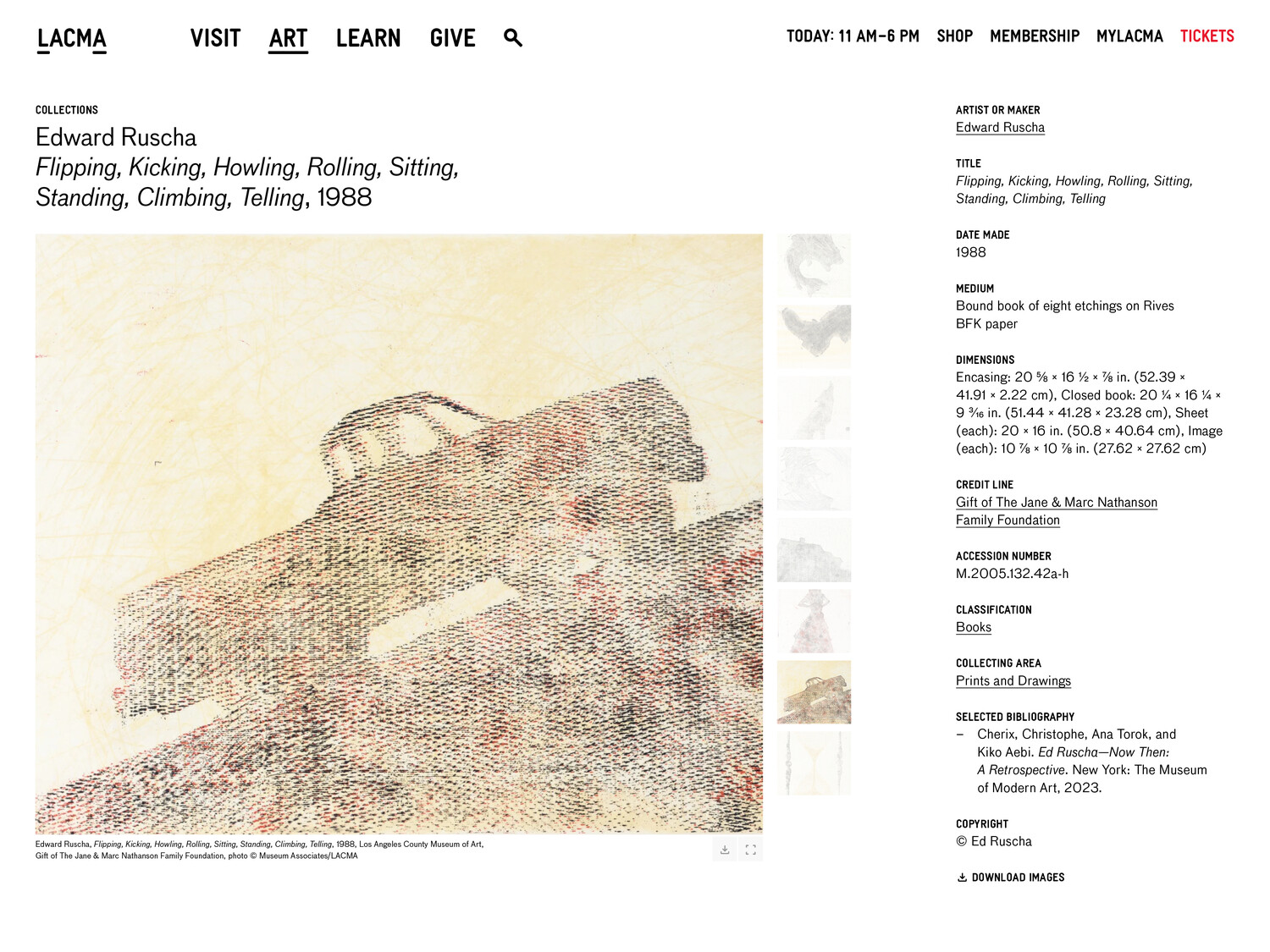
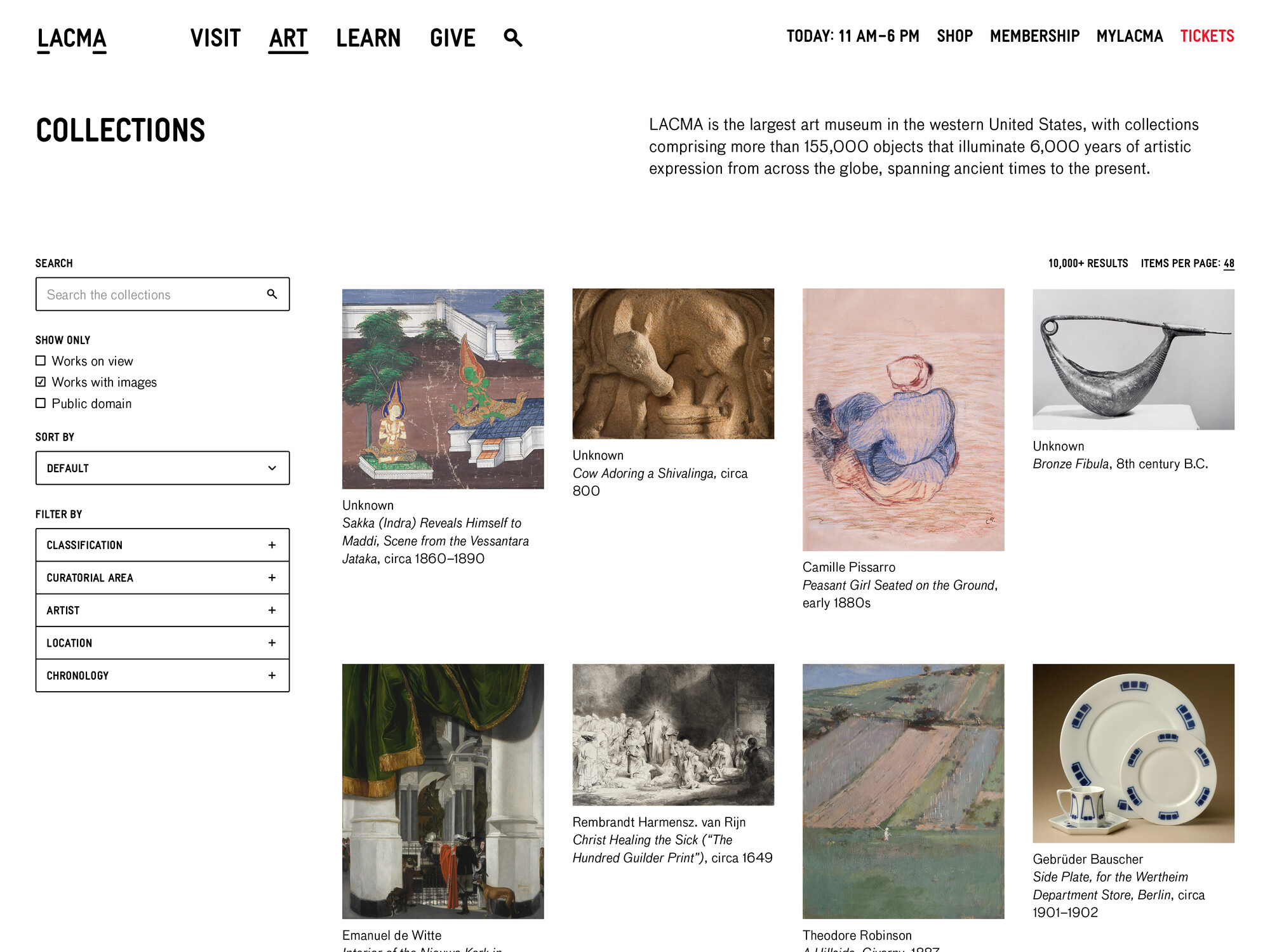
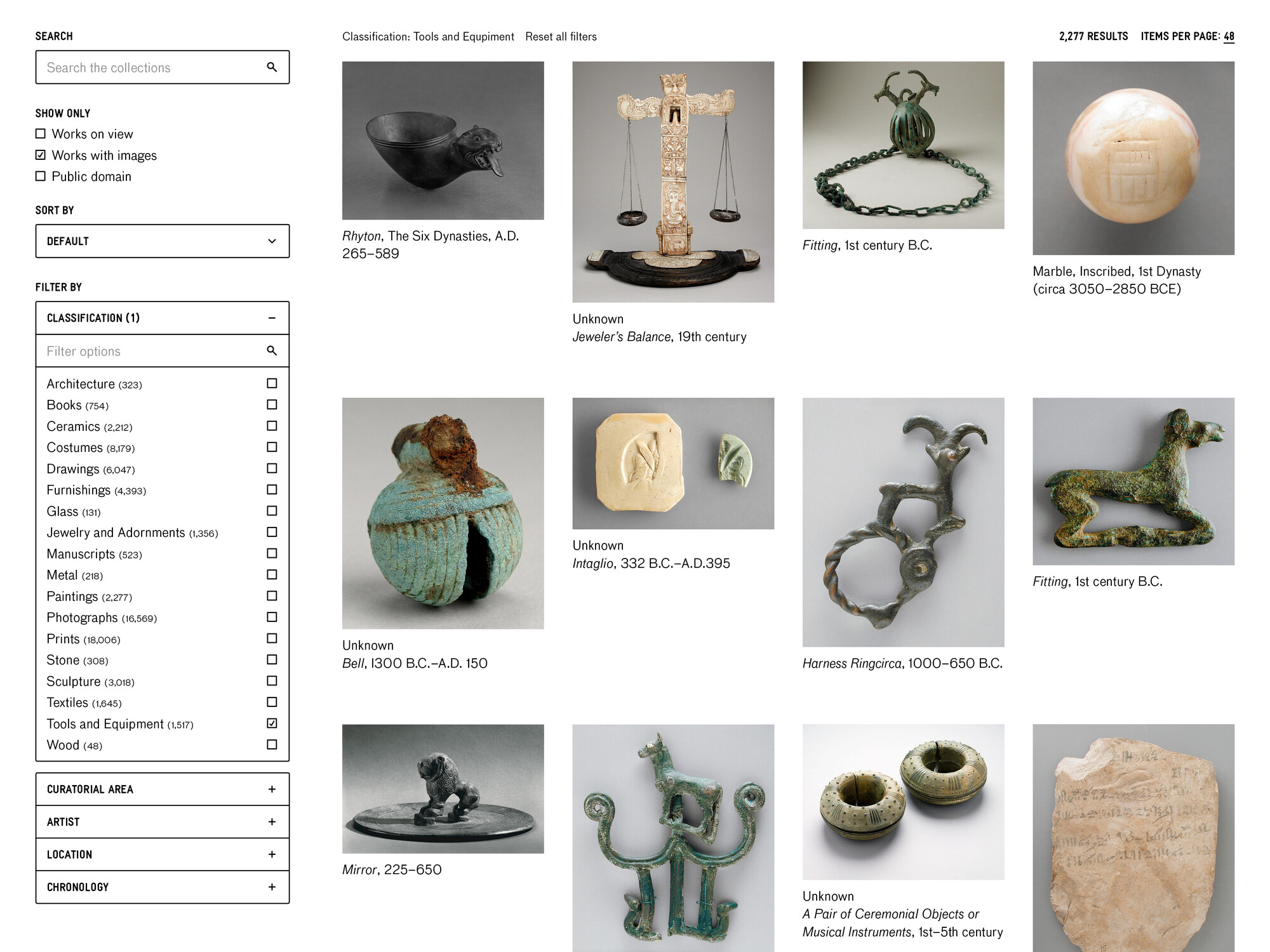
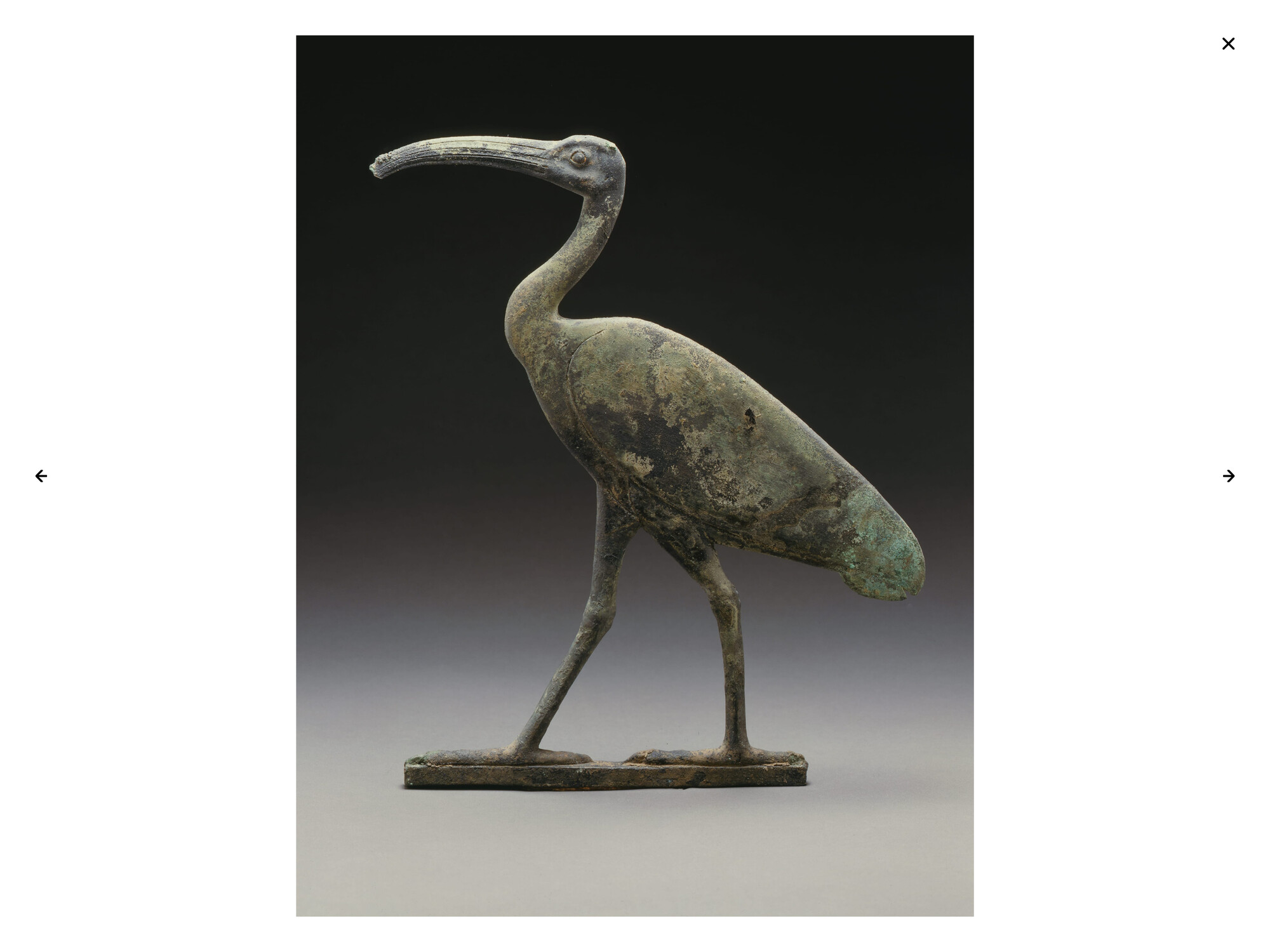
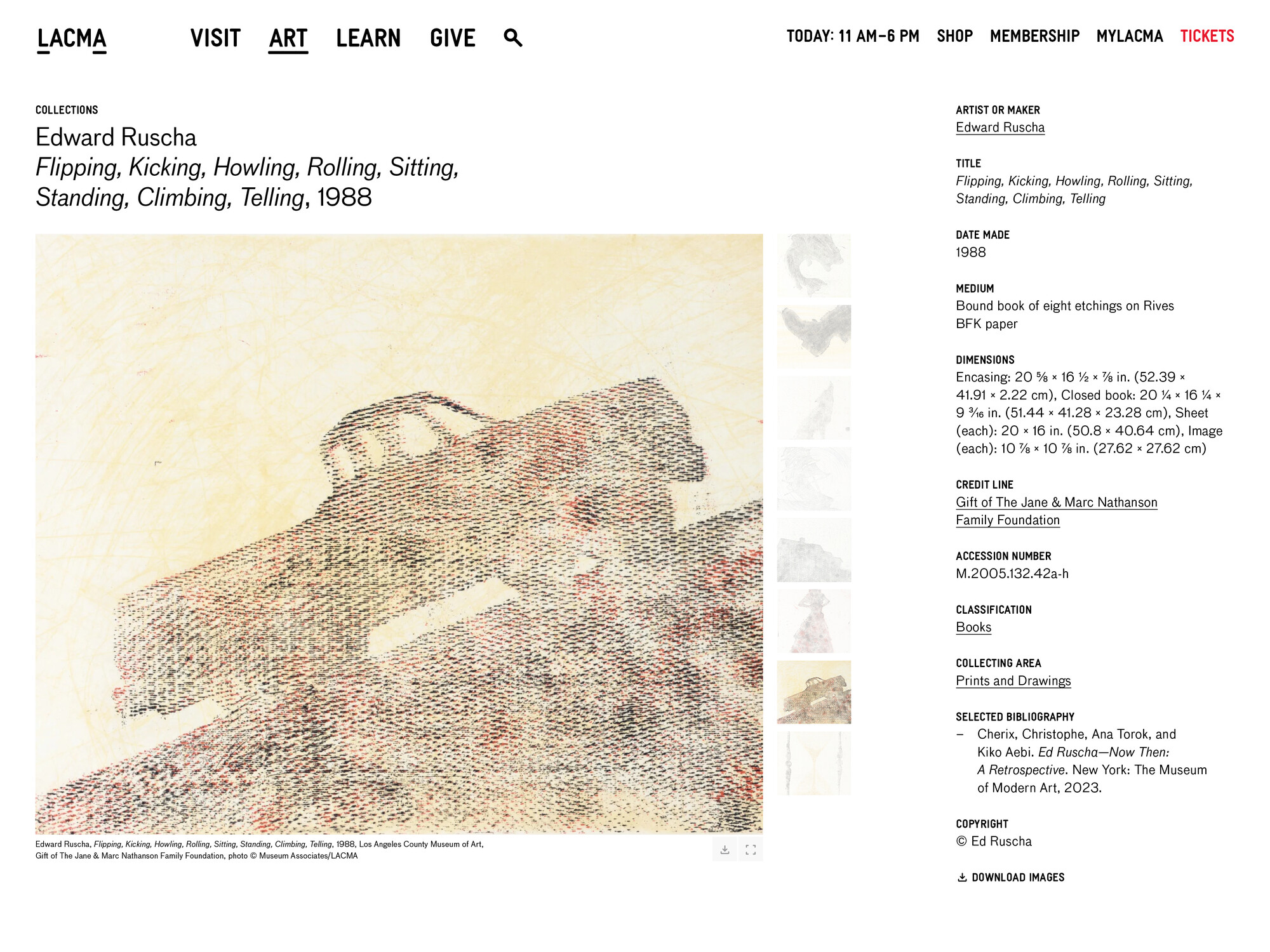
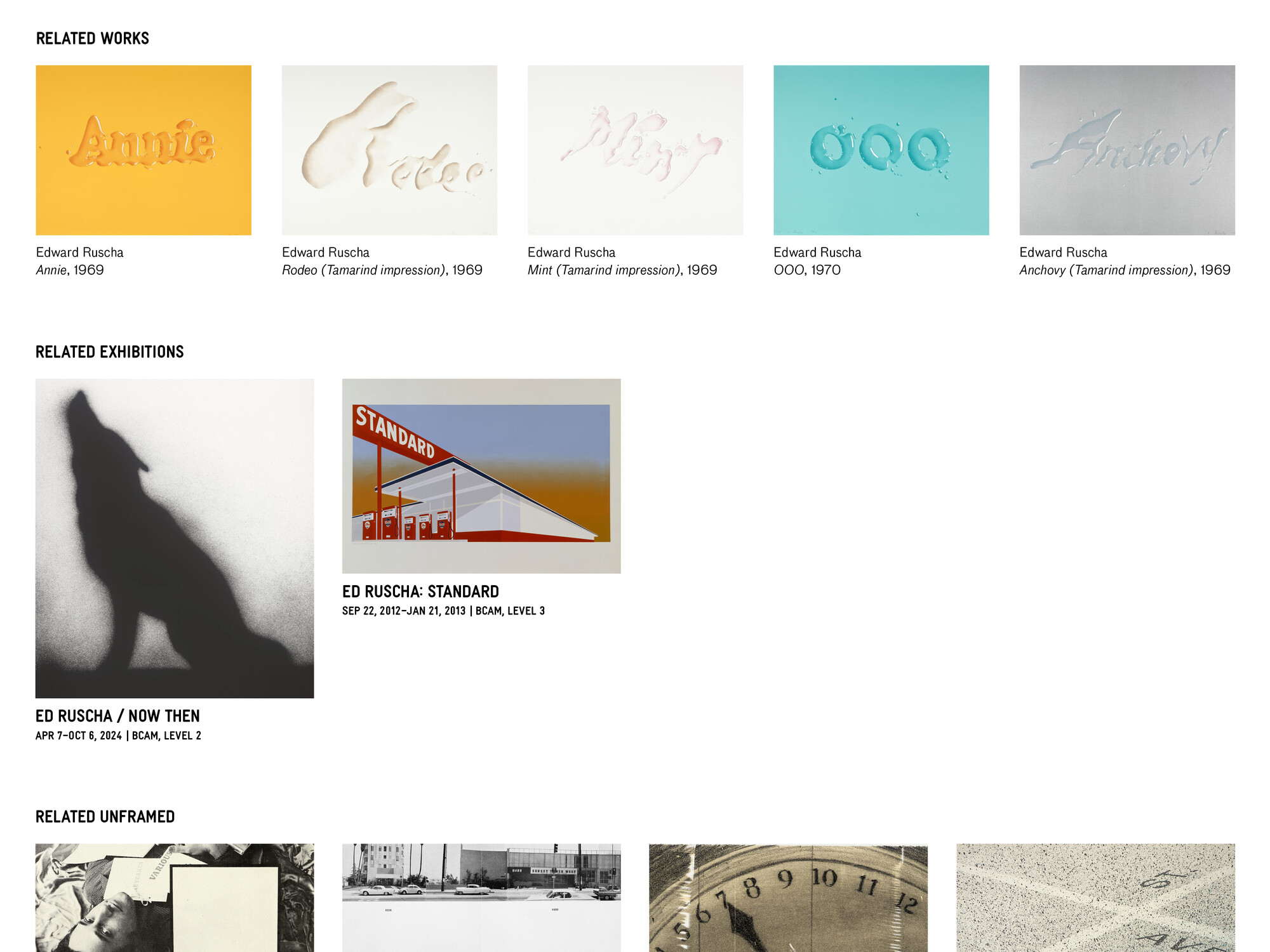
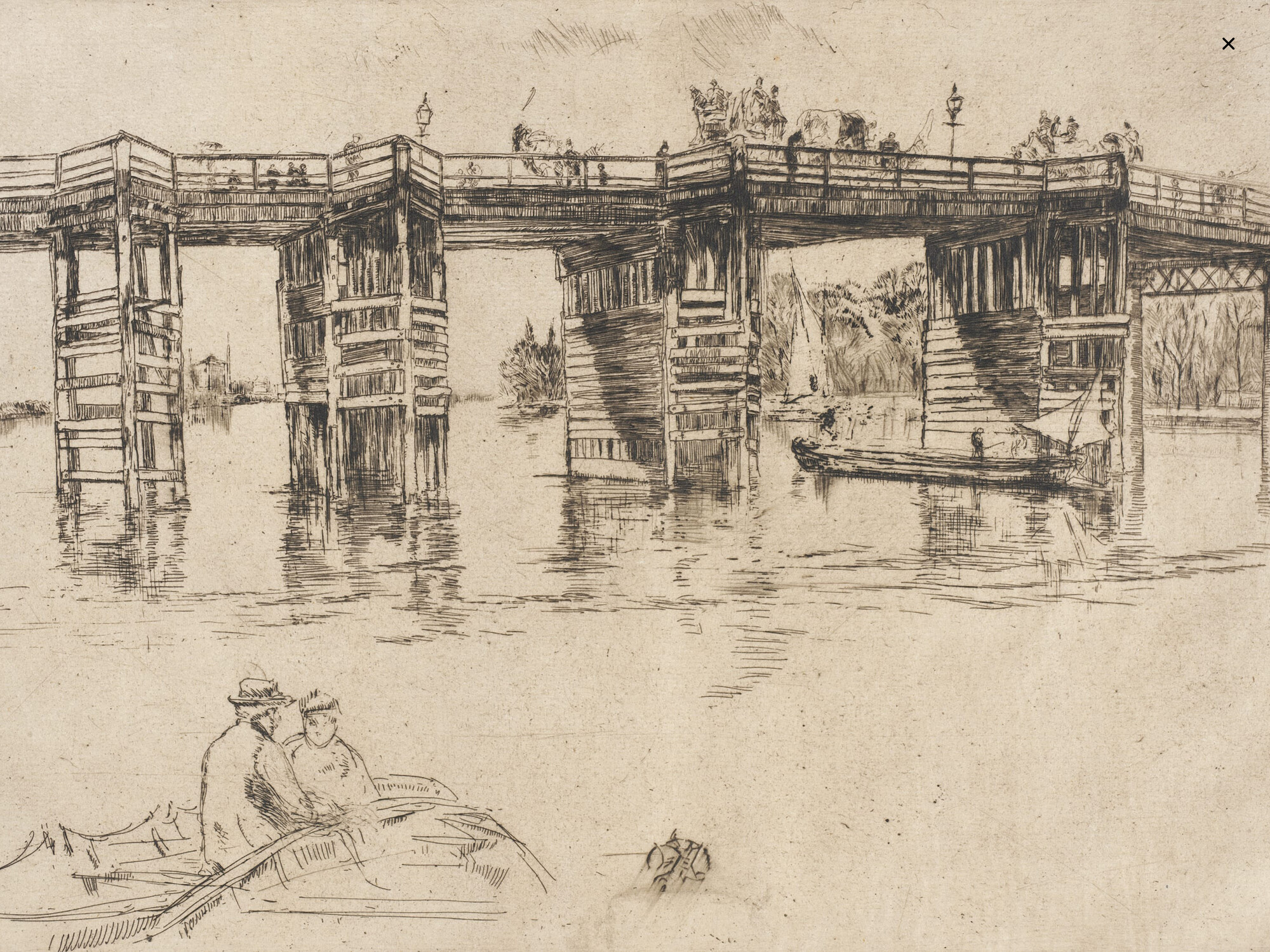
The Los Angeles County Museum of Art houses the largest museum collection in the western United States. The new online platform comprises of a cleanly rebuilt data endpoint paired with a restrained interface design that gives nuanced object records common structure while preserving distinctions in attribution, dating, and depth of scholarship.
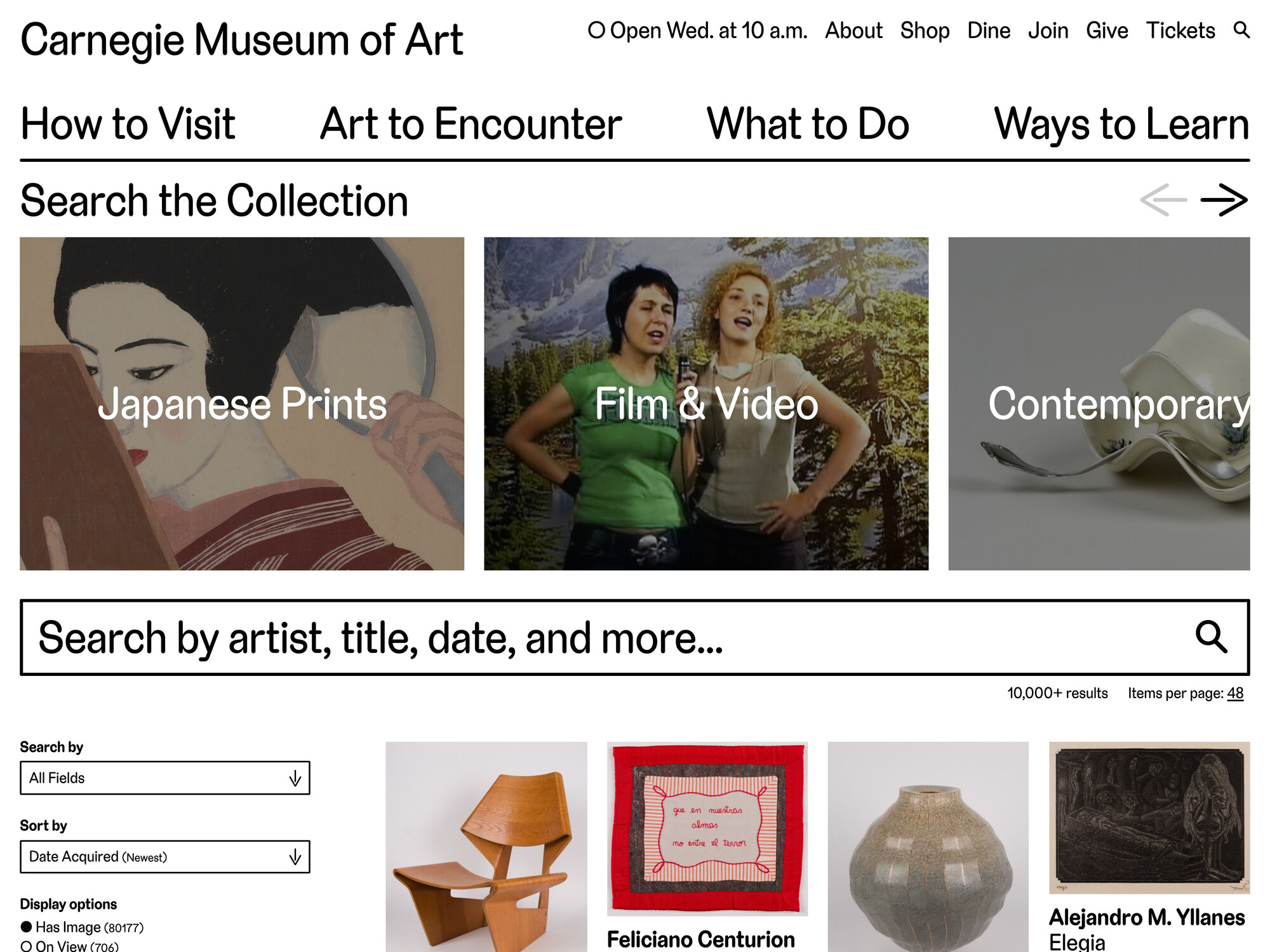
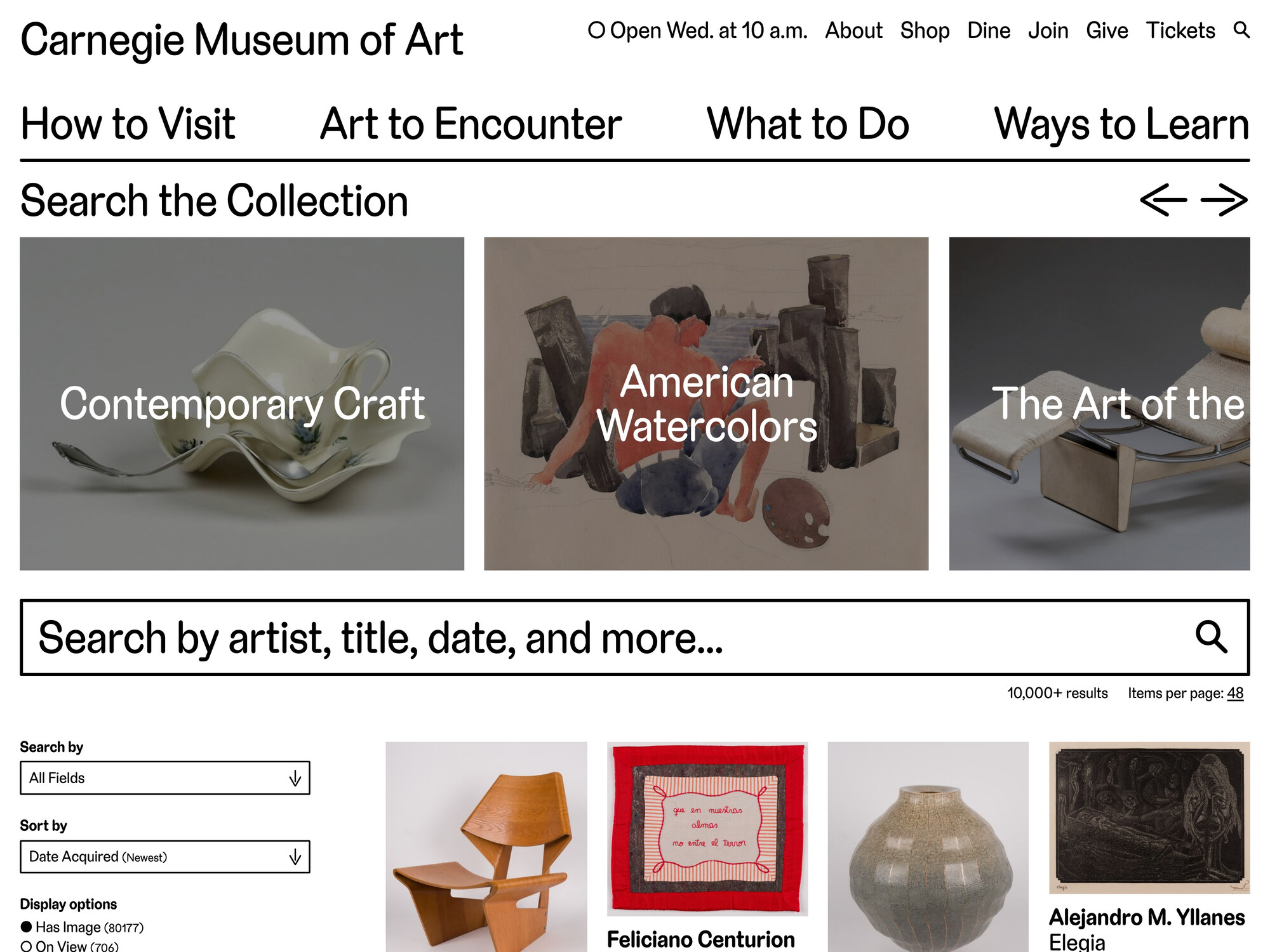
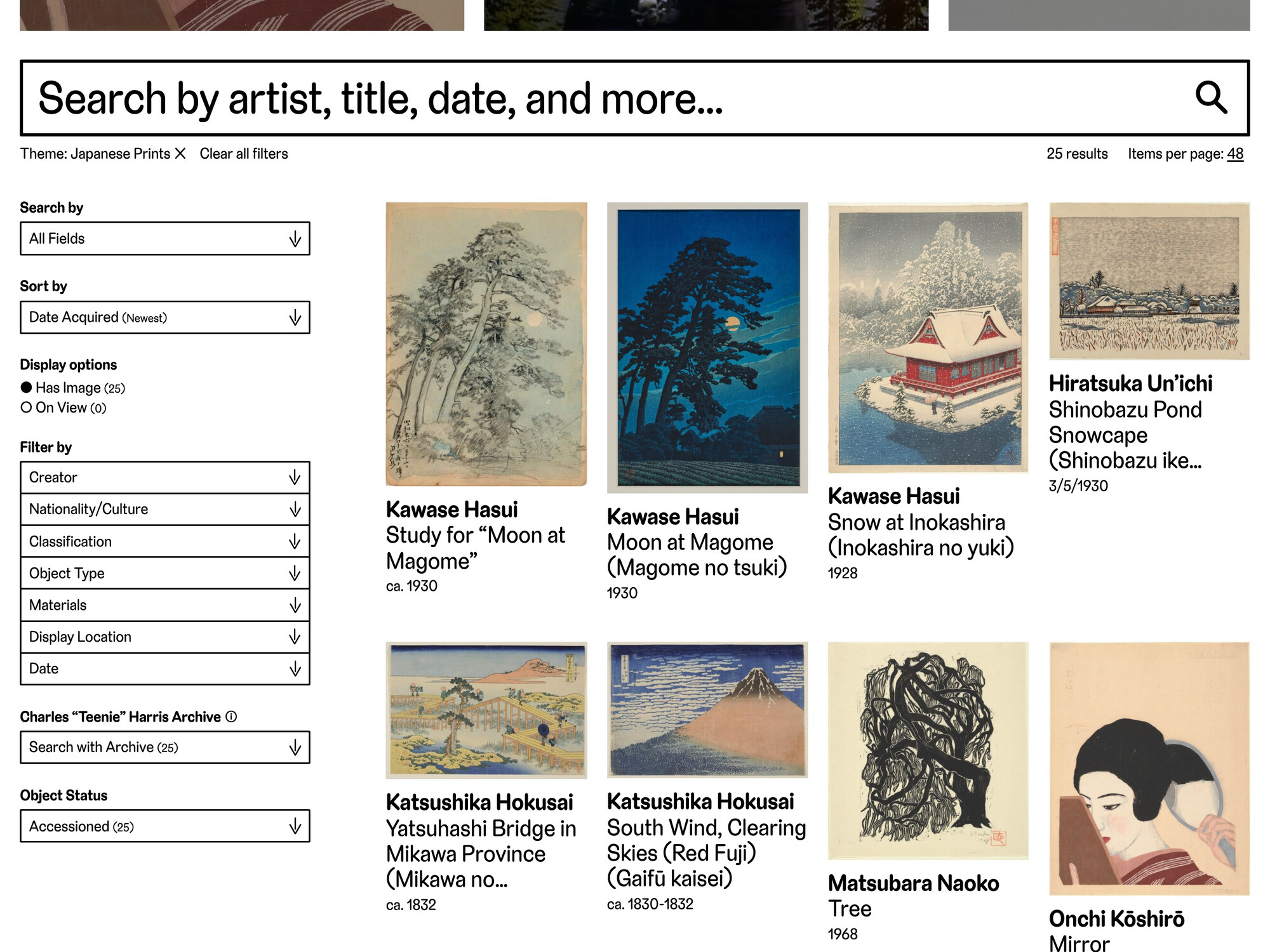
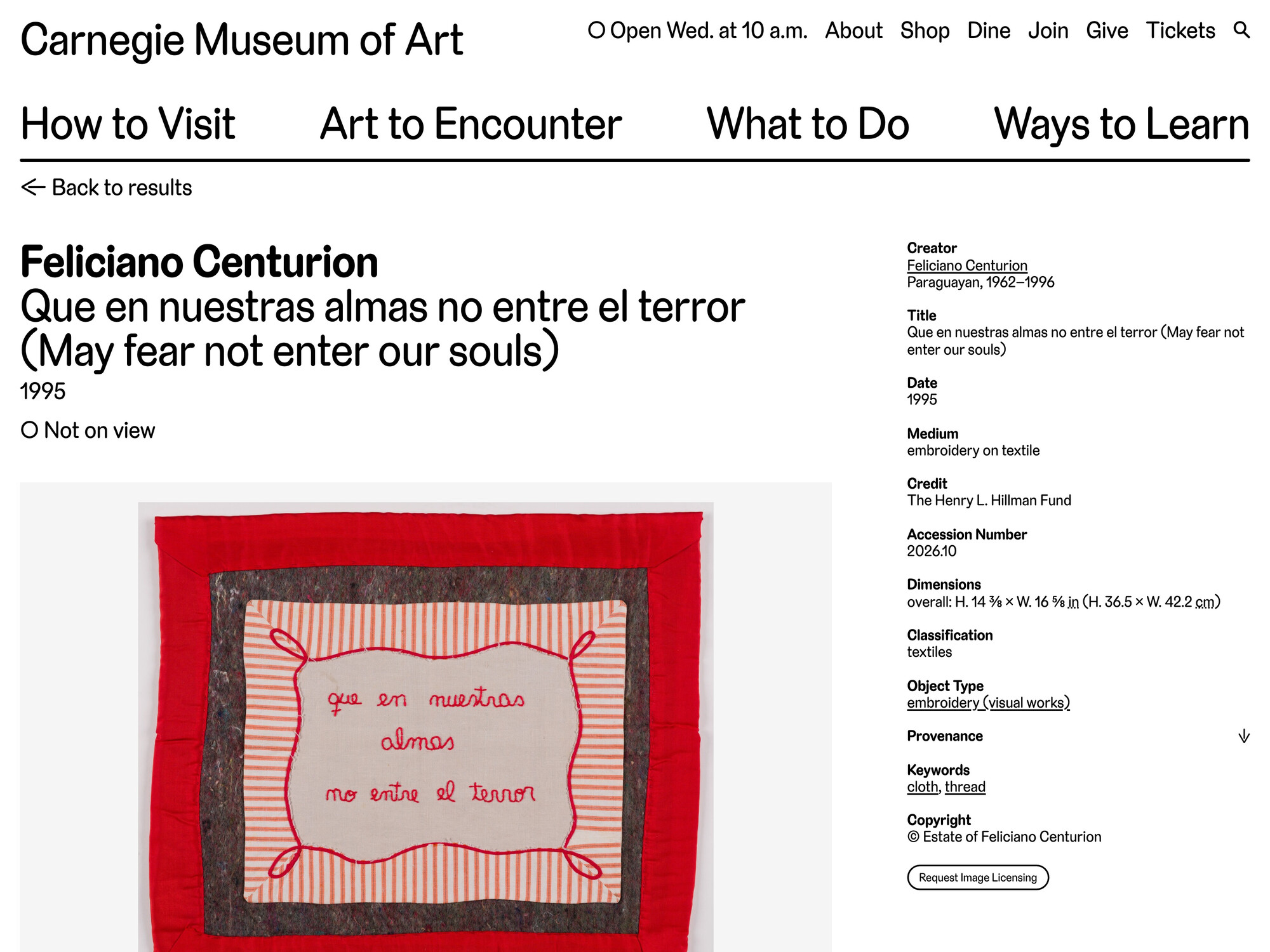
Expanded from our previous work on Carnegie Museum of Art’s online catalogue, the collections website opens us closer study of the collection by connecting individual works with group records, exhibition histories, and associated texts. The collection’s development is more readily traced through museum programs including it’s growth through the Carnegie International, North America's longest-running recurring exhibition of international contemporary art.
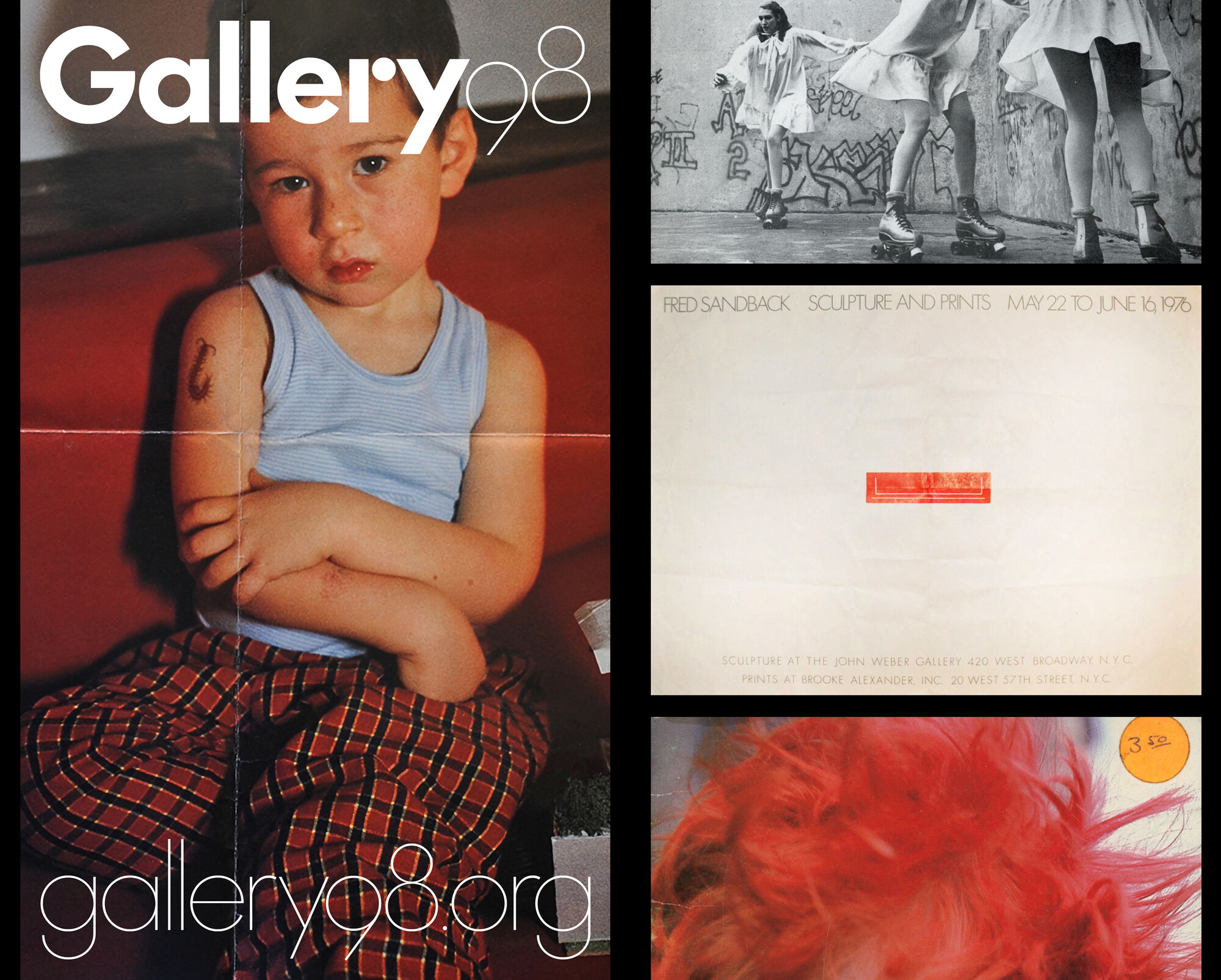
Gallery 98 is an active online archive for curator Marc H. Miller’s collection of arts ephemera from the 1960s–1990s, centered around his long involvement in the New York art world. The collection catalogs thousands of items across announcement cards, posters, and publications connected through artists, galleries, nightclubs, and themes, while retaining the hand-built nature of Miller’s practice.
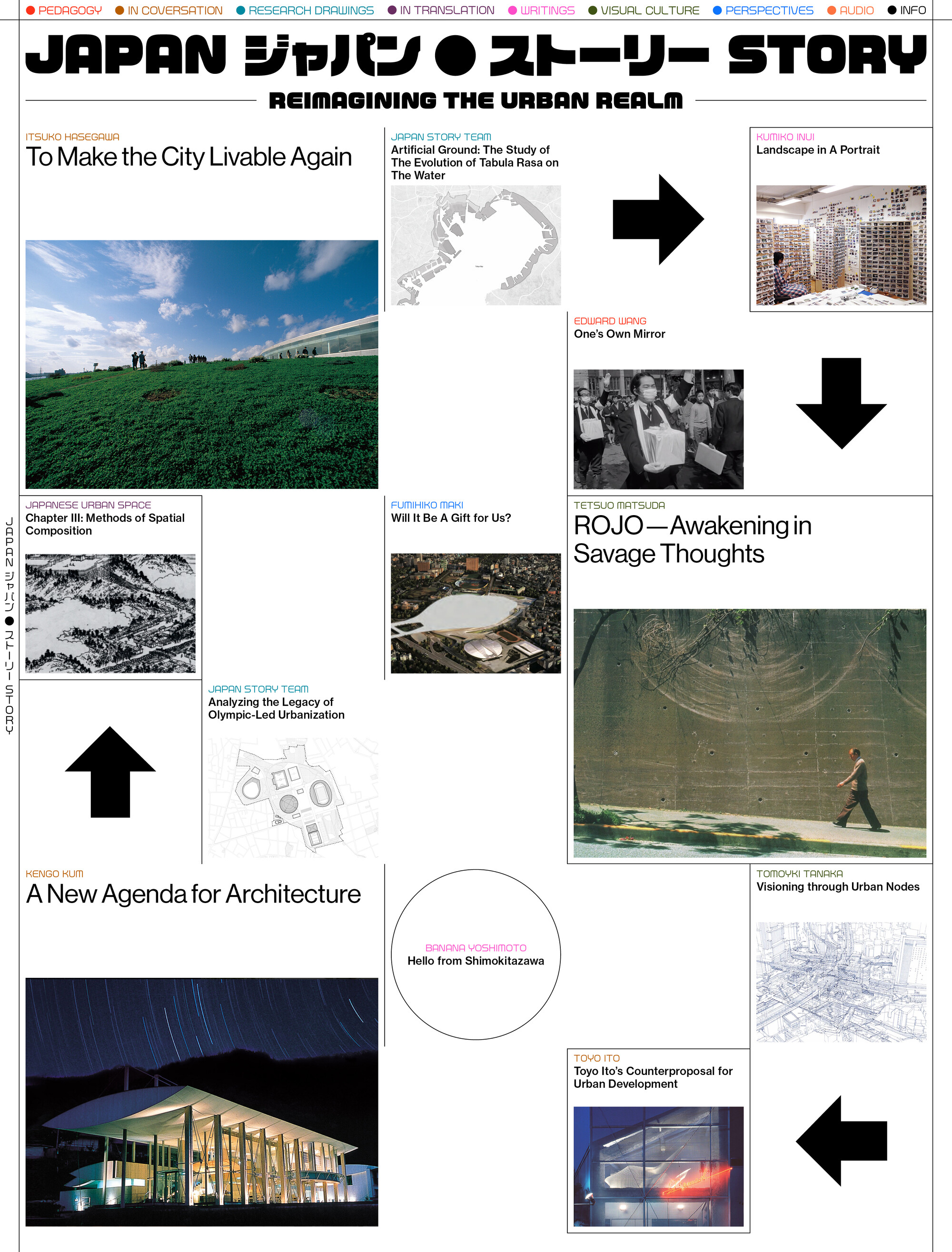
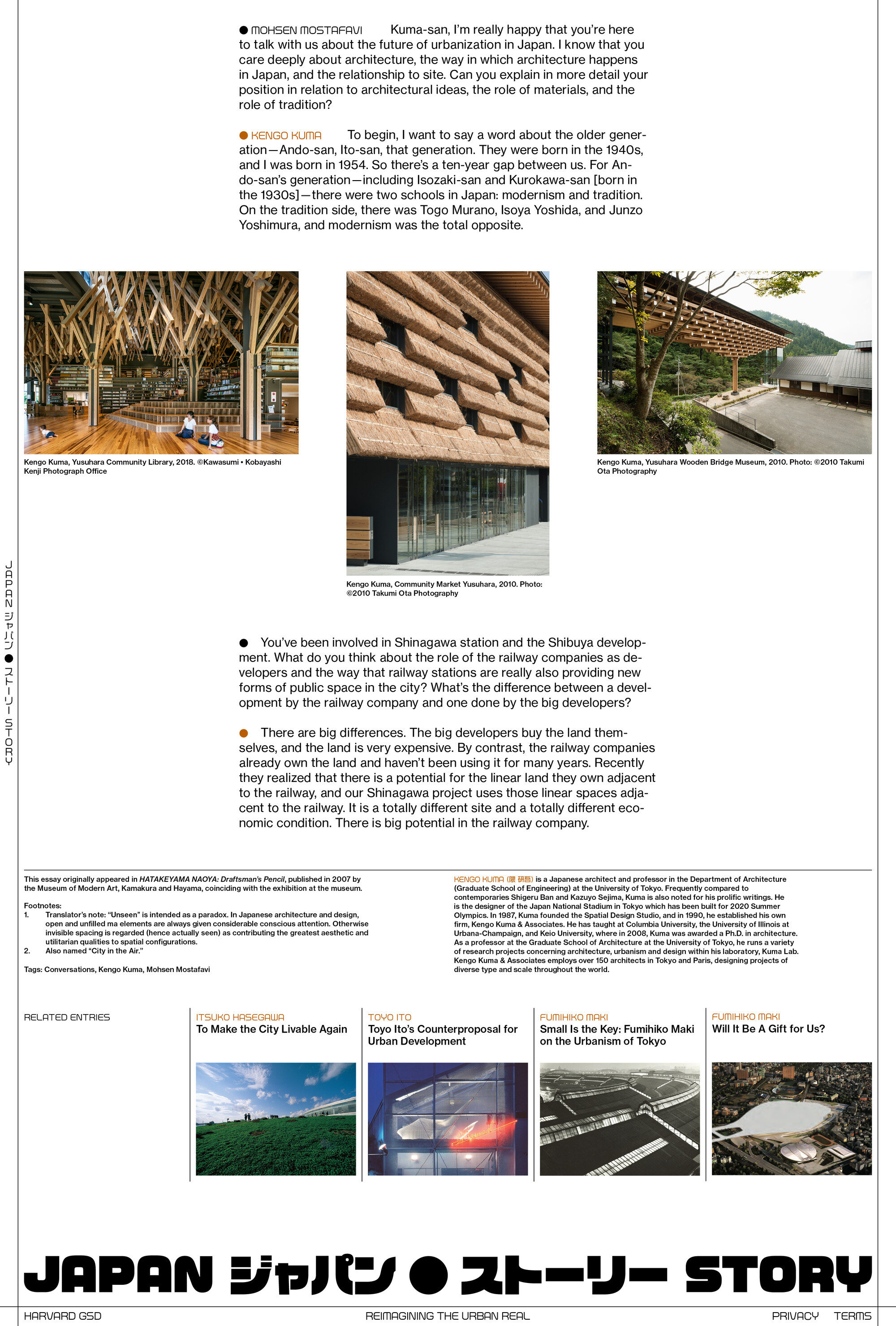
Japan Story is an academic research platform and course at Harvard GSD originating from a series of intense, high-profile symposiums and interdisciplinary panel discussions centered around urbanization and the future of the city. The project follows distinct threads of pedagogy, conversations, drawings, translated texts, literature, visual culture, critical essays, and music.
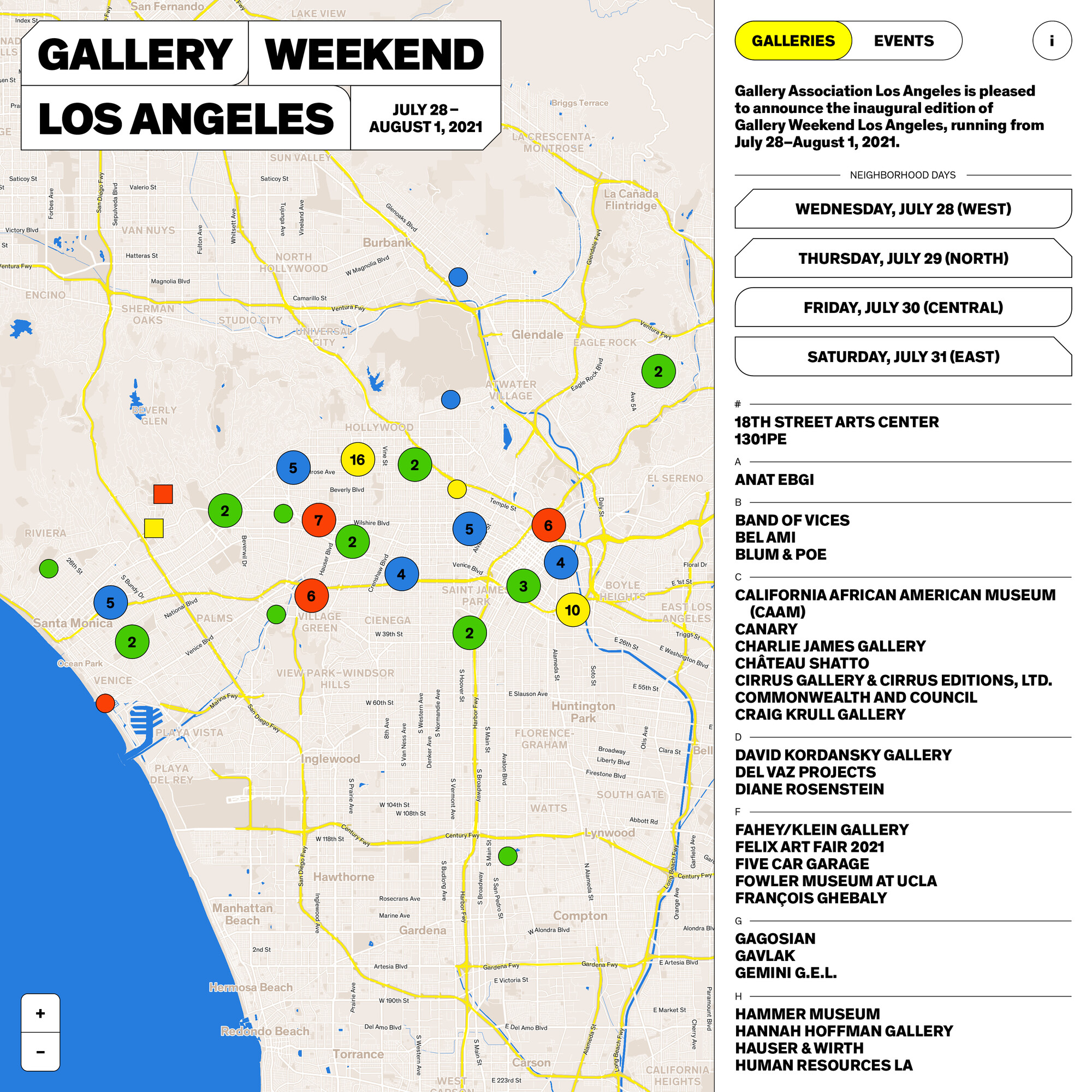
Gallery Weekend Los Angeles is an inclusive community program presented annually by Gallery Association Los Angeles. The weekend connects audiences directly with the artists, curators, and gallerists through extended evening hours, and self-guided neighborhood maps—promoting unity in the gallery landscape and giving emerging and underrepresented venues equal visibility.
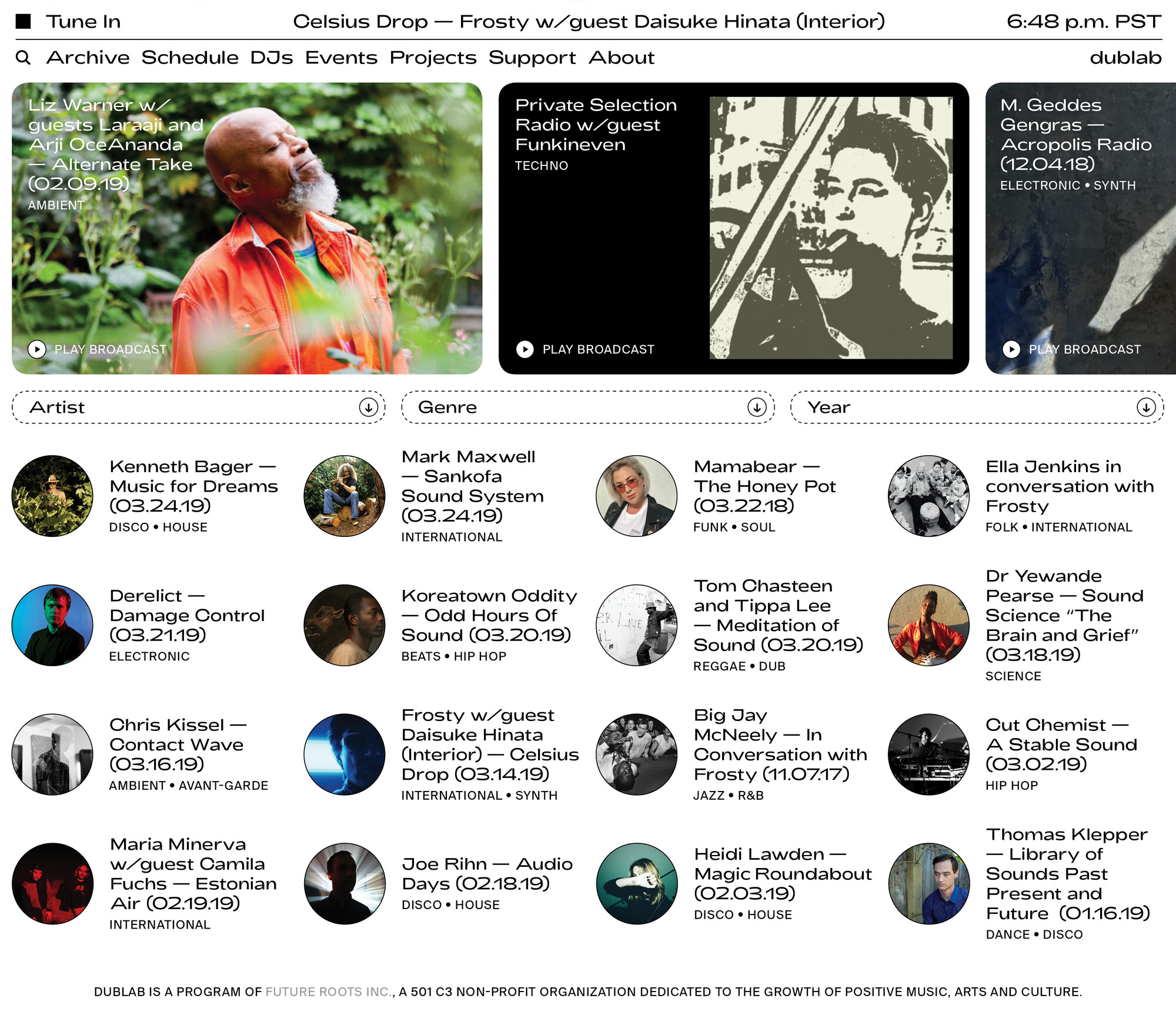
dublab is the pioneering, non-profit community radio station and cultural institution in Los Angeles founded in 1999. Future Roots Radio connects music of the past as the foundation for today, and today’s music as the roots of tomorrow. The website is an internet checkpoint in LA featuring live broadcasts and the foundation‘s broadcast archive in full.
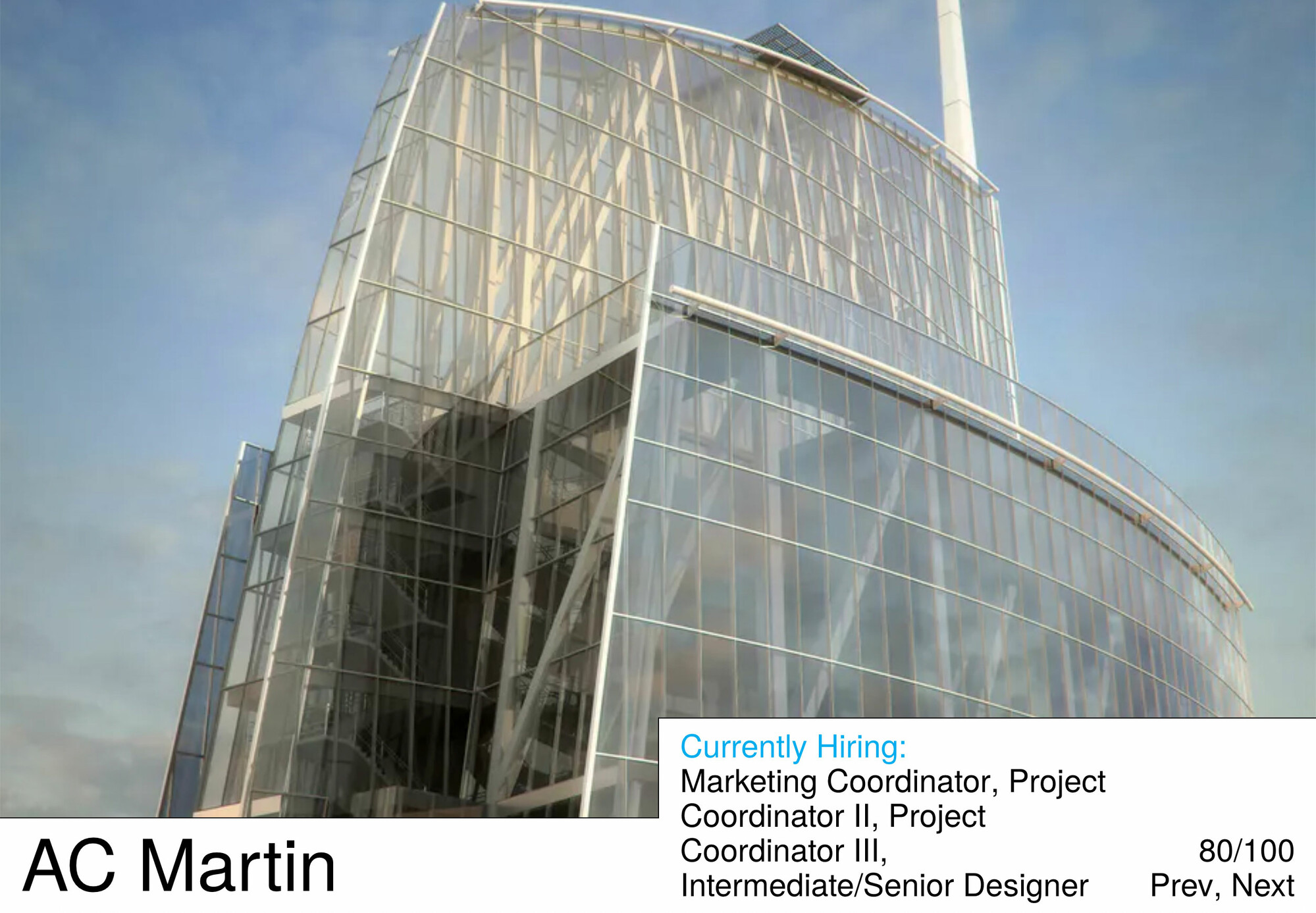
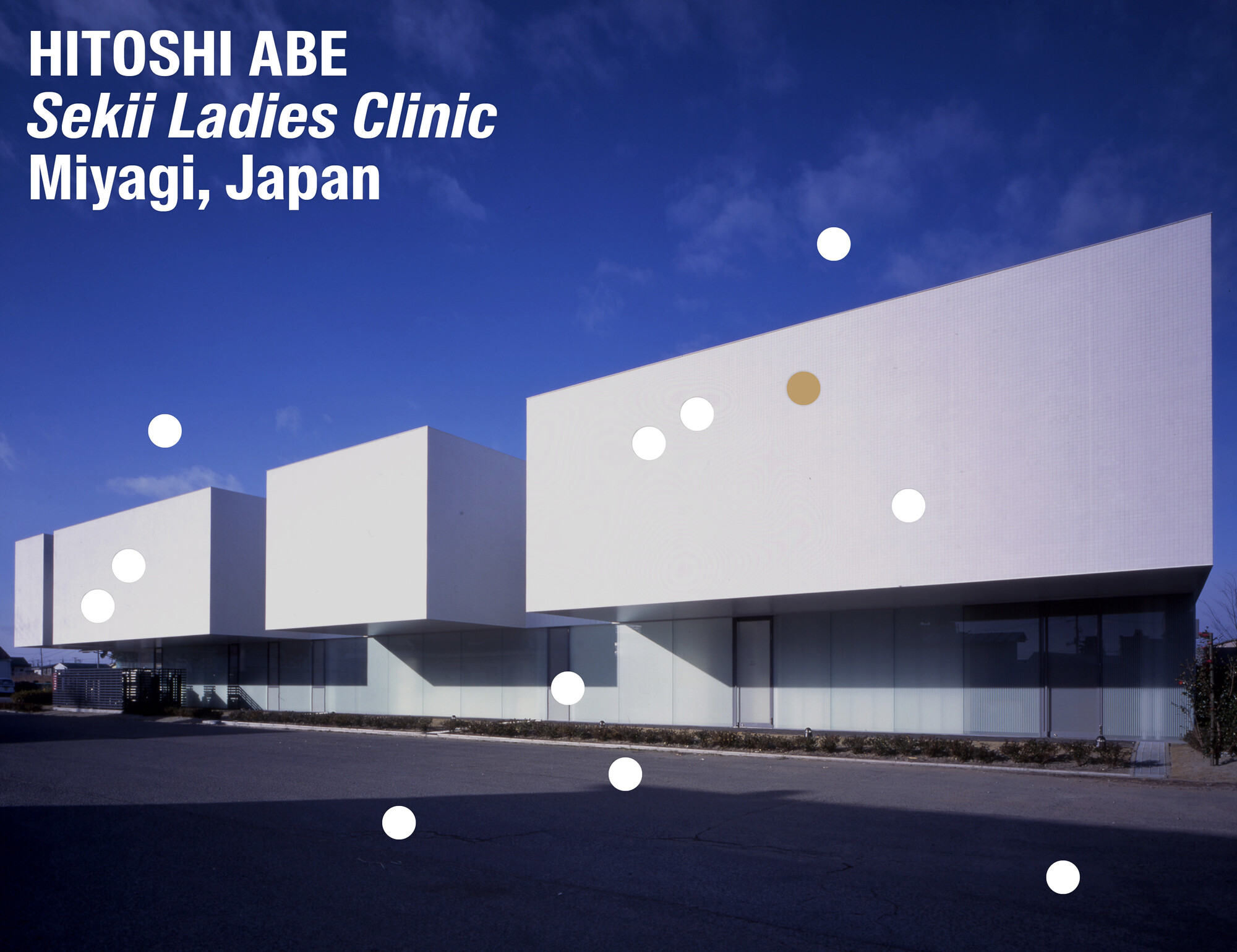
Archinect has served as a digital home and unfiltered pulse for the architecture community since 1997. Its jobs board is widely considered the go-to resource for on-the-ground information in the field. The visualizer flips the traditional job search on its head by presenting employers through their built work and design portfolios first, rather than walls of requirements.
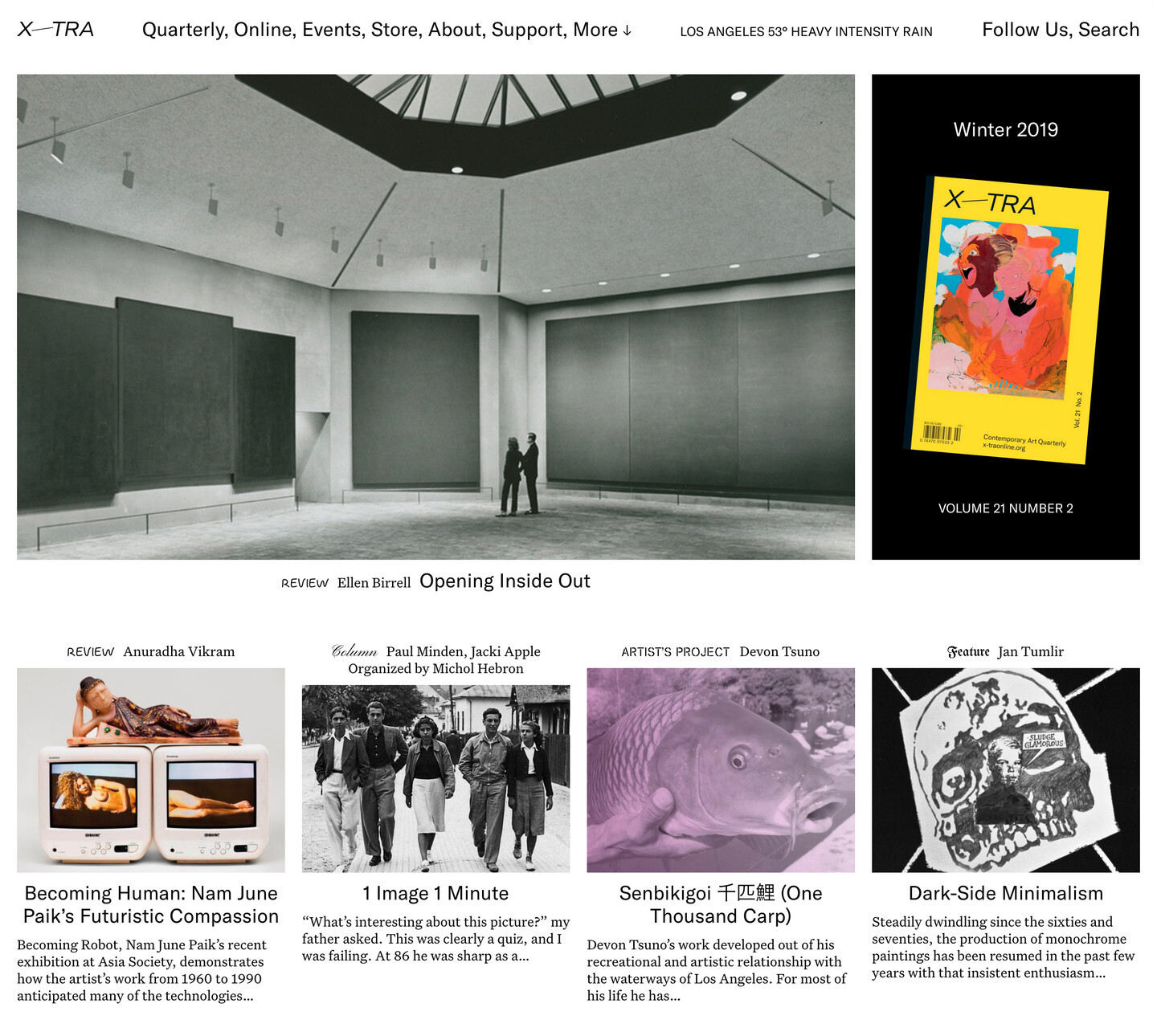
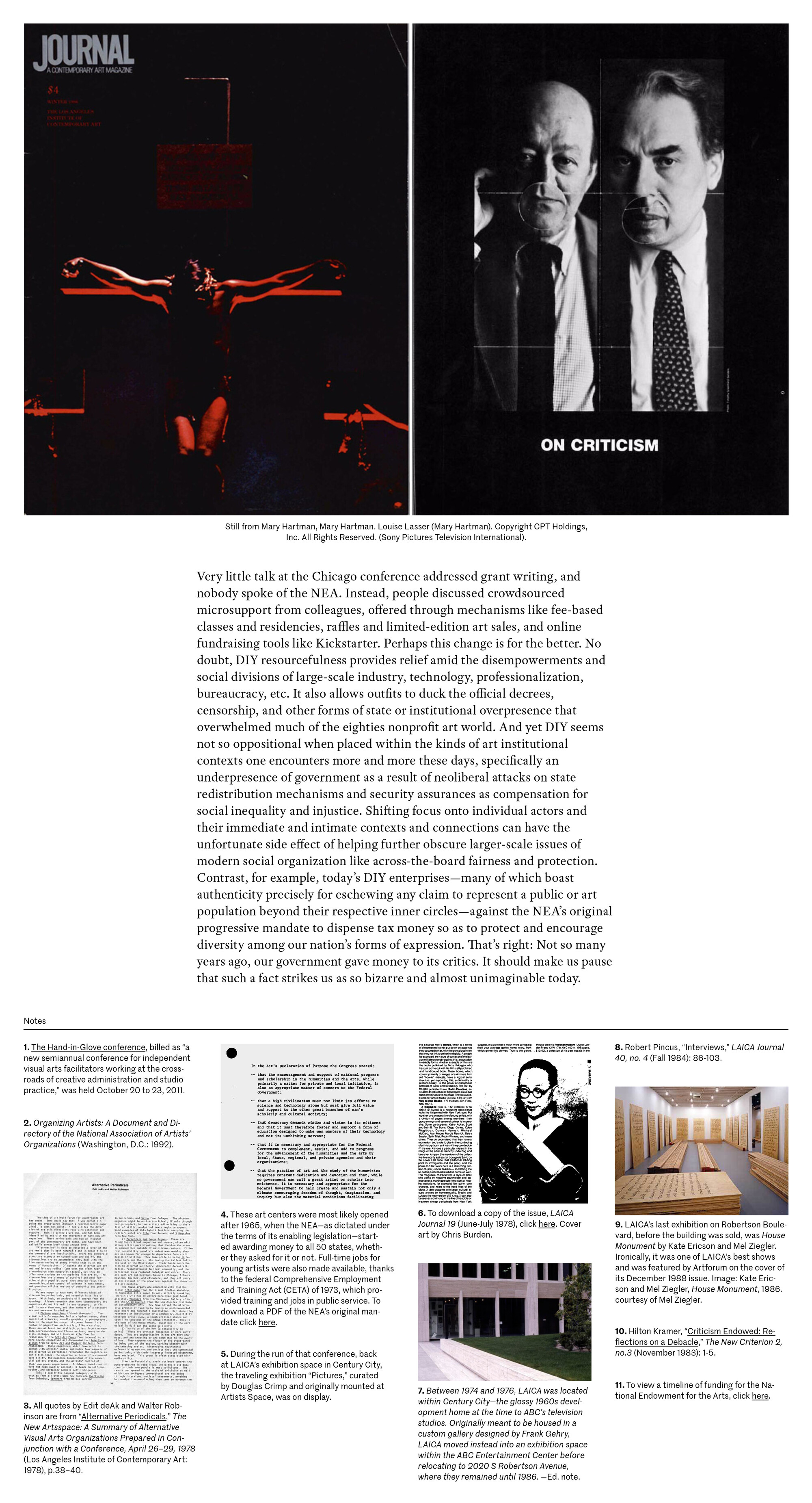
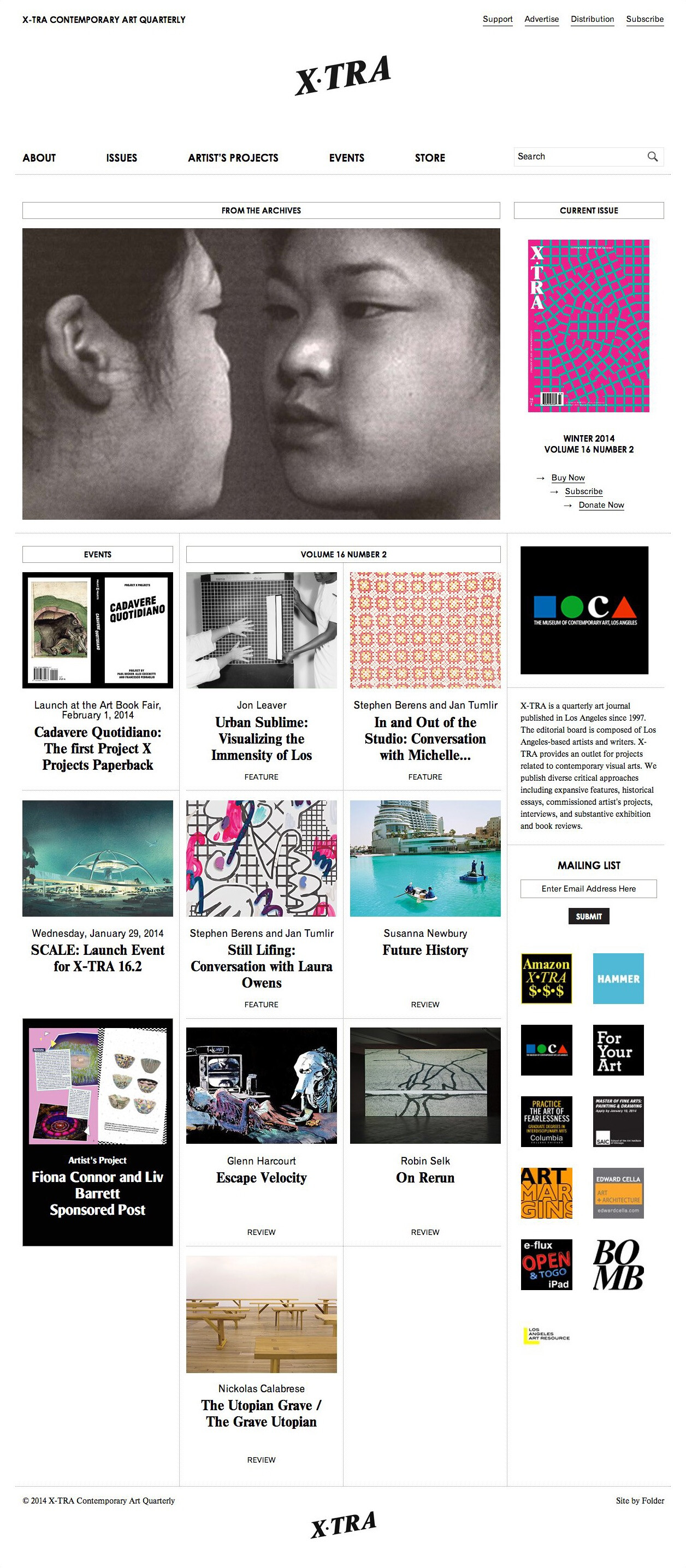
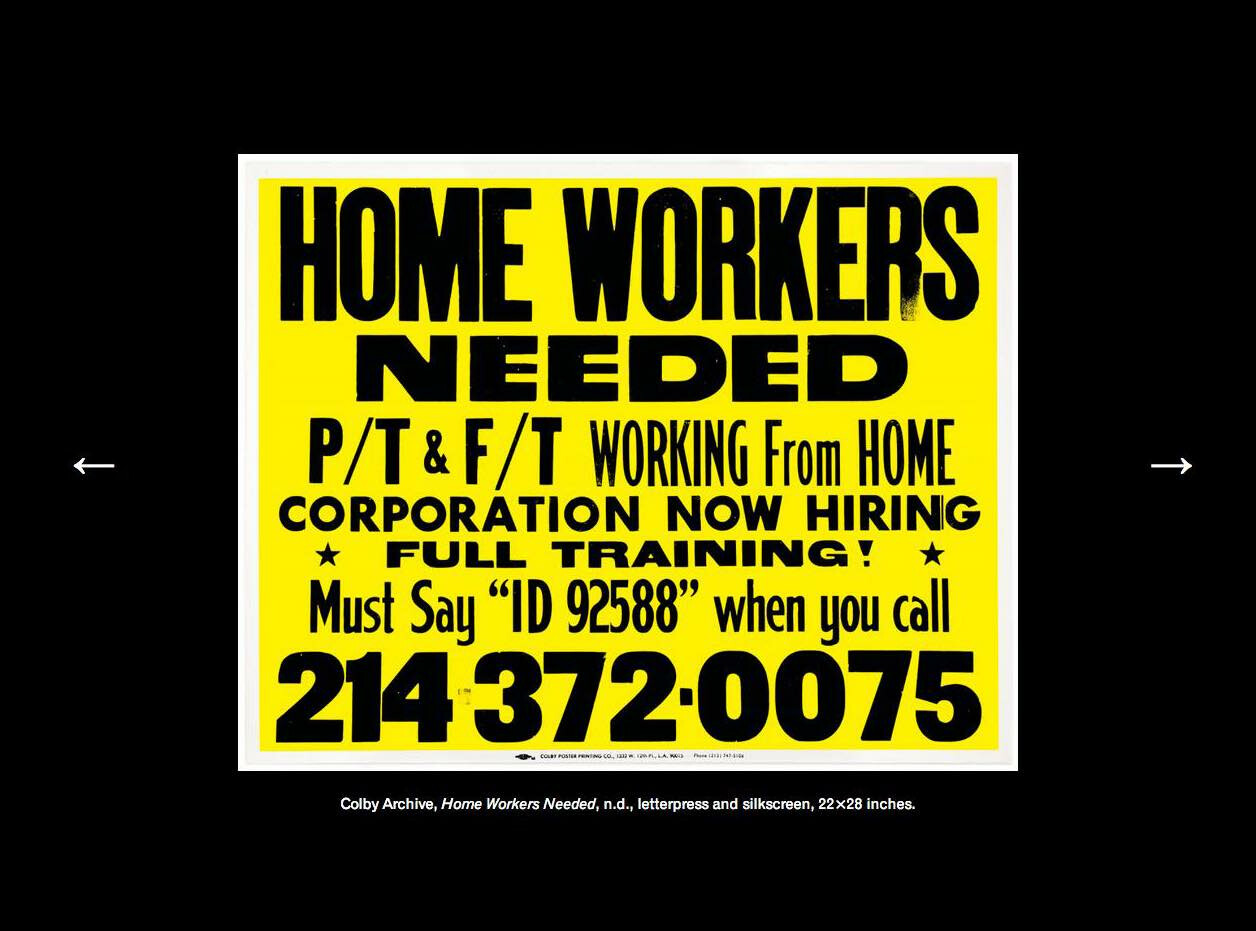
X-TRA Contemporary Art Journal, the longest running LA art journal, ended its run in Spring 2024 after 26 years of publishing. The website houses a complete catalog of essays, reviews, interviews, and artist projects into a reading environment organized by issue, contributor, and series. Built to support ongoing publishing alongside the back catalogue, it continues as a free archive following the journal’s closure.
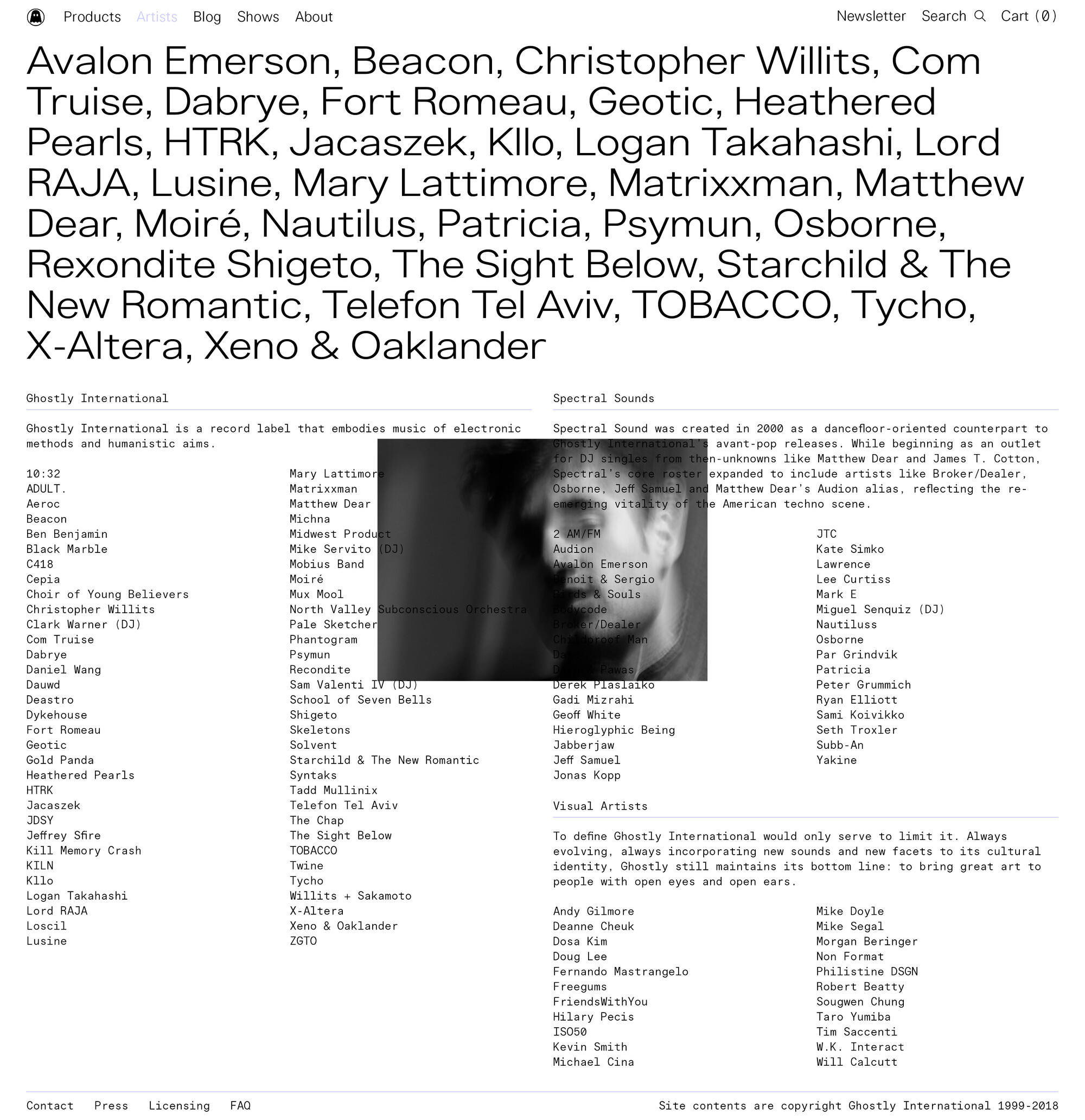
Ghostly International is a pioneering American independent record label and art company founded in 1999, merging boundary-pushing music with museum-grade graphic design and curated objects. The website is a full-featured web store and online archive, documenting it’s historic run and broad influence across genres.
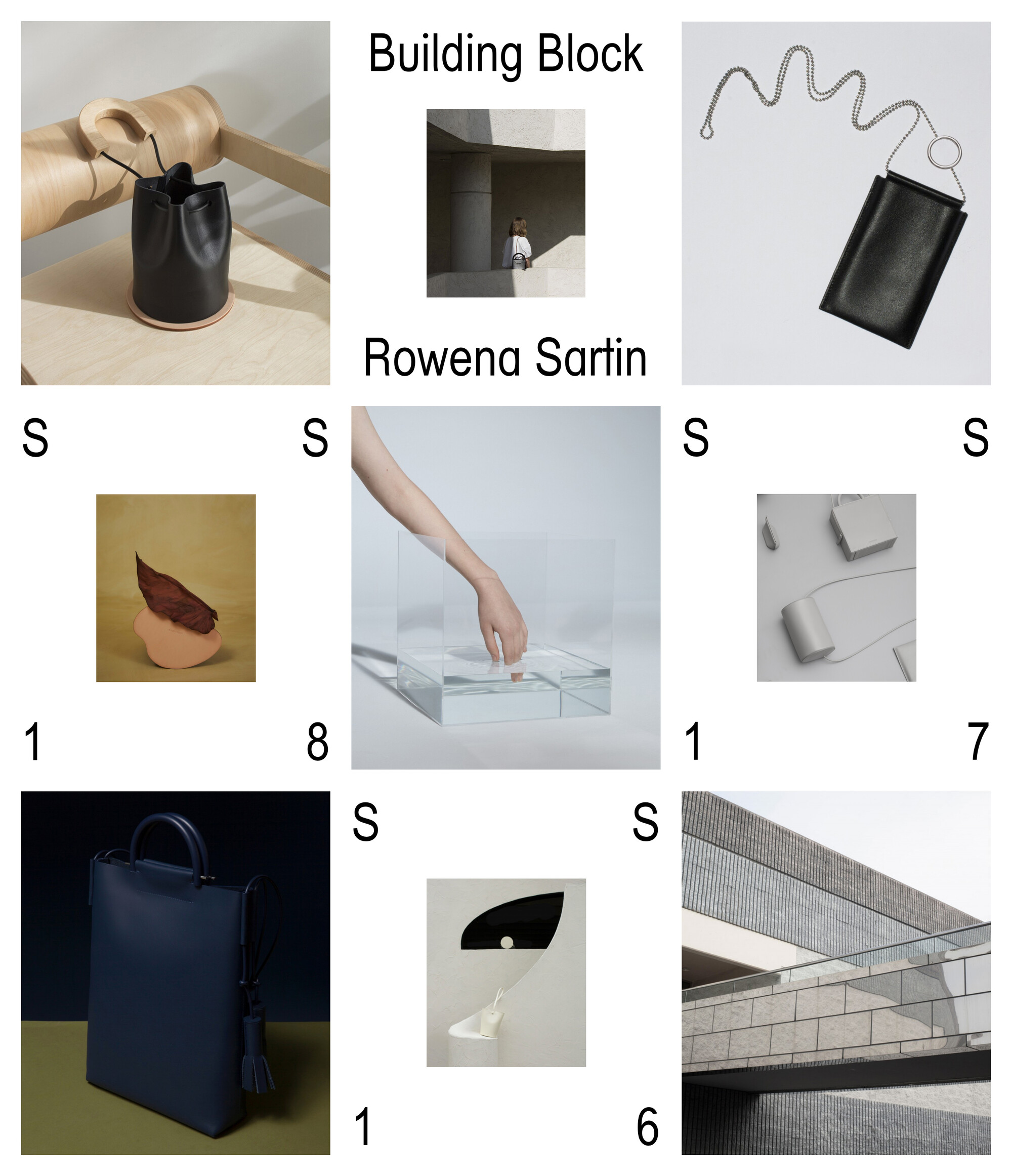
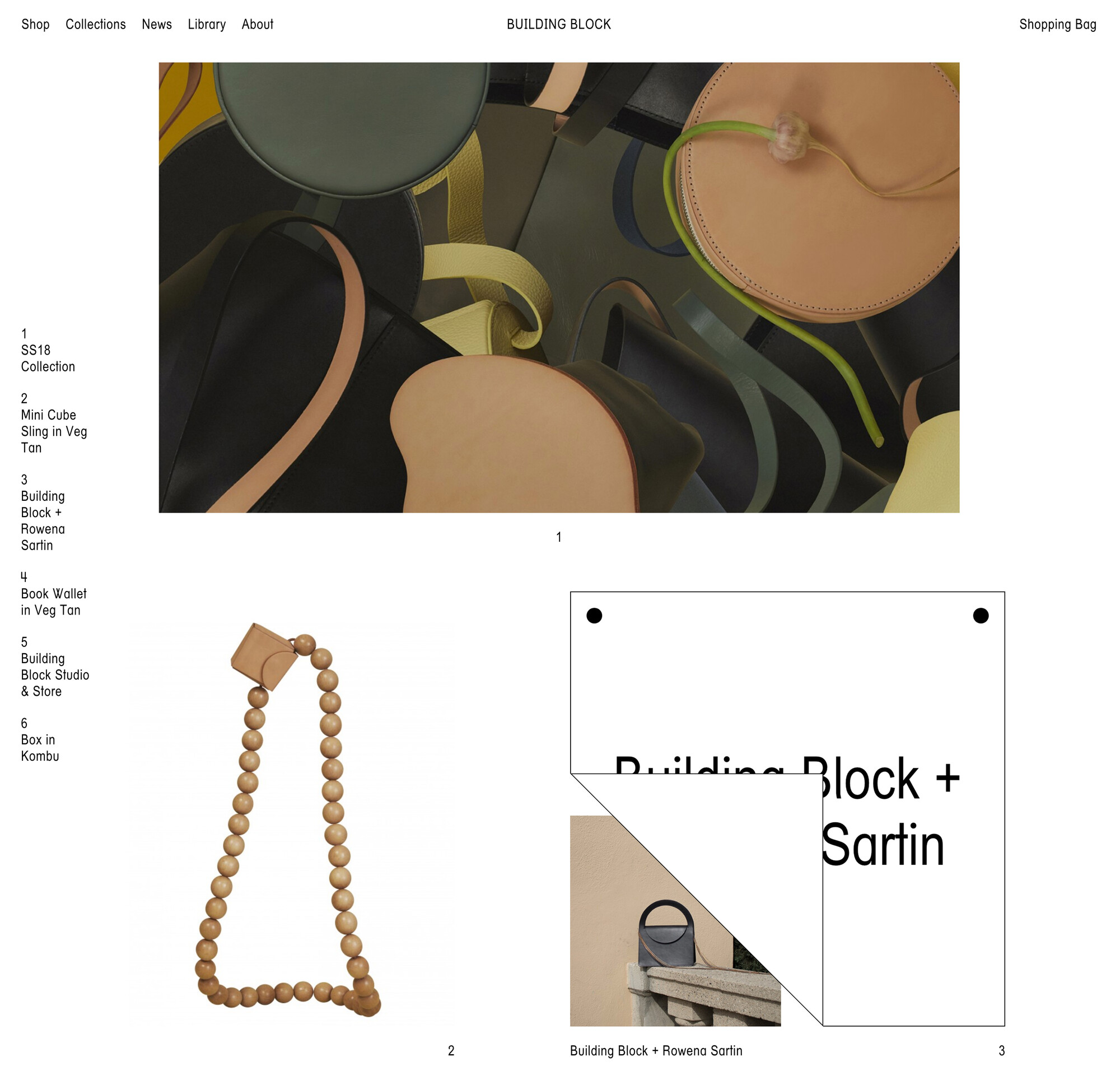
Building Block is an influential accessories brand applying industrial and architectural concepts to leather goods. Their aesthetic relies on clean, classic geometry paired with unexpected materials like rubber tubing and wood pieces. The website served as its online store until their closing in 2024, and now holds the complete product and collections archive.
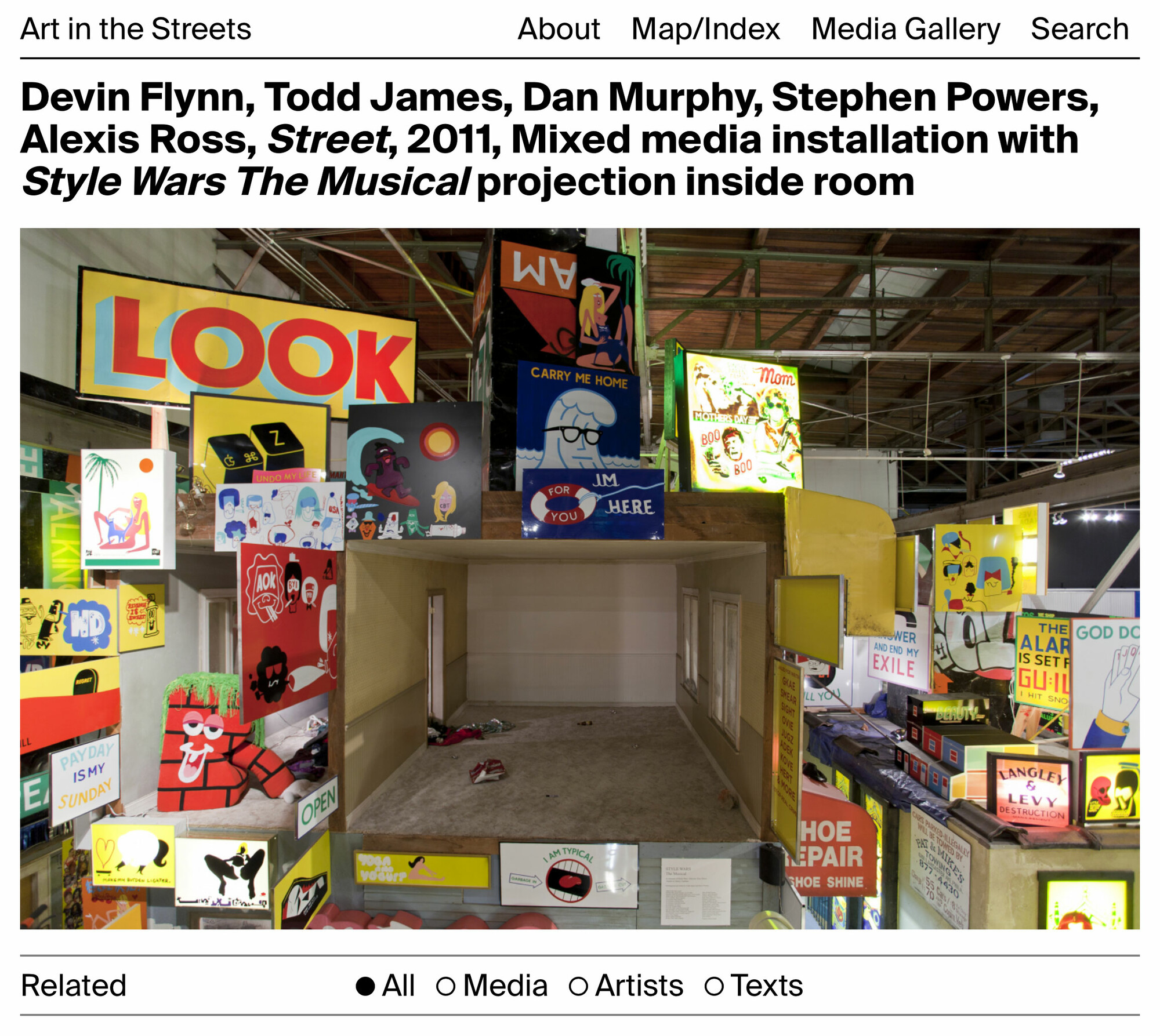
Art in the Streets is the landmark exhibition held at MOCA LA in 2011. It was the first comprehensive American museum retrospective to chart the history, evolution, and global footprint of graffiti and street art. The website acts as a permanent digital time capsule that preserves the artwork, source materials, artist essays and interviews, as well as the massive public reaction to the show.
Archive website for Takachizu, takara (treasure) + chizu (map), a community mapping project organized by Little Tokyo Service Center. Residents contributed objects of personal and historical significance to document what Little Tokyo holds and wants to protect. Visit site ⎘
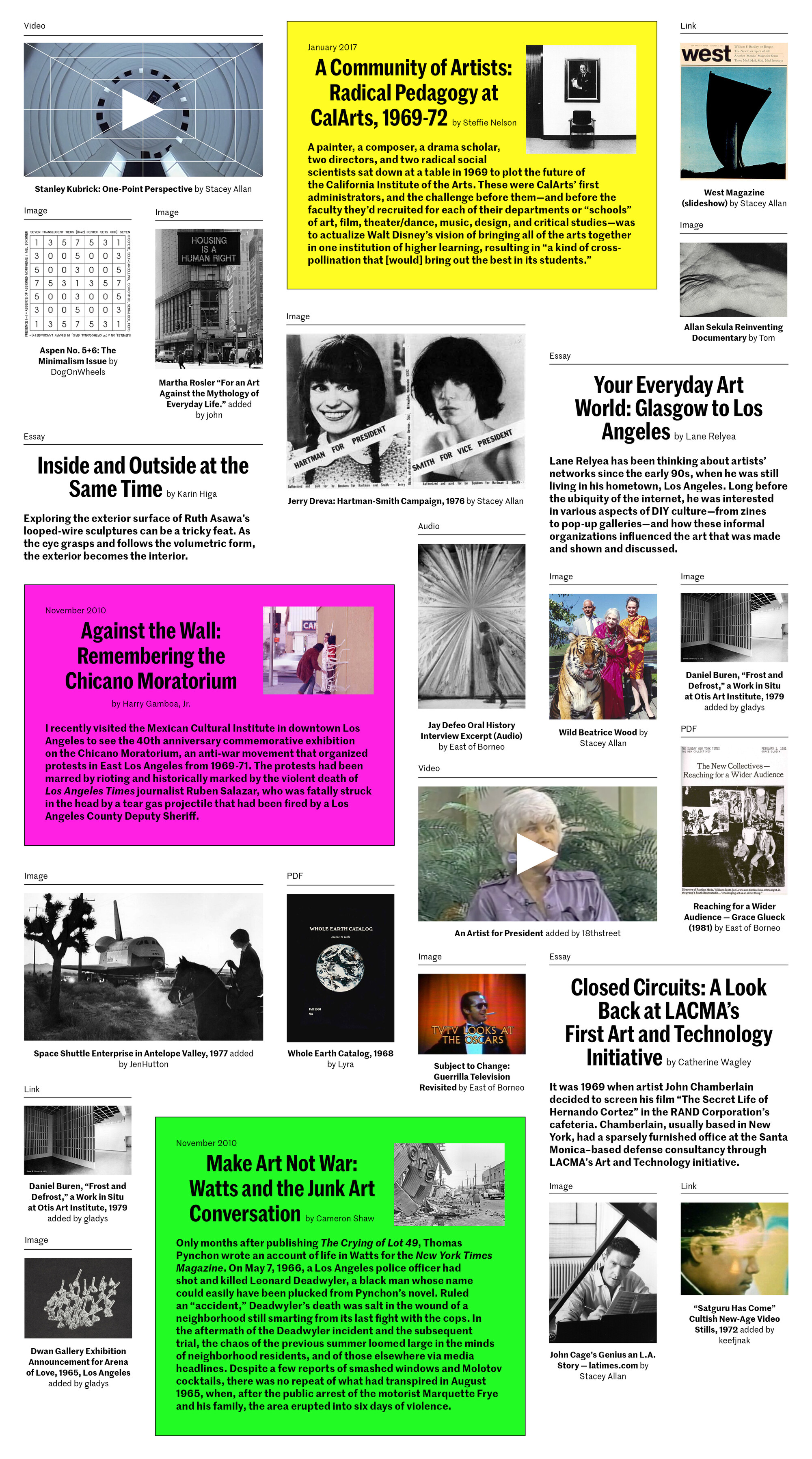
Website for East of Borneo, a collaborative online magazine dedicated to contemporary art and its history in Los Angeles. Hosts essays, interviews, and an open-access archive of images and documents contributed by the public. Visit site ⎘
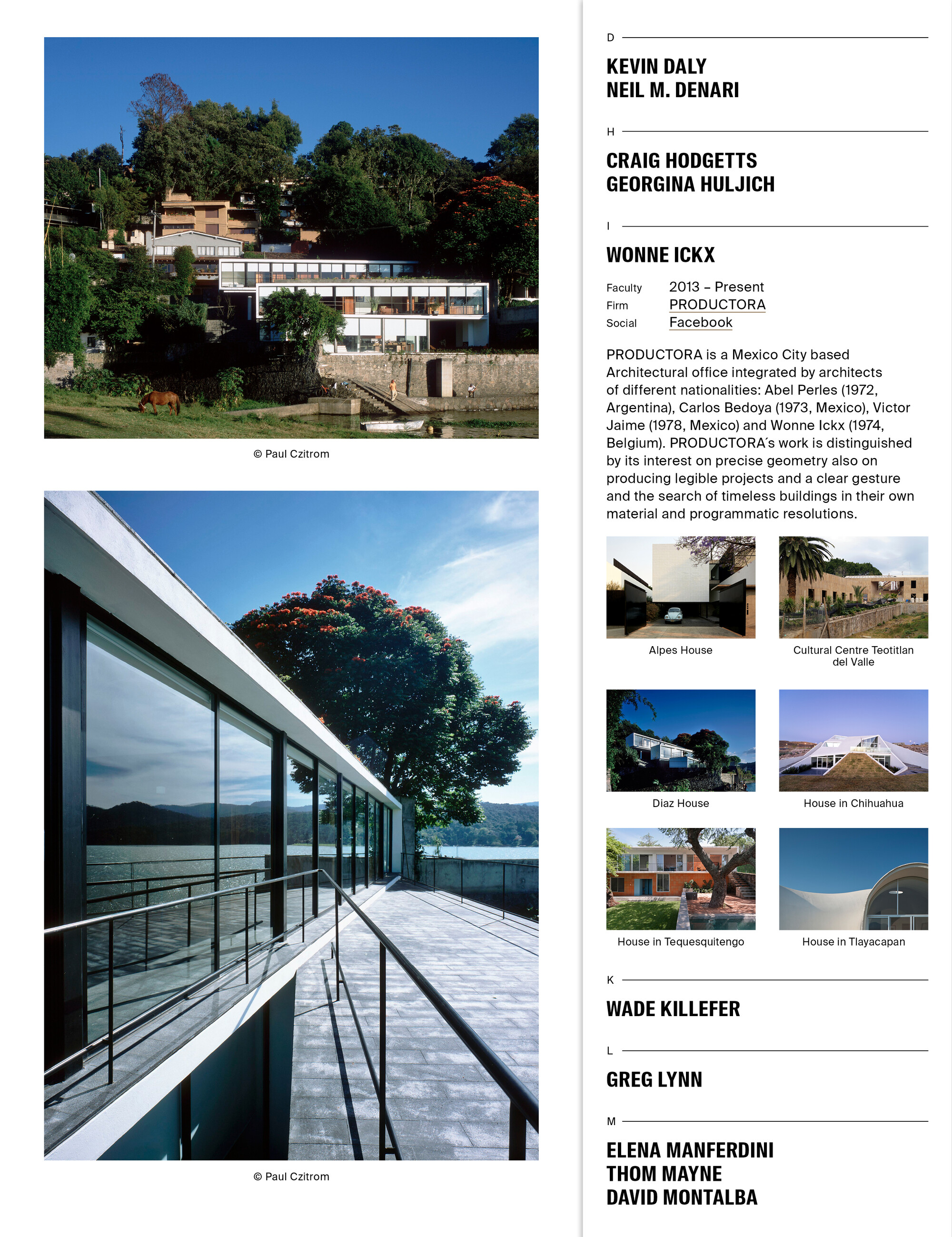
Interactive platform for UCLA Architecture and Urban Design mapping the work of faculty and alumni around the world. Visualizes connections between research, practice, and geography across the department’s global network.
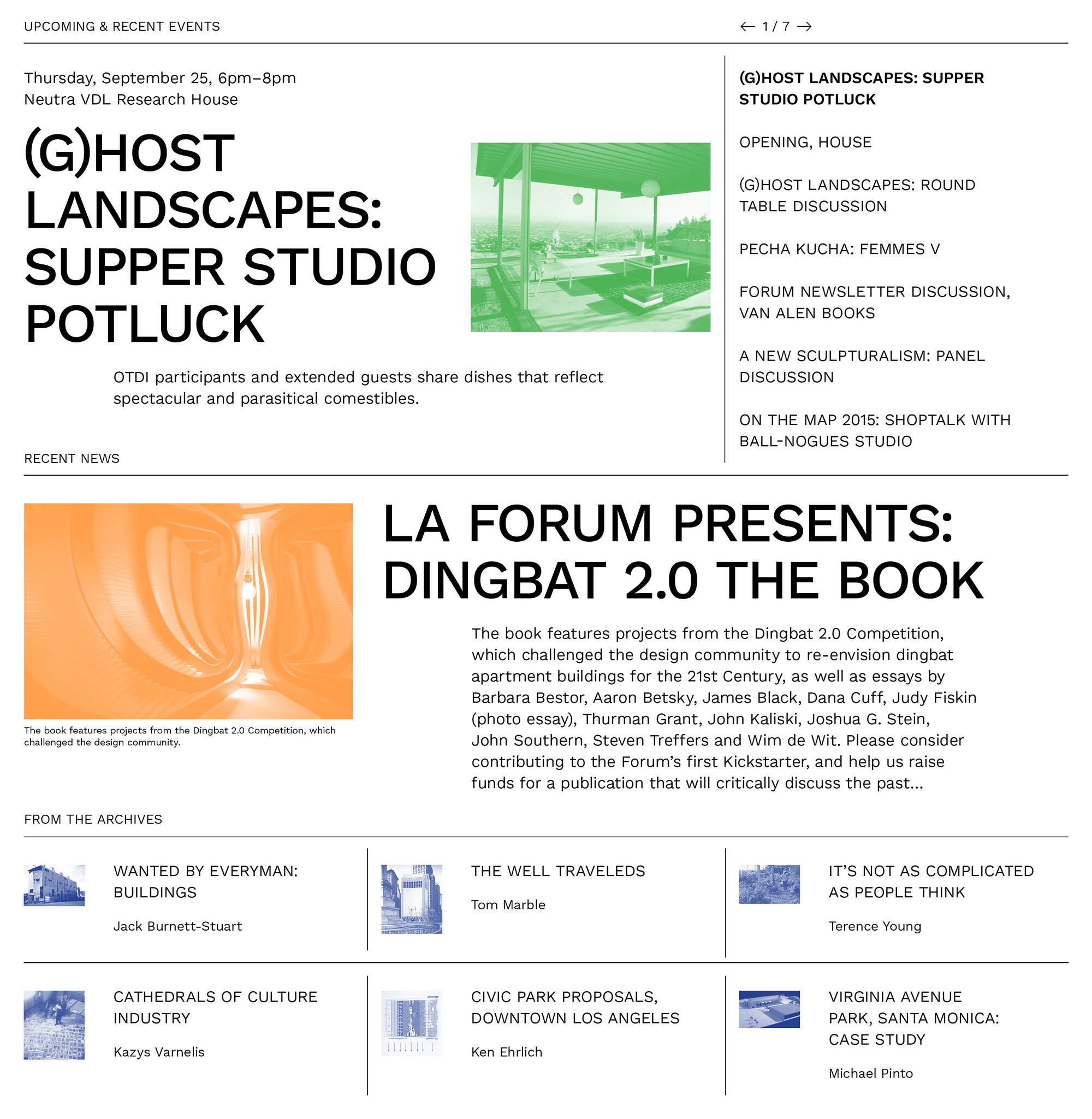
Website for the Los Angeles Forum for Architecture and Urban Design. Highlights upcoming events and provides access to the organization’s publication archive through a structure designed for intuitive browsing.
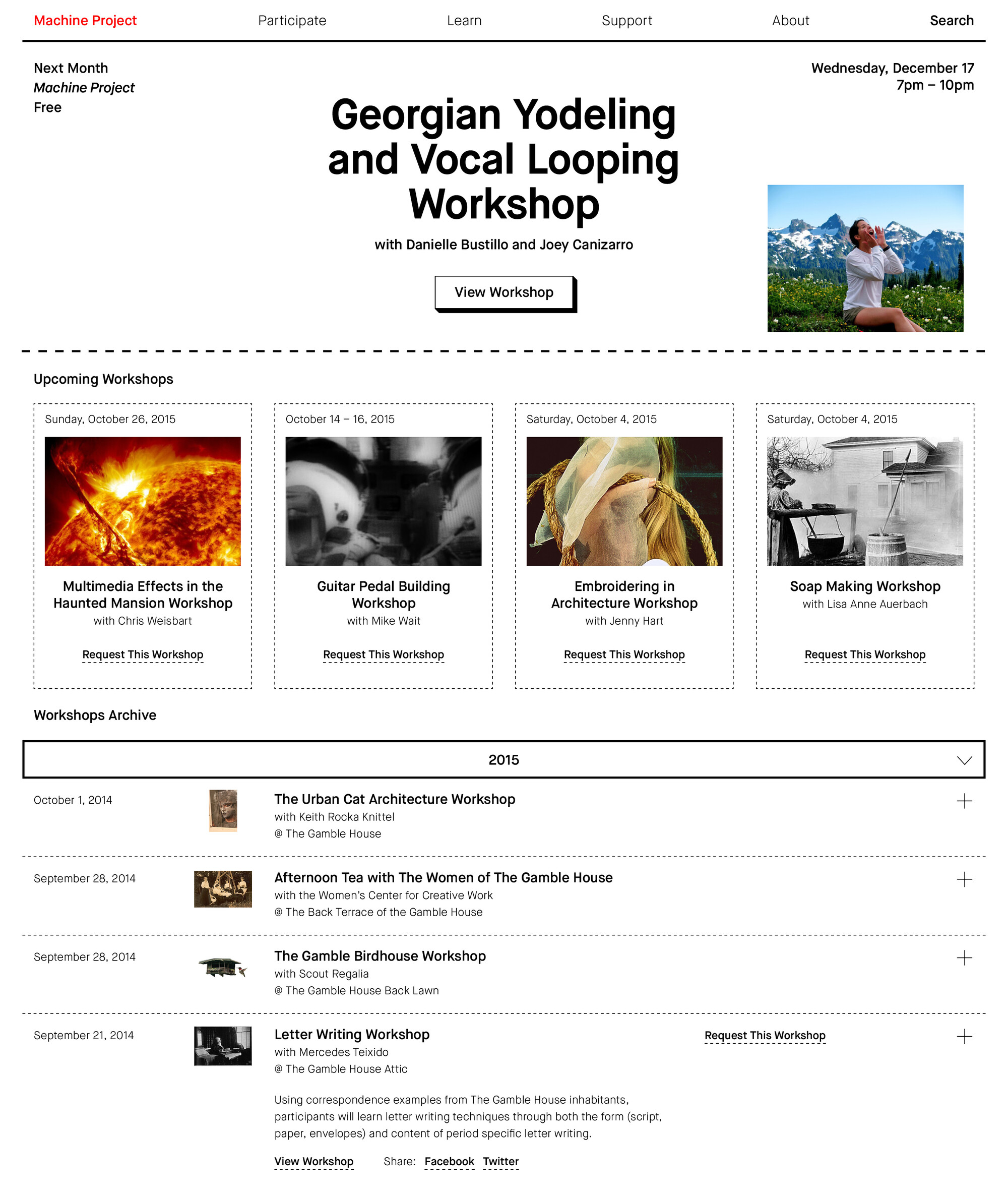
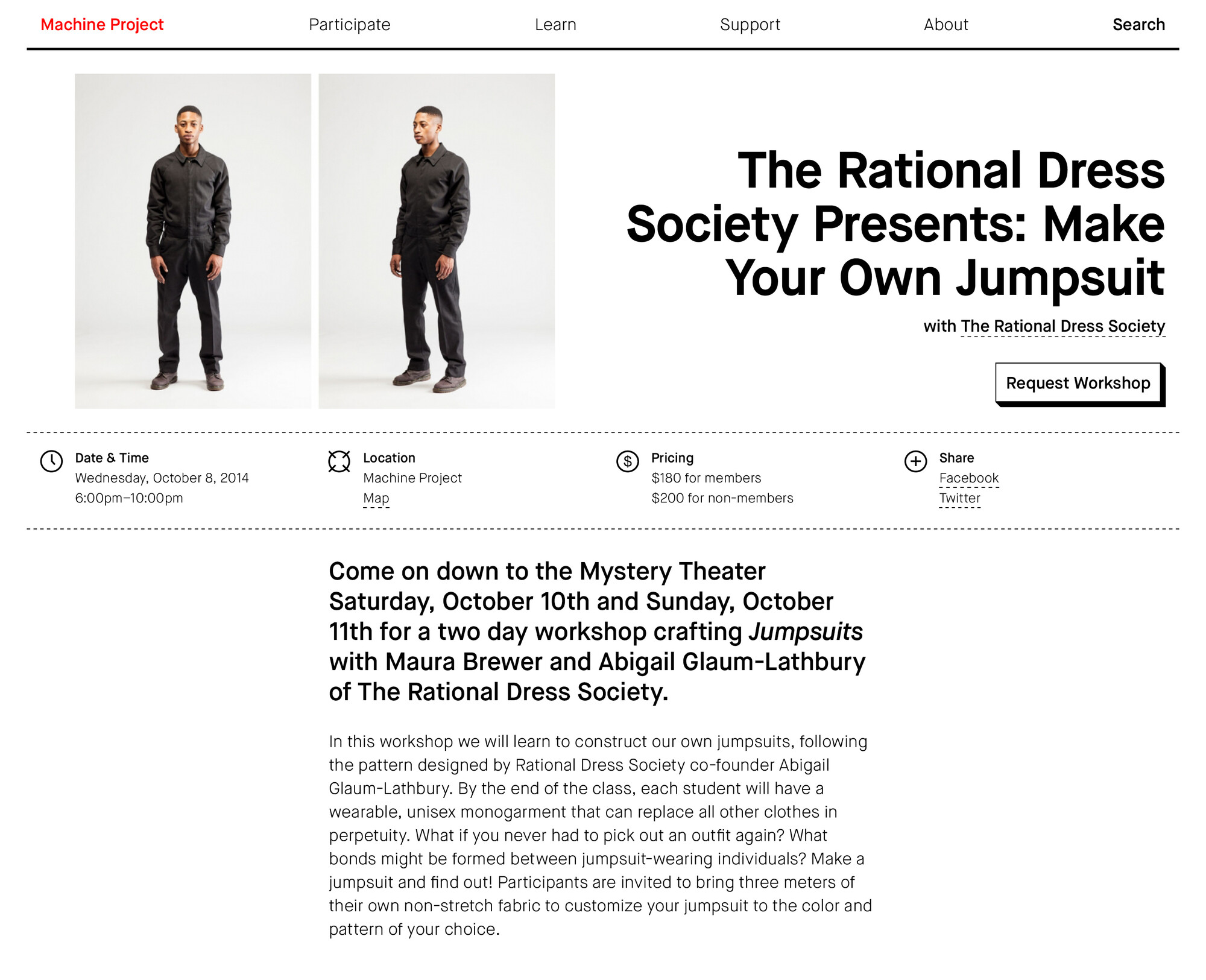
Website for Machine Project, a Los Angeles-based collective for experimental art and performance. Reflects the organization’s informal and eclectic spirit through a flexible, image-led structure documenting events and workshops. Visit site ⎘
Website for X-TRA, the Los Angeles–based contemporary art quarterly. Hosts an eighteen-year archive of print issues, reviews, and artist writings. The site was later redesigned by the studio in 2018.